instagram.com/SpecialKidsEducation
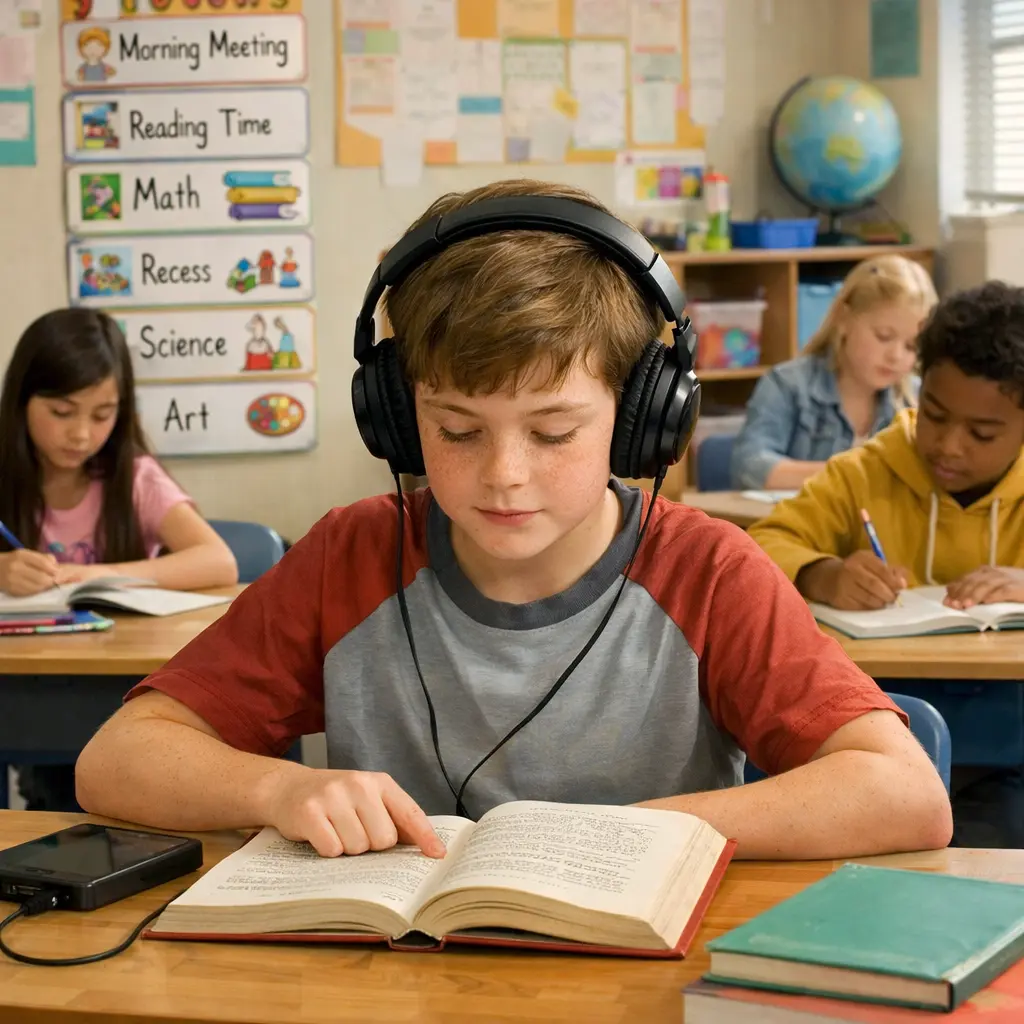
When a child struggles to read, it’s easy to worry. Is it a vision problem? A lack of effort? Something more? For many children, the answer is dyslexia—a common learning difference that affects how the brain processes written language. Dyslexia in children is not a reflection of intelligence. It’s not laziness. It’s a different way of learning. With the right support, children with dyslexia can become confident, successful readers. This guide will help you recognize the early signs of dyslexia in children, provide you with effective, evidence-based reading strategies, and outline classroom accommodations that make a real difference. Whether you’re a parent just beginning to suspect dyslexia or a teacher looking for practical tools, this resource is for you.
What Is Dyslexia? A Different Way of Reading
Dyslexia in children is a specific learning disability that affects accurate and fluent word recognition and spelling. It’s neurobiological in origin—meaning it’s about how the brain is wired, not about effort or intelligence. Children with dyslexia have difficulty connecting letters to sounds, breaking down words, and reading automatically. This makes reading slow, effortful, and frustrating. However, dyslexia in children has nothing to do with IQ. Many children with dyslexia are bright, creative, and capable in areas like problem-solving, storytelling, or art. Understanding this is the first step to effective support. This understanding of learning differences is central to our pillar resource, Understanding Learning Disabilities in Children.
Early Signs of Dyslexia in Children: What to Look For
Recognizing dyslexia in children early can be life-changing. The sooner a child gets support, the less they struggle—and the less damage is done to their self-esteem. Signs of dyslexia in children vary by age.
Signs in Preschool and Kindergarten
- Delayed speech development or trouble pronouncing words.
- Difficulty learning nursery rhymes or playing rhyming games.
- Mixing up sounds in multi-syllable words (e.g., “aminal” for “animal”).
- Trouble learning letters and their sounds.
- Difficulty remembering the names of letters, colors, or numbers.
Signs in Elementary School (Grades 1-4)
- Slow, labored reading that sounds choppy or without expression.
- Difficulty sounding out unfamiliar words; guessing based on first letter or pictures.
- Frequent spelling errors, even with common words.
- Reversing letters (b/d, p/q) past age 7 or 8.
- Strong listening comprehension but poor reading comprehension.
- Intense frustration or avoidance of reading tasks.
Signs in Older Children (Grades 5 and Up)
- Slow reading speed; difficulty completing assigned readings.
- Poor spelling that doesn’t improve with practice.
- Difficulty learning a foreign language.
- Trouble summarizing a story or answering comprehension questions.
- Low self-esteem about academic abilities despite strengths in other areas.
Effective Reading Strategies for Children with Dyslexia
Children with dyslexia learn to read best through structured, explicit, multisensory instruction. These reading strategies are backed by research and can be used at home and in school.
Structured Literacy Approach (Orton-Gillingham Based)
The most effective instruction for dyslexia in children is systematic, explicit, and multisensory. It teaches the rules of language directly, not by accident. Look for programs or tutors trained in Orton-Gillingham, Wilson, Barton, or similar approaches. These programs teach:
- Phonemic awareness (hearing and manipulating sounds in words).
- Phonics (connecting letters to sounds).
- Fluency (reading with speed and accuracy).
- Vocabulary and comprehension strategies.
Multisensory Reading Activities at Home
You can reinforce reading skills at home with playful, multisensory activities:
- Sand or shaving cream writing: Have your child write letters or words in sand, shaving cream, or on a textured surface while saying the sounds aloud.
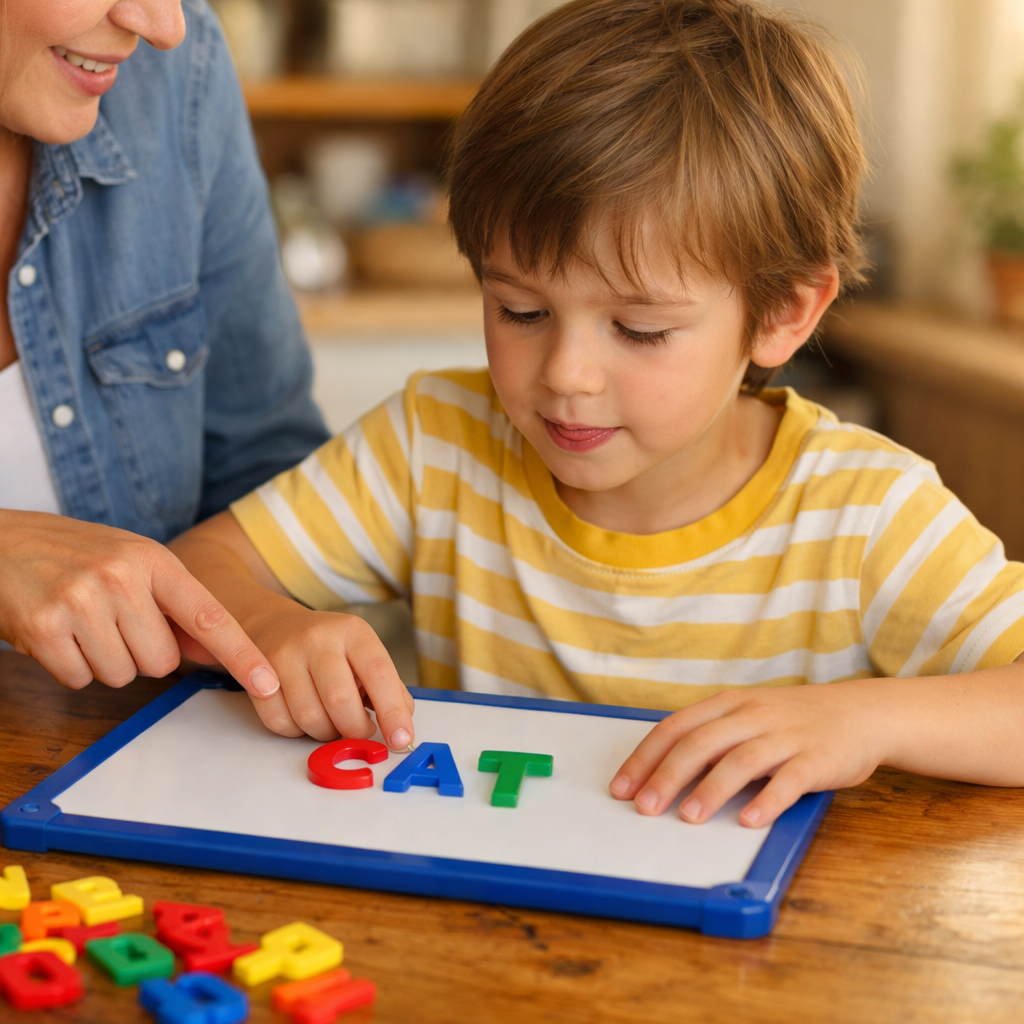
- Magnetic letters: Build words with magnetic letters, then change one letter to make a new word (cat → bat → rat).
- Read aloud together: Take turns reading. You read a page, then your child reads a sentence. Use “echo reading” (you read a line, they repeat it).
- Audiobooks: Pair audiobooks with the printed book. Your child can follow along while listening, building vocabulary and comprehension without the struggle of decoding.
- Word games: Play word games like “I Spy” with letter sounds (“I spy something that starts with /b/”).
Building Fluency and Automaticity
Fluency is the bridge between decoding and comprehension. These strategies build reading speed and accuracy:
- Repeated reading: Have your child read the same short passage multiple times until it sounds smooth.
- Timed readings: Set a timer for one minute. How many words can they read? Graph progress to build motivation.
- Reader’s theater: Practice reading a script for a short play. The repetition and performance aspect build fluency and confidence.
Classroom Accommodations for Students with Dyslexia
Accommodations level the playing field. They don’t give an unfair advantage—they remove barriers so that children with dyslexia can show what they know.
Reading and Testing Accommodations
- Extra time on tests and assignments: Reading takes longer. Extra time is essential.
- Text-to-speech and audiobooks: Provide access to digital texts that can be read aloud.
- Oral administration of tests: Allow the student to respond orally rather than in writing.
- Reduced reading load: Highlight key passages, provide summaries, or allow the student to listen to audiobooks for content-area reading.
- Use of spell-check and speech-to-text: For writing assignments, allow assistive technology.
Classroom Environment and Instruction
- Seat the student near the teacher: This allows for easier monitoring and support.
- Provide notes in advance: Rather than requiring the student to copy from the board.
- Use large-print materials: For some students, larger text reduces visual stress.
- Allow colored overlays: Some children with dyslexia find that colored overlays or paper reduce visual distortion.
- Break assignments into smaller chunks: “Read pages 5-10” is overwhelming. “Read the first paragraph” is manageable.
The Role of the IEP or 504 Plan
These accommodations should be documented in a formal plan. An IEP can also provide specialized reading instruction (using an Orton-Gillingham based program) from a trained specialist. If your child has been diagnosed with dyslexia in children, request a team meeting to discuss appropriate supports.
For a deeper dive into the evaluation and IEP process, see our guide on How to Request and Navigate an IEP for a Child with a Learning Disability
Supporting Reading at Home: A Parent’s Toolkit
Beyond specific strategies, the home environment plays a huge role in your child’s reading development and attitude toward learning.
- Read aloud every day: Even when your child is older. Reading aloud builds vocabulary, comprehension, and a love of stories without the struggle of decoding.
- Build a home library of high-interest books: Graphic novels, audiobooks, magazines, and books on topics your child loves (dinosaurs, sports, animals).
- Focus on effort, not perfection: “I saw how hard you worked on that word. Great persistence!”
- Protect homework time: Short, focused sessions are better than long, exhausting ones. Use a timer. Take breaks.
- Celebrate strengths: What does your child excel at? Art? Sports? Building? Storytelling? Make sure those strengths get as much attention as reading practice.
Emotional Support: Building Confidence and Resilience
Children with dyslexia often internalize their struggles. “I’m stupid.” “I’m bad at school.” “Everyone else can read but me.” These beliefs damage self-esteem and motivation. Your words and actions can counteract them.
- Talk openly about dyslexia: Use simple, positive language. “Your brain learns reading in a different way. That’s not bad—it just means we need to find the strategies that work for you.”
- Share stories of successful people with dyslexia: Albert Einstein, Whoopi Goldberg, Steven Spielberg, Anderson Cooper—all have or had dyslexia. Their struggles didn’t stop them.
- Separate effort from outcome: “You worked so hard on that reading. I’m proud of your effort.”
- Model a growth mindset: “I don’t know how to do this yet. I need to practice.”
- Advocate for accommodations without shame: “Using audiobooks isn’t cheating. It’s how you access the same information as everyone else.”
For more strategies on nurturing your child’s self-worth, see our guide on Building Self-Esteem in Children with Learning Disabilities: Strategies for Parents and Teachers.
Frequently Asked Questions (SSS)
Q: Can a child with dyslexia ever become a good reader?
A: Yes! With the right instruction—explicit, systematic, multisensory—most children with dyslexia can learn to read accurately and fluently. They may always read more slowly than peers, but they can become strong, capable readers. The key is early, evidence-based intervention.
Q: My child reverses letters. Does that mean they have dyslexia?
A: Letter reversals (b/d, p/q) are common in young children up to age 7. If reversals persist past age 7 or 8, and are accompanied by other reading difficulties (slow, labored reading, trouble sounding out words), it may be a sign of dyslexia. An evaluation is the only way to know.
Q: What should I do if I suspect my child has dyslexia?
A: First, talk to your child’s teacher. Share your concerns. Then, request a formal evaluation from the school district (in writing). You can also seek an independent evaluation from a psychologist or neuropsychologist. Early identification is key to getting the right support.
Q: Will my child need special education forever?
A: Many children with dyslexia receive special education services for reading instruction. Once they’ve learned to read, they may need fewer services—but they may still need accommodations (like extra time or audiobooks) throughout school. This varies by child.
Q: How do I explain dyslexia to my child without making them feel “different”?
A: Use simple, positive language. “Your brain learns reading in a different way. It’s like having a brain that’s really good at some things and needs extra practice with others. We’re going to find the strategies that work for your brain.” Focus on strengths, not deficits.
Conclusion: Every Child Can Learn to Read
Recognizing dyslexia in children early and providing the right supports transforms lives. The journey may have challenges—frustration, tears, setbacks. But with evidence-based instruction, thoughtful accommodations, and unwavering emotional support, children with dyslexia learn to read. More than that, they learn that they are capable, resilient, and worthy—not despite their learning difference, but because of the unique strengths it brings. Whether you’re a parent reading aloud every night or a teacher adapting a lesson, you are part of a child’s success story. Keep going. It works.