instagram.com/SpecialKidsEducation
In a sea of information overload and misinformation about Autism Spectrum Disorder (ASD), finding accurate, actionable guidance can feel overwhelming. As a parent, not understanding why your child behaves in certain ways can lead to feelings of helplessness. As an educator, figuring out how best to support a student in your classroom can create confusion and doubt. The question, “Am I doing enough?” might linger in your mind.
This guide is designed to meet you right at that point. Our goal is to demystify ASD with science-backed facts, clarify what the “spectrum” truly means, and provide you with practical strategies you can start implementing right away—both at home and in school.
Autism is not a deficit or a disease; it’s a different neurodevelopmental wiring. Throughout this guide, you will find a roadmap to help you discover your child’s or student’s strengths, build bridges of communication, and create a supportive environment that allows their potential to flourish. Let’s move beyond fear and focus on understanding and empowerment.
What Is Autism Spectrum Disorder?
Autism Spectrum Disorder is a developmental condition that affects how a person communicates, interacts with others, and experiences the world around them. The word “spectrum” is used because autism can look very different from one child to another—some children may require significant support in daily life, while others may live independently with minimal assistance.
Key features of ASD often include:
- Challenges in social communication and interaction.
- Repetitive behaviors or restricted interests.
- Sensory sensitivities (to sound, light, textures, or smells).
Each child with autism is unique. For example, one child might speak fluently but struggle to make eye contact, while another may be nonverbal but highly skilled in problem-solving tasks. Recognizing this diversity is essential in providing appropriate support.
Breaking Down Common Myths
Autism is surrounded by more misinformation than perhaps any other developmental condition. These myths don’t just create confusion—they cause real harm by delaying support, increasing stigma, and exhausting families with guilt and false hope. Let’s clear the air with science-backed facts.

Myth 1: “Autism is caused by bad parenting.”
Fact: This myth, often called the “refrigerator mother” theory, was debunked decades ago. Autism is a neurodevelopmental condition with strong genetic and biological underpinnings. Parenting style does not cause autism. What parents can do is provide the love, structure, and advocacy that help their child thrive.
Myth 2: “Vaccines cause autism.”
Fact: This is one of the most harmful medical hoaxes in history. The original 1998 study that suggested a link was retracted due to serious ethical violations and fraudulent data. Dozens of large-scale studies involving millions of children have found no link between vaccines and autism. Delaying or avoiding vaccines puts children at risk for preventable, dangerous diseases.
Myth 3: “Autistic people lack empathy.”
Fact: This is a misunderstanding of how empathy works. Many autistic individuals experience intense empathy—they deeply feel the emotions of others. The difference is often in expressing empathy in ways neurotypical people expect. An autistic child might not make eye contact or offer a hug, but they may be profoundly affected by a friend’s distress. It’s not a lack of empathy; it’s a different way of showing it.
Myth 4: “All autistic children have intellectual disabilities.”
Fact: Autism affects cognitive abilities across the full spectrum. Many autistic children have average or above-average intelligence. Some excel in specific areas like mathematics, music, memory, or visual-spatial reasoning. Autism and intelligence are separate traits that vary independently.
Myth 5: “Autism can be cured.”
Fact: Autism is not a disease; it’s a different way of being wired. There is no “cure” because there is nothing to cure. What does help is early intervention, therapies that build skills, and environments that accommodate sensory and communication needs. Be wary of anyone promising a cure—they are often selling false hope or unproven, potentially harmful treatments.
Myth 6: “Autistic people don’t want friends or social connection.”
Fact: Most autistic individuals do want meaningful friendships and relationships. The challenge is navigating social rules that don’t come naturally to them. They may feel lonely or left out but struggle with the “how” of connection. With understanding peers and supportive environments, they build deep, loyal friendships.
Myth 7: “Autism is a childhood condition that people grow out of.”
Fact: Autism is lifelong. A child with autism becomes an adult with autism. However, with appropriate support, many autistic individuals learn strategies to navigate challenges and live independent, fulfilling lives. The goal isn’t to “outgrow” autism—it’s to grow into a confident, capable version of oneself.
The Importance of Early Diagnosis
Research consistently shows that early detection and intervention lead to significantly better developmental outcomes. The brain is most “plastic”—most capable of forming new connections—in the first few years of life. Identifying autism early allows families to access support during this critical window, when therapies have the greatest impact.
What Are the Early Signs?
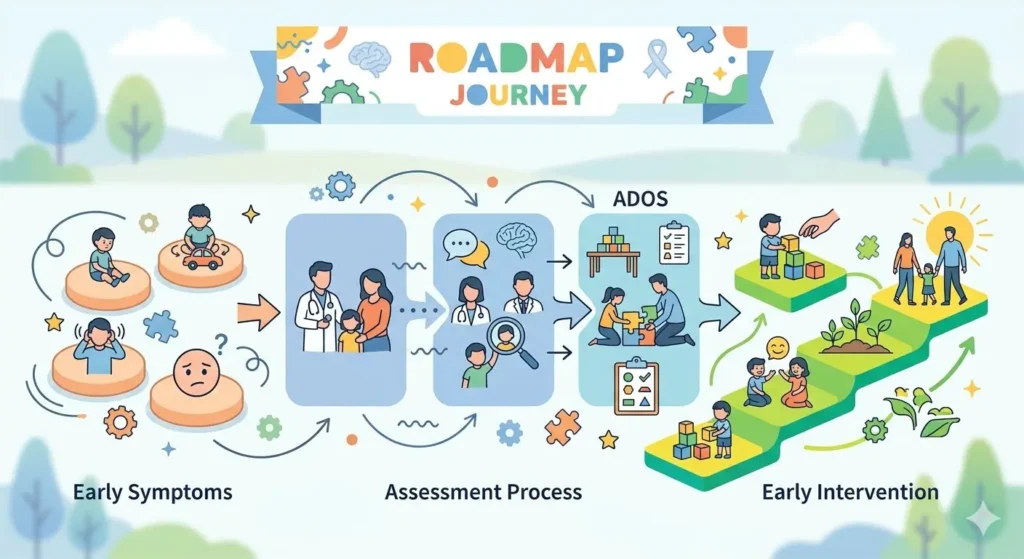
Signs of autism can sometimes appear as early as 12–18 months. Parents and caregivers should watch for:
- Limited or inconsistent eye contact
- Not responding to their name by 12 months
- Delayed speech or unusual language patterns (repeating phrases, losing previously spoken words)
- Lack of pretend play (e.g., feeding a doll, pretending a block is a car)
- Intense attachment to routines and extreme distress with small changes
- Unusual sensory responses—seeming indifferent to pain or overwhelmed by everyday sounds
- Repetitive movements (hand flapping, rocking, spinning)
No single sign is diagnostic on its own. But a cluster of these behaviors warrants a conversation with a pediatrician.
How Does the Evaluation Process Work?
Many parents feel anxious about the diagnostic process, partly because they don’t know what to expect. Here’s a typical path:
- Pediatrician Screening: At well-child visits (especially 18 and 24 months), pediatricians use standardized tools like the M-CHAT (Modified Checklist for Autism in Toddlers) to screen for early signs. If concerns arise, they will refer you to specialists.
- Developmental Pediatrician or Child Psychiatrist: These physicians specialize in childhood development. They conduct comprehensive medical evaluations, ruling out other conditions and assessing overall development.
- Multidisciplinary Team Evaluation: Often, a team of specialists—including a psychologist, speech-language pathologist, and occupational therapist—works together to assess the child from multiple angles.
- ADOS-2 (Autism Diagnostic Observation Schedule): This is often considered the “gold standard” diagnostic tool. It’s a structured, play-based assessment that observes the child’s communication, social interaction, and play behaviors. It’s not a blood test or scary procedure—it looks and feels like a series of interactive games.
- Feedback and Diagnosis: The team meets with parents to share findings, provide a diagnosis if appropriate, and outline recommended next steps for early intervention services.
Why Early Intervention Matters
Once a diagnosis is confirmed—or even while waiting for a full evaluation—early intervention services can begin. These services (speech therapy, occupational therapy, behavioral support) are often available through state programs or school districts from birth. Early intervention helps children build foundational skills in communication, social interaction, and self-regulation before challenges become entrenched.
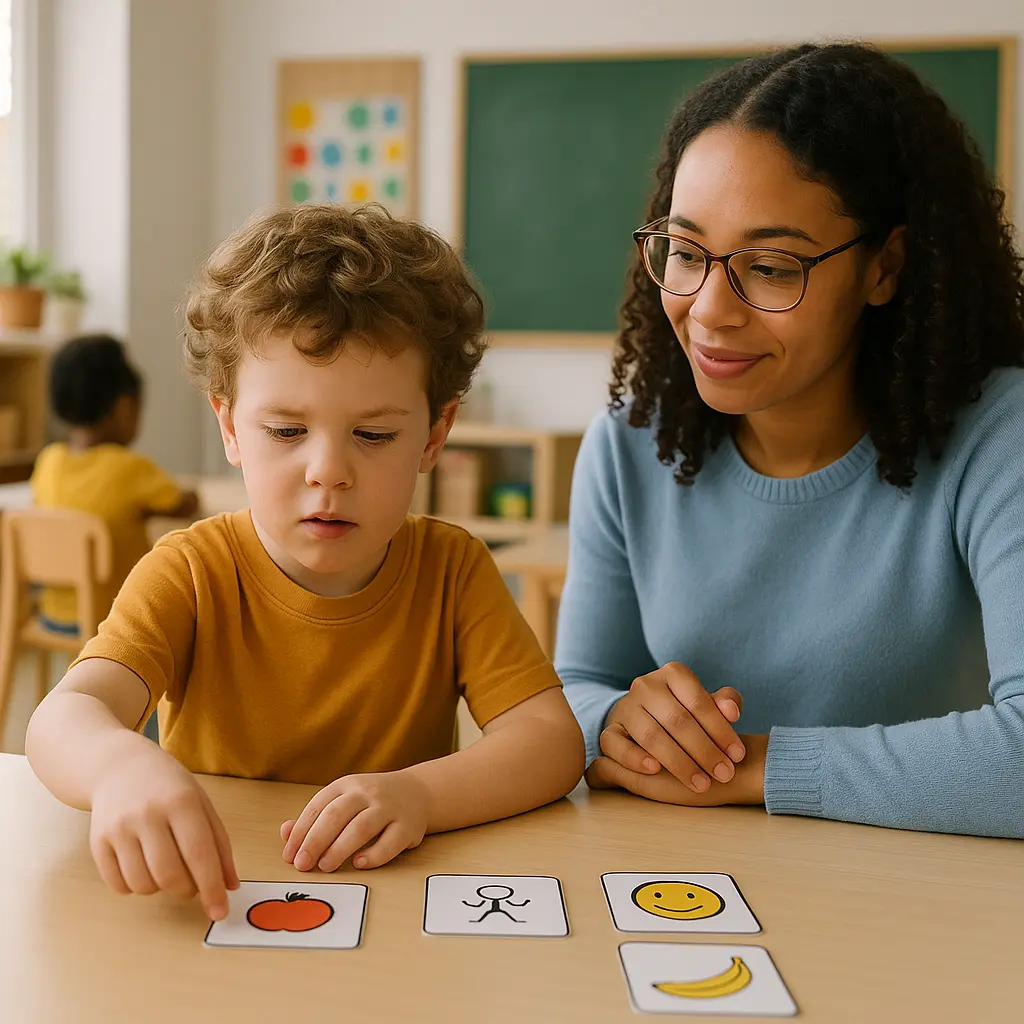
Example: A 2-year-old who is not yet speaking but shows strong visual skills can begin speech therapy that uses picture cards and gestures. With consistent support, this same child may enter preschool with a communication system already in place—rather than years of frustration and isolation.
Core Characteristics & Strengths
When we talk about Autism Spectrum Disorder, the conversation often focuses on challenges. But understanding autism fully means also recognizing the unique ways of thinking and the incredible potential that often comes with it. The word “spectrum” isn’t about a line from “mild” to “severe”—it’s more like a vast, colorful palette of traits that combine differently in each person.
These neurological differences aren’t just obstacles to overcome; they can also translate into remarkable strengths. Here are some of the core characteristics of ASD, reframed to highlight the abilities they can foster:
- Exceptional Attention to Detail: While they might miss the “big picture” social cues, many autistic individuals have an extraordinary ability to spot tiny details, patterns, or inconsistencies that others completely overlook. This makes them invaluable in fields like quality control, data analysis, software testing, and editing.
- Deep Focus and Expertise (Hyperfocus): When something captures their interest, autistic individuals can enter a state of deep, intense concentration. This “hyperfocus” allows them to quickly become experts on complex topics, solve intricate problems, and produce highly creative work in their chosen fields.
- Reliability and Adherence to Routines: A need for predictability and order translates into incredible reliability, punctuality, and a strong commitment to following procedures. They excel in roles that require consistency, structure, and a methodical approach.
- Systematic and Logical Thinking: The tendency to categorize information and look for underlying systems makes many autistic individuals naturally gifted in logic, mathematics, coding, and strategic planning. They can see patterns and structures where others see chaos.
- Honesty and Directness: While they may struggle with the unspoken rules of social etiquette, this often means they are refreshingly honest and straightforward. Their communication is free of hidden agendas or manipulation, which can be a foundation for deep, authentic trust.
- Creative and Original Perspectives: Because they don’t automatically absorb social norms, autistic individuals often bring a fresh, unconventional perspective to art, music, storytelling, and problem-solving. They can think “outside the box” because they don’t see the box in the first place.
Nurturing these strengths is just as important as addressing challenges. By shifting our focus from “fixing deficits” to “building on abilities,” we help children with ASD develop confidence, self-worth, and a clear path toward a future where they can thrive.
Practical Support at Home and School
Creating a supportive environment isn’t about walking on eggshells—it’s about building a bridge between the child’s world and ours. When we understand why a strategy works, we can apply it with more confidence and consistency. Here are evidence-based approaches that make a real difference, both in the classroom and at home.
1. Visual Schedules and Predictable Routines
- The Strategy: Use pictures, symbols, or written words to create a clear visual timeline of the day’s activities (e.g., morning routine: wake up → brush teeth → breakfast → bus).
- Why It Works: Many children with ASD process visual information more easily than spoken language. A visual schedule reduces anxiety by answering the unspoken questions: “What’s happening now? What comes next? When will it end?” This predictability lowers stress hormones and makes transitions smoother.
- Deeper Dive: Need ready-to-use templates and step-by-step guidance? Check out our full guide: Daily Routines and Visual Schedules for Autism .
2. Clear, Simple, and Visual Communication
- The Strategy: Use short, concrete sentences. Pair verbal instructions with gestures, pictures, or written notes. Instead of “Would you like to tidy up your toys now?” try “Toys in the box” while pointing to the box.
- Why It Works: Auditory processing delays can make long sentences feel like noise. Visual supports give the brain a second channel to receive the message. This isn’t about “dumbing down” language—it’s about making it accessible.
- Deeper Dive: Learn more about augmentative communication tools and techniques in our article: Ways of Communicating with Non-Verbal or Minimally Verbal Children .
3. Create Sensory-Friendly Spaces
- The Strategy: Adapt the environment to the child’s sensory needs. This might mean dimming fluorescent lights, allowing noise-canceling headphones, removing scratchy clothing tags, or creating a quiet corner with weighted blankets and fidget toys.
- Why It Works: Sensory processing differences are neurological, not behavioral. When a child is overwhelmed by buzzing lights or background chatter, their brain is in a state of “threat response.” A sensory-friendly space allows the nervous system to calm down and return to a state where learning and connection are possible.
- Deeper Dive: Recognize the signs of overload and learn quick calming strategies in our guide: Understanding and Managing Sensory Overload .
4. Use Positive Reinforcement, Not Punishment
- The Strategy: Catch them being good. Immediately and specifically praise or reward desired behaviors, even small steps. A sticker, a high-five, or extra time with a favorite toy can be powerful motivators.
- Why It Works: Positive reinforcement releases dopamine in the brain, which makes the behavior feel good and more likely to be repeated. Punishment, on the other hand, increases anxiety and damages trust. Focus on teaching what to do instead of only correcting what not to do.
- Deeper Dive: Want to avoid common pitfalls? Learn what to avoid in our guide: Common Mistakes in Supporting Children with Autism .
5. Foster Peer Support and Inclusion
- The Strategy: Educate classmates about autism in an age-appropriate way. Implement “buddy systems” where peers invite the child with ASD to join games or lunch. Create structured opportunities for social interaction.
- Why It Works: Isolation is often a result of misunderstanding. When peers understand that the child processes the world differently—not “weirdly”—they become more patient and inclusive. Structured interactions reduce the social anxiety for the autistic child.
- Deeper Dive: Coming soon: “Building Inclusive Classrooms: A Guide for Teachers.”
Therapy and Intervention Options
Navigating the world of autism therapies can feel overwhelming. There are many approaches—some evidence-based, others less so. The goal of this section is not to prescribe a specific path, but to give you a clear, neutral overview of the most widely recognized options so you can make informed decisions in partnership with your child’s care team.
No single therapy works for every child. The best approach is often a combination of services tailored to your child’s unique profile of strengths and challenges.
Applied Behavior Analysis (ABA)
What it is: ABA is a therapy based on the science of learning and behavior. It breaks down skills into small, teachable steps and uses positive reinforcement to encourage desired behaviors and reduce harmful ones. Modern ABA focuses on building communication, social, and daily living skills.
What it aims to do: Increase helpful behaviors (like communication and self-care), teach new skills, and reduce behaviors that interfere with learning or safety. When done well, ABA is individualized, play-based, and respects the child’s dignity.
Things to know: ABA is one of the most widely researched and insurance-covered therapies for autism. However, it’s important to seek providers who use child-led, naturalistic approaches rather than rigid, compliance-focused methods.
Occupational Therapy (OT)
What it is: OT focuses on helping children participate in the “occupations” of childhood—playing, learning, dressing, eating, and sleeping. For autistic children, OT often targets sensory processing differences, fine motor skills, and daily living skills.
What it aims to do: Help children regulate their sensory systems (so they’re not overwhelmed or under-stimulated), develop motor skills, and gain independence in daily activities like feeding themselves, writing, or managing transitions.
Things to know: Many autistic children benefit from OT regardless of their age or support needs. A good OT works closely with families to integrate strategies into home and school routines.
Speech-Language Therapy
What it is: Speech therapy addresses both communication and, when relevant, feeding/swallowing challenges. It can support verbal speech, alternative communication methods (like picture exchange systems or speech-generating devices), and the social use of language (pragmatics).
What it aims to do: Help the child express their wants and needs, understand others, and navigate social communication. For non-speaking children, speech therapists introduce augmentative and alternative communication (AAC) tools.
Things to know: Communication goes beyond spoken words. A skilled speech therapist helps the child find their way to connect—whether that’s through words, gestures, pictures, or technology.
Floortime (DIR/Floortime)
What it is: Floortime is a relationship-based approach that meets the child at their current developmental level and follows their lead. The therapist or parent gets on the floor with the child and builds interactions through play, opening and closing “circles of communication.”
What it aims to do: Build foundational social-emotional skills—engagement, two-way communication, shared problem-solving, and creative thinking—by tapping into the child’s natural interests and motivations.
Things to know: Floortime is less structured than ABA and focuses heavily on emotional connection. Many families combine it with other therapies. Evidence is growing, though it has less large-scale research support than ABA or speech therapy.
TEACCH (Treatment and Education of Autistic and Related Communication-Handicapped Children)
What it is: The TEACCH approach emphasizes structured teaching and environmental organization. It uses visual schedules, organized workspaces, and clear routines to support independence.
What it aims to do: Reduce anxiety and confusion by making the environment predictable and understandable. It capitalizes on the autistic child’s strengths in visual processing and preference for structure.
Things to know: TEACCH principles are often integrated into special education classrooms and home environments. It’s not a “therapy” you “do” as much as a framework for designing supportive spaces.
How to Choose?
There is no single “right” path. Here are some guiding questions for families:
- What does my child need right now? Communication support? Sensory regulation? Daily living skills?
- What does our family need? Can we commit to intensive therapy hours, or do we need a more flexible model?
- Does the provider respect my child’s autonomy? Do they focus on building skills with the child, not forcing compliance?
- Is the approach evidence-based? Look for therapies with peer-reviewed research and reputable professional organizations behind them.
Most families build a “toolkit” of services—speech therapy one day a week, occupational therapy another, and a parent-led approach like Floortime woven into daily life. The key is to start somewhere, monitor progress, and adjust as your child grows.
Encouraging Social and Communication Skills
Supporting social development is one of the most important—and often most challenging—areas for children with autism spectrum disorder. Unlike academic skills, social communication doesn’t always follow clear rules. But with the right strategies, children can build meaningful connections at their own pace.
Social Stories™
Developed by Carol Gray, Social Stories are short, simple narratives that describe a social situation, skill, or concept in concrete terms. They answer the “what,” “why,” and “how” of social interactions that neurotypical children often pick up intuitively.
Example: A child who struggles with losing at games might benefit from a story like:
“Sometimes I play board games with my friends. When I play, I might win or I might lose. If I lose, I can say ‘Good game!’ and take a deep breath. My friends like playing with me when I am calm. I am proud of myself when I stay calm.”
Social Stories reduce anxiety by making the invisible rules of social interaction visible and predictable.
Role-Playing and Scripting
Practicing real-world conversations in a safe, low-pressure environment helps children build a “toolkit” of phrases and responses. This isn’t about forcing robotic speech—it’s about giving children the words they can adapt when they need them.
Examples:
- Ordering food: Role-play a restaurant scene. Practice saying, “I would like the chicken nuggets, please.” Then add variations: “Can I have ketchup?” or “No onions, please.”
- Initiating play: Practice walking up to a peer and saying, “Can I play too?” or “I like your truck.”
- Joining a group: Script simple phrases like, “What are you playing?” or “Can I try?”
Video Modeling
Many children with autism learn effectively by watching videos of others demonstrating a skill. Video modeling shows the desired behavior in a clear, repeatable format without the pressure of real-time interaction. Studies show this technique is particularly effective for teaching social skills, self-care routines, and even conversation turn-taking.
Peer-Mediated Interventions
Sometimes the most powerful teacher is another child. Structured peer-mediated interventions pair a child with autism with a trained peer buddy who models social engagement. The buddy might invite the child to join a game, ask simple questions, or include them in conversation. This approach benefits both children—the child with autism gains social practice, and the peer develops empathy and leadership skills.
Practical Tip for Families
Start with one skill at a time. If your child struggles with greeting people, practice “hello” and “goodbye” consistently for two weeks before adding another skill. Use visual supports, be patient, and celebrate small wins. A child who makes eye contact for one second today may make it for three seconds next month. Progress is progress.role-playing “how to order food at a restaurant” prepares the child for real-world experiences.
The Role of Families and Educators
Children with autism spectrum disorder thrive when the important adults in their lives work together as a team. Families and educators each bring unique insights, and when those perspectives combine, the child receives consistent support across all settings.
The Family’s Role: Advocacy, Love, and Consistency
Parents are the experts on their child. No one knows the child’s sensory triggers, communication style, or what motivates them better than the family. Your role includes:
- Being the historian: You hold the timeline of your child’s development. Share what you’ve noticed with therapists and teachers.
- Creating predictability at home: Routines, visual schedules, and clear expectations reduce anxiety and build independence.
- Protecting your family’s well-being: Caring for a child with additional needs is marathon, not a sprint. Self-care, asking for help, and connecting with other autism parents are essential.
The Educator’s Role: Inclusion, Flexibility, and Curiosity
Teachers and school staff spend significant hours with the child and can create environments where neurodiversity is not just accommodated but celebrated. Effective educators:
- Assume competence: They believe the child can learn and grow, even if progress looks different from their peers.
- Partner with families: They see parents as collaborators, not critics. A quick weekly email or a shared communication log can bridge home and school.
- Adapt the environment: Flexible seating, sensory breaks, visual supports, and clear routines aren’t “extras”—they are essential tools for accessibility.
- Educate peers: Age-appropriate conversations about differences reduce bullying and build a classroom culture of inclusion.
IEP and 504 Plans: A Quick Guide for Families
If your child receives special education services in the United States (or similar support structures in other countries), you will encounter Individualized Education Programs (IEPs) or 504 Plans. These legal documents outline the supports your child will receive at school.
What to know:
- You are an equal member of the team. Your input matters. If something in the plan doesn’t feel right, speak up.
- Be specific. Instead of “extra help,” request concrete supports like “pre-teaching vocabulary before lessons” or “sensory breaks every 30 minutes as needed.”
- Progress monitoring. The plan should include how progress will be measured and how often you will receive updates.
- You can request a meeting anytime. You don’t have to wait for the annual review if concerns arise.
Building the Family-School Partnership
The most successful outcomes happen when families and educators communicate openly. Here are practical ways to build that bridge:
| Strategy | How It Helps |
|---|---|
| Daily communication log | A notebook or app where teachers share highlights and parents share what worked at home |
| Meet before the school year starts | Introduce your child’s strengths, triggers, and effective strategies before challenges arise |
| Share what works at home | If a visual schedule or reward system is effective at home, it may work at school too |
| Ask for observations, not judgments | “What did you notice?” is more helpful than “What did he do wrong?” |
A Note on Self-Care for Parents and Educators
Supporting a child with autism spectrum disorder is deeply rewarding—and deeply demanding. Burnout is real. Families need respite, trusted friends, and permission to rest. Educators need manageable class sizes, training, and supportive administration. You cannot pour from an empty cup. Taking care of yourself is not selfish; it’s essential to your ability to show up consistently for the child who needs you.
Frequently Asked Questions (FAQ)
Q1: Can a child with autism spectrum disorder succeed in a mainstream classroom?
A: Yes, many children with autism spectrum disorder thrive in general education settings when appropriate supports are in place. These supports may include a visual schedule, a paraprofessional or aide, sensory breaks, and a “buddy system” for social inclusion. The key is individualization—the support plan should match the child’s unique needs.
Q2: Do all children with autism struggle with speech?
A: No. Communication challenges vary widely across the autism spectrum. Some children are nonspeaking and use alternative communication methods like picture boards or speech-generating devices. Others develop strong verbal language skills but struggle with the social aspects of communication—such as taking turns in conversation, understanding sarcasm, or reading facial expressions.
Q3: Is autism more common today than in the past?
A: Autism diagnoses have increased significantly in recent decades, but this is largely due to better awareness, broader diagnostic criteria, and improved screening tools—not because the condition itself is suddenly more common. Many individuals who would have been overlooked or misdiagnosed in the past are now accurately identified and supported.
Q4: At what age can autism spectrum disorder be diagnosed?
A: Autism can often be reliably diagnosed by age 2. Some children show signs as early as 12–18 months. Early diagnosis is valuable because it opens the door to early intervention services during a critical period of brain development.
Q5: What should I do if I suspect my child has autism spectrum disorder?
A: Start by talking to your pediatrician. Describe your concerns and ask for a developmental screening. If the screening indicates potential signs of autism spectrum disorder, request a referral to a developmental pediatrician, child psychologist, or a multidisciplinary evaluation team. While waiting for an evaluation, you can often access early intervention services through your state or school district—you don’t need a formal diagnosis to begin support.
Q6: Which therapy is best for autism spectrum disorder?
A: There is no single “best” therapy. The right approach depends on your child’s specific strengths, challenges, age, and personality. Most children benefit from a combination of services—speech therapy for communication, occupational therapy for sensory and daily living skills, and behavioral or developmental approaches like ABA or Floortime. A good provider will tailor their approach to your child, not force your child into a rigid program.
Q7: Do children with autism spectrum disorder outgrow it?
A: Autism is a lifelong neurodevelopmental condition. A child with autism becomes an adult with autism. However, with appropriate support, many autistic individuals develop strategies to navigate challenges and lead independent, fulfilling lives. The goal is not to “outgrow” autism but to grow into the best version of oneself.
Q8: How can I explain autism spectrum disorder to my child’s classmates?
A: Use simple, concrete, and positive language. Focus on differences rather than deficits. For example: “John’s brain works in a special way. He sometimes needs quiet time when things get loud, and he’s really great at remembering details. We all have different strengths, and we can all help each other.” Avoid language that might lead to pity or stigma. Books and videos about autism designed for young children can also be helpful tools.
Conclusion
Autism Spectrum Disorder is not a limitation—it is a different way of experiencing, thinking, and interacting with the world. When we move beyond outdated myths and focus on understanding, we begin to see the strengths that come with this unique neurotype. Whether it’s exceptional attention to detail, deep focus, honesty, or creative thinking, these qualities are not despite the autism spectrum disorder—they are part of it.
With early recognition, thoughtful support, and greater public awareness, children with autism spectrum disorder can grow into confident, independent individuals who contribute their unique gifts to the world. The journey may look different from what you expected, but with the right tools—visual schedules, clear communication, sensory-friendly spaces, and therapies that build on strengths—progress is not only possible, it’s inevitable.
Every child deserves to be seen for who they truly are. By breaking myths, embracing strengths, and building supportive environments at home and school, we don’t just help one child—we build a more compassionate, inclusive world for everyone.