instagram.com/SpecialKidsEducation

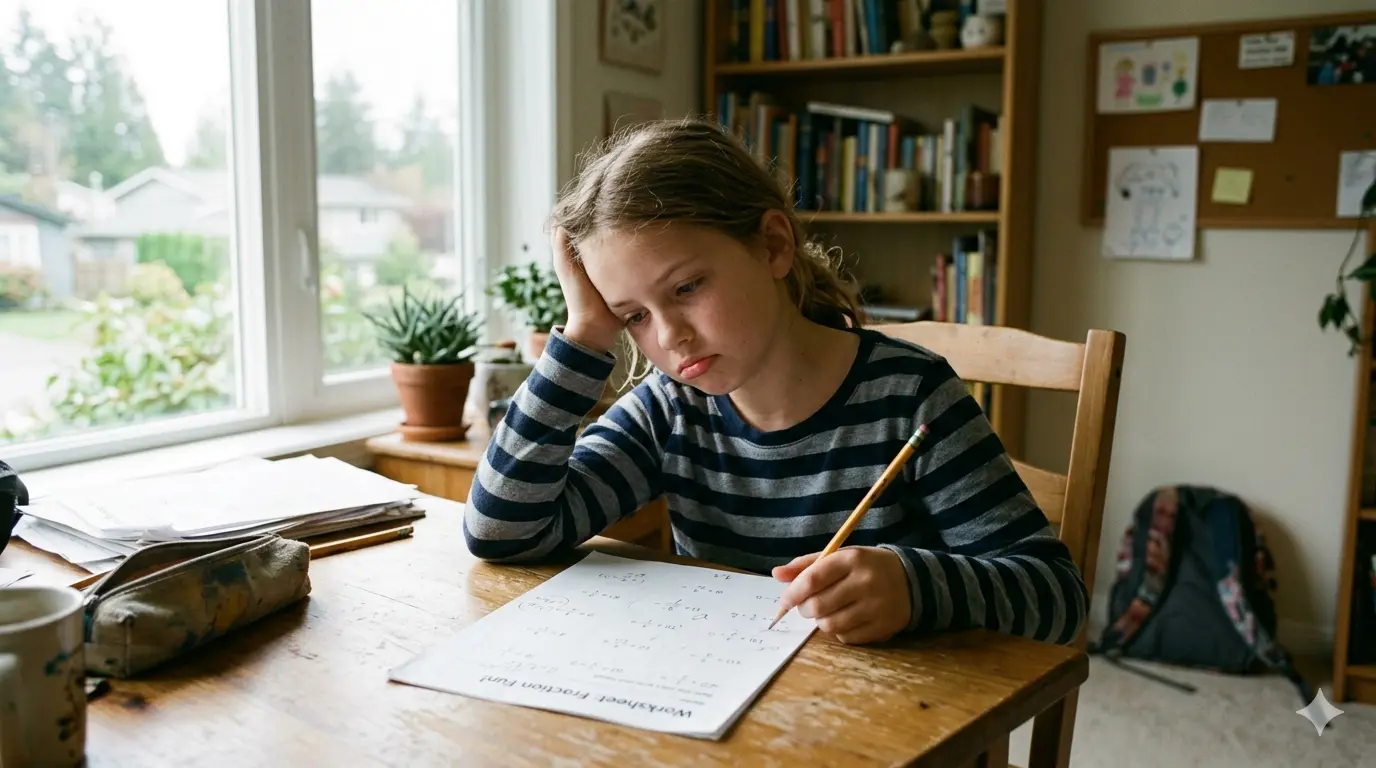
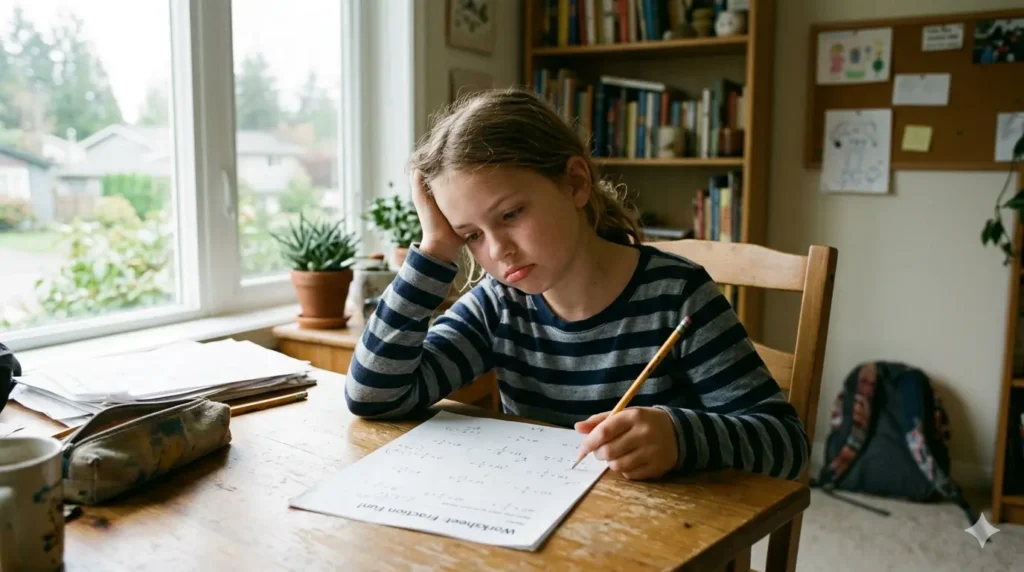
He has so much potential. If only he would apply himself. She’s brilliant but won’t do the work. These phrases are heartbreakingly common in conversations about gifted children who are not performing at expected levels. Gifted underachievement describes a significant gap between a child’s demonstrated ability and their actual academic performance. It is not laziness, defiance, or a character flaw. It is a complex pattern that often signals unmet needs—intellectual, emotional, or both. Understanding gifted underachievement is the first step toward reversing it. This guide explores why bright students struggle, the hidden factors that contribute to underachievement, and most importantly, practical, evidence-based strategies to help your gifted child re-engage with learning and develop the skills they need to succeed.
What Is Gifted Underachievement? Understanding the Gap
Gifted underachievement is typically defined as a persistent discrepancy between a child’s high potential (measured by ability tests, IQ scores, or demonstrated talents) and their actual school performance (grades, test scores, or work completion). It is not a one-time slump or a bad semester—it is a sustained pattern. Importantly, gifted underachievement is not the same as a learning disability, though the two can co-occur. A child with a learning disability cannot perform due to a skill deficit. An underachieving gifted child can perform but does not. The critical question is: why not?
Understanding this distinction is central to our pillar resource, Gifted and Talented Education: Nurturing Exceptional Potential.
Underachievement can look different in different children:
- The passive underachiever: Withdrawn, daydreaming, completing minimal work. May appear lazy or unmotivated.
- The aggressive underachiever: Acting out, disrupting class, arguing about assignments. May be labeled a behavior problem.
- The perfectionistic underachiever: Avoiding work for fear of not doing it perfectly. May not turn in anything at all.
- The selective underachiever: Excelling in areas of interest but failing in others. May be labeled as “not trying” when they are simply disengaged.
Why Gifted Children Underachieve: The Root Causes
Gifted underachievement rarely has a single cause. Instead, it emerges from a combination of school factors, home factors, and child-specific factors. Understanding these root causes is essential for effective intervention.
School Factors That Contribute to Underachievement
- Lack of intellectual challenge: When the curriculum is too easy, gifted children never learn to work hard. They coast. When they eventually face real challenge (often in middle or high school), they lack study skills and persistence.
- Repetitive or meaningless work: Endless worksheets, rote memorization, and tasks that feel like “busy work” kill motivation for gifted learners.
- Inflexible pacing: Gifted children may need to move faster through some material. Being forced to wait for peers who learn more slowly leads to boredom and disengagement.
- Negative teacher attitudes: Teachers who view giftedness as “privilege” rather than need, or who dismiss gifted children’s questions as “attention-seeking,” can push them toward underachievement.
- Lack of appropriate accommodations: Without access to gifted programming, enrichment, or acceleration, gifted children may simply tune out.
Home and Parent Factors
- Overemphasis on grades rather than learning: Children who are praised only for outcomes (grades, test scores) may develop fear of failure rather than love of learning.
- Inconsistent expectations or support: Parents who are either overly controlling or completely hands-off may contribute to underachievement.
- Family stress or trauma: Divorce, illness, financial strain, or other stressors can distract gifted children from schoolwork.
- Unrealistic pressure: Children who feel they can never be “good enough” may stop trying.
Child-Specific Factors
- Perfectionism and fear of failure: The most common cause of underachievement in gifted children. If perfect is impossible, why try at all?
- Twice-exceptionality (2e): Gifted children with undiagnosed ADHD, dyslexia, autism, or anxiety may underachieve because their disabilities are not accommodated.
- Social-emotional struggles: Anxiety, depression, or difficulty with peer relationships can drain energy and motivation for schoolwork.
- Perfectionism and fear of failure (the most common cause): If perfect is impossible, why try at all?
- Lack of self-regulation or study skills: Gifted children who have never been challenged may lack the skills to manage difficult work when it finally arrives.
If you suspect your child may be twice-exceptional, see our guide on twice-exceptional (2e) children for more information on how giftedness co-occurs with ADHD, dyslexia, and autism.
Recognizing the Signs: Is Your Child Underachieving?
Not every child who gets B’s or C’s is underachieving. Gifted underachievement is about the gap between ability and performance. Here is what to look for:
- High ability test scores but low grades: A child who scores in the 95th percentile on IQ or achievement tests but earns C’s and D’s.
- Refusal to do homework: Consistent avoidance, arguing, or “forgetting” assignments.
- Inconsistent performance: Brilliant work one day, nothing the next. Aces tests but fails projects. Engaged in some subjects, checked out in others.
- Boredom complaints: “This is stupid.” “I already know this.” “Why do we have to learn this?”
- Low self-esteem masked by attitude: Defensiveness, excuses, or blaming others for poor performance. Underneath, the child may feel incapable or hopeless.
- Erasing redoing, or refusing to turn in “imperfect” work: Signs of perfectionistic underachievement.
- Disruptive behavior or withdrawal: Acting out to avoid work or withdrawing completely.
How to Reverse Gifted Underachievement: Practical Strategies
Reversing gifted underachievement is not about punishment, pressure, or “tough love.” It is about addressing the root causes and re-engaging the child’s natural love of learning.
Strategy 1: Re-Engage Through Passion and Choice
Underachieving gifted children have often lost a sense of autonomy and purpose. Restore it.
- Build learning around their interests: A child who loves dinosaurs reads about paleontology, calculates dinosaur sizes, writes stories about dinosaur worlds. Connect school skills to passions.
- Offer meaningful choice: “You can write a report, create a diorama, or give an oral presentation.” Choice restores autonomy.
- Allow independent projects: Let them go deep on a topic of their choosing. This builds self-direction and engagement.
Strategy 2: Address the Challenge Gap
Gifted children underachieve when work is too easy or too hard. Find the “Goldilocks zone.”
- Advocate for appropriate challenge: Ask for pre-testing to skip what they already know. Request compacting (moving through material faster). Seek subject acceleration if needed.
- Provide enrichment at home: Museum trips, science kits, online courses, chess club, robotics. Keep their minds active outside of school.
- Talk to teachers: “My child is underachieving because the work isn’t challenging. Can we work together on differentiation?”
Strategy 3: Teach Missing Skills Explicitly
Many underachieving gifted children have never learned study skills, time management, or how to persist through difficulty. These skills are learned, not innate. Teach them directly.
- Break tasks into small steps: Use checklists. Set timers. “First, gather materials. Then, do problem 1. Then, take a break. Then, do problem 2.”
- Teach the difference between effort and ability: “You are smart, but smart isn’t enough. Smart plus effort gets things done.”
- Model persistence: Work alongside your child. Show them how you handle frustration. “I’m stuck on this crossword puzzle. Let me try a different strategy.”
Strategy 4: Address Perfectionism Head-On
For perfectionistic underachievers, the goal is not perfect work—it is finished work. Lower the bar to raise the ceiling.
- Set time limits on homework: “You have 20 minutes for math. Whatever is done is done. We will not spend longer.”
- Praise starting and trying, not just finishing: “You wrote the first sentence. That’s a win. Now let’s try the second sentence.”
- Use the “good enough” standard: “Is this good enough to turn in? Then let’s stop. You can make it perfect when you have more time, but for now, good enough is done.”
Strategy 5: Separate Grades from Learning
Gifted underachievers often conflate their worth with grades. Break this link.
- Focus feedback on effort, strategy, and improvement: Not “You got an A” but “I saw how you planned your essay outline before writing. That really helped.”
- Celebrate what they learned, not what they scored: “What’s one thing you know now that you didn’t know before?”
- De-emphasize grades at home: Don’t display report cards on the fridge. Don’t punish low grades. Instead, problem-solve together: “You got a C in math. What do you think made that unit hard? What would help?”
Strategy 6: Build Relationships with Teachers
Underachieving gifted children often have strained relationships with teachers. You can help repair or strengthen these connections.
- Advocate respectfully: Share your child’s interests, strengths, and challenges. Offer solutions, not complaints. “My child is passionate about space. Could you allow her to choose some space-related reading for the book report?”
- Ask teachers what they’re seeing: “What do you notice about his engagement? What times of day is he most focused? Least focused?”
- Request regular check-ins: A weekly 5-minute chat between teacher and student can rebuild connection and accountability.
Strategy 7: Consider Outside Evaluation
If underachievement persists despite your best efforts, consider a comprehensive evaluation. Gifted underachievement can mask underlying issues:
- Undiagnosed learning disabilities (dyslexia, dysgraphia, dyscalculia)
- ADHD (inattention or impulsivity interferes with performance)
- Anxiety or depression (emotional struggles drain motivation)
- Executive function deficits (organization, planning, task initiation)
An evaluation can identify these issues and lead to appropriate supports in school (IEP or 504 Plan). For a step-by-step guide, see How to Request an IEP for a Learning Disability: A Step-by-Step Parent Guide.
Frequently Asked Questions (SSS)
Q: Is underachievement always the school’s fault? Can it be?
A: No, and yes. Schools often contribute to underachievement by failing to challenge gifted learners. But underachievement can also arise from home factors, child-specific issues (perfectionism, 2e), or a mismatch between the child and the environment. The key is to avoid blame and focus on solutions—what can we change to help this child re-engage?
Q: My child underachieves only in one subject. What does that mean?
A: Selective underachievement often signals a mismatch between the child’s learning style or interests and that subject’s instruction. A child who underachieves in math but excels in reading may need a different math approach (visual, hands-on). Or they may have an undiagnosed math disability (dyscalculia). Or they may simply dislike the teacher. Investigate the specific subject to identify the root cause.
Q: Should I punish my child for underachieving?
A: No. Punishment for underachievement almost never works. It increases anxiety, damages relationships, and reinforces the child’s sense of “I’m bad at school.” Instead, approach underachievement as a problem to solve together. “We have a problem. Your grades don’t match what I know you can do. Let’s figure out what’s getting in the way and how to fix it.”
Q: Can rewards help reverse underachievement?
A> Sometimes, but carefully. External rewards (money, screen time) can work in the short term but may undermine intrinsic motivation in the long term. Use rewards sparingly and always pair them with conversations about internal satisfaction: “You finished your homework. How do you feel? Did it feel good to get it done?”
Q: When is underachievement a sign of a deeper problem?
A: When underachievement is accompanied by persistent sadness, withdrawal, anxiety, sleep changes, appetite changes, or talk of self-harm, seek professional mental health support immediately. Underachievement can be a symptom of depression or anxiety, not just academic disengagement.
Conclusion: From Underachievement to Re-Engagement
Reversing gifted underachievement is a process, not an event. It requires patience, persistence, and a willingness to look beyond surface behaviors to understand what’s really happening. The gifted child who refuses homework may be screaming, “I’m afraid I’m not good enough.” The one who acts out in class may be crying, “I’m bored and no one sees me.” The one who has withdrawn may be whispering, “I’ve given up on school caring about who I am.” Your job is not to force compliance—it is to listen, advocate, and create conditions for re-engagement. This means addressing the challenge gap, teaching missing skills, managing perfectionism, and building relationships with teachers. It means separating your child’s worth from their grades. It means believing that underachievement is reversible—and acting on that belief. With the right supports, your gifted child can discover not only their potential, but their motivation to use it.