instagram.com/SpecialKidsEducation

Communicating with autistic children at home can feel challenging for many parents and caregivers. Autism Spectrum Disorder (ASD) affects how children process language, social cues, emotions, and sensory input. As a result, traditional communication methods may not always work as expected.
Some autistic children may have limited verbal language, while others may speak fluently but struggle with understanding tone, body language, or implied meaning. These differences can lead to misunderstandings, frustration, and emotional stress within the home environment.
However, it is important to understand that autistic children do want to communicate. They may simply need different tools, approaches, and levels of support. With patience and the right strategies, families can significantly improve communication at home and build stronger emotional connections.
Understanding Communication Differences in Autism Spectrum Disorder
Autism Spectrum Disorder is characterized by a wide range of communication styles and abilities. No two autistic children communicate in exactly the same way. Some children rely heavily on visual communication, while others respond better to structured routines or repetitive language patterns.
Common communication differences in autism may include:
- Difficulty understanding abstract or figurative language
- Limited use of gestures or facial expressions
- Challenges with turn-taking in conversation
- Sensitivity to tone of voice or sensory distractions
Understanding these differences is the first step toward effective communication with autistic children at home. When parents adjust expectations and communication styles, interactions become more positive and productive.
Effective Ways to Communicate with Autistic Children at Home
Use Clear, Simple, and Direct Language
One of the most effective autism communication strategies is using clear and direct language. Many autistic children process language literally, which means indirect phrases or complex explanations can be confusing.
To support communication at home:
- Use short and specific sentences
- Give one instruction at a time
- Avoid idioms, sarcasm, or metaphors
For example, instead of saying, “Can you tidy up a bit before we sit down?”, try saying, “Put the toys in the box. Then sit at the table.”
Clear language reduces misunderstandings and helps autistic children feel more confident when responding.
Support Communication with Visual Aids and Tools
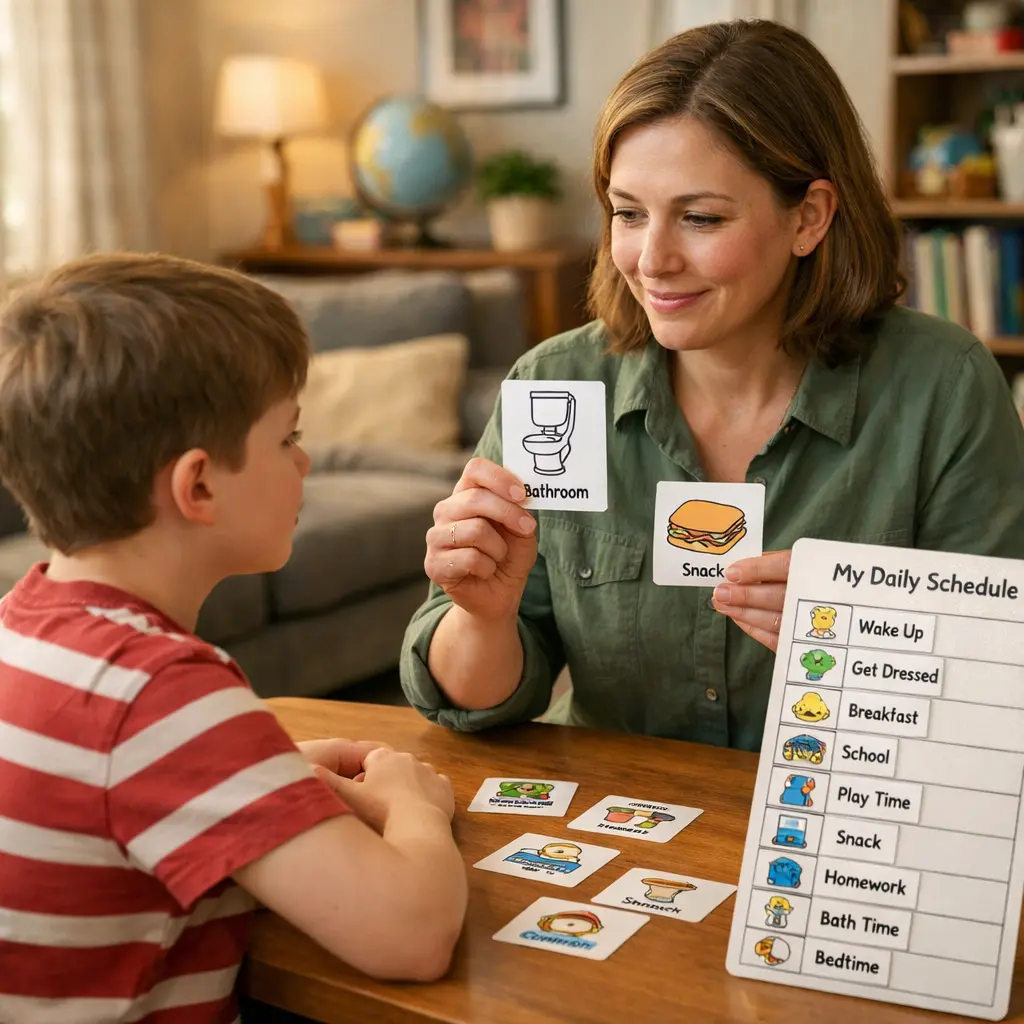
Visual supports play a critical role in communicating with autistic children at home. Many children with ASD are visual learners and understand information more easily through images rather than spoken words.
Helpful visual tools include:
- Picture schedules for daily routines
- Visual timers to indicate transitions
- Step-by-step picture cards for tasks
Using visual aids helps make expectations clear and reduces anxiety, especially during transitions between activities.
Respect Sensory Needs and Comfort Levels
Sensory sensitivities can strongly affect communication for autistic children. Loud noises, bright lights, or crowded environments may overwhelm them and make communication more difficult.
To support sensory-friendly communication:
- Reduce background noise when speaking
- Use a calm and steady tone of voice
- Allow physical space if the child needs it
Eye contact should never be forced. Some autistic children communicate better without direct eye contact, and respecting this preference helps build trust.
Build Predictable Daily Routines
Consistency and predictability are essential when communicating with autistic children at home. Daily routines provide structure and help children understand what will happen next.
Effective routine-based strategies include:
- Keeping mealtimes and bedtime consistent
- Using visual schedules for daily activities
- Giving advance notice before changes
When children feel secure in their routines, they are more open to communication and interaction.
Encourage Communication in Everyday Activities
Daily activities offer natural opportunities to practice communication skills. Cooking, playing, dressing, and cleaning can all become communication-rich moments.
You can encourage communication by:
- Naming objects and actions during activities
- Offering choices instead of yes/no questions
- Pausing to allow the child time to respond
Everyday communication builds confidence and reinforces language skills in a natural way.
Use Positive Reinforcement to Strengthen Communication
Positive reinforcement is a powerful tool for supporting autism communication strategies. When autistic children make an effort to communicate, acknowledging that effort is essential.
Examples of positive reinforcement include:
- Verbal praise
- Smiles or gestures of approval
- Access to preferred toys or activities
Reinforcing communication attempts encourages repetition and builds motivation.
Be Patient and Allow Processing Time
Many autistic children need extra time to process information and respond. Rushing communication can increase stress and reduce understanding.
Helpful approaches include:
- Waiting several seconds after asking a question
- Avoiding repeated prompts too quickly
- Accepting non-verbal responses
Allowing processing time shows respect and supports successful communication.
Adapt Communication as the Child Grows
Communication needs may change over time. What works at one stage may need adjustment later. Regularly observing and adapting strategies is important for long-term success.
Parents can:
- Observe which methods work best
- Adjust language complexity gradually
- Seek professional guidance if needed
Flexibility helps maintain effective communication at home as children develop.
Common Mistakes to Avoid When Communicating with Autistic Children
While learning how to communicate with autistic children at home, some common mistakes can unintentionally create barriers.
These include:
- Speaking too quickly or giving multiple instructions
- Assuming lack of response means lack of understanding
- Forcing eye contact or verbal responses
Avoiding these mistakes helps create a more supportive and respectful communication environment.
Strengthening Family Bonds Through Better Communication
Effective communication with autistic children at home goes beyond words. It is about understanding, patience, and connection. By using clear language, visual supports, consistent routines, and positive reinforcement, families can create an environment where autistic children feel heard and valued.
Improved communication strengthens trust, reduces frustration, and supports emotional development over time.
For a broader understanding of Autism Spectrum Disorder, characteristics, and general support approaches, you may also find our article “What Is Autism Spectrum Disorder (ASD)?” helpful.