instagram.com/SpecialKidsEducation

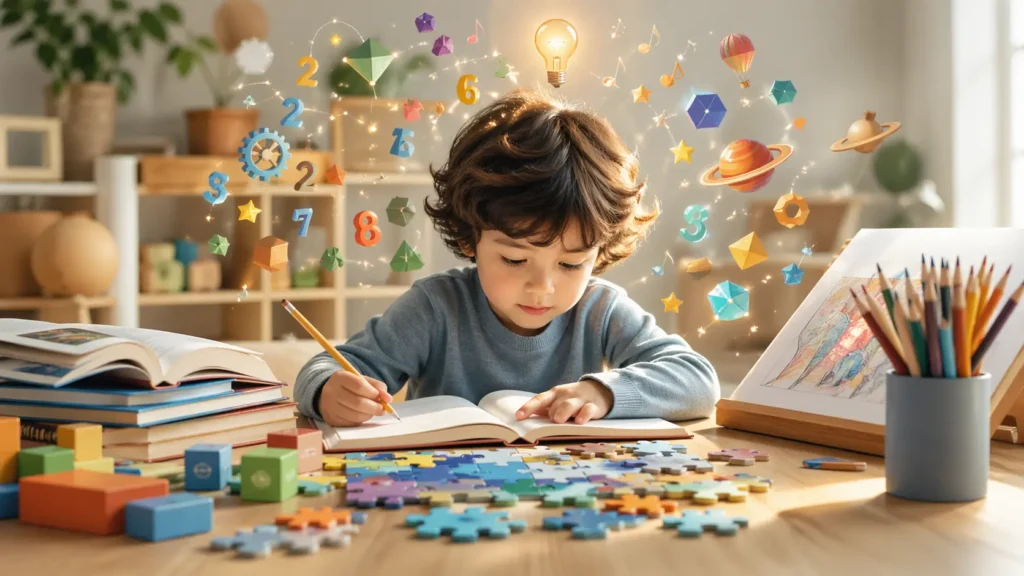
Every parent looks at their child and sees something special. But sometimes, there are signs that a child’s development is truly exceptional. Recognizing the signs of a gifted child early can make a profound difference in their educational journey and emotional well-being. Gifted children process the world differently—they may learn to read before kindergarten, ask questions that stump adults, or become intensely focused on a single topic for months. However, signs of a gifted child aren’t always obvious. Some gifted children are quiet, intense, or struggle with perfectionism. Some have learning disabilities that mask their abilities. This guide will help you understand the common signs of a gifted child across different age ranges, distinguish giftedness from simply being bright, and know when and how to seek further assessment. Whether you’re a parent just beginning to wonder or a teacher looking to better identify gifted students, this resource is for you.
What Does “Gifted” Really Mean? Understanding the Definition
Before diving into specific signs of a gifted child, it’s important to understand what giftedness actually means. Giftedness is not just about high test scores or good grades. It refers to exceptional ability in one or more areas, including intellectual, creative, artistic, or leadership capacities. Gifted children often demonstrate asynchronous development—their intellectual abilities may far outpace their emotional or social maturity. Understanding this complexity is central to our pillar resource, Gifted and Talented Education: Nurturing Exceptional Potential.
Giftedness is not a one-size-fits-all category. Some gifted children excel in math and science. Others show extraordinary verbal or artistic abilities. And some are twice-exceptional (2e)—gifted but also having a learning disability or neurodevelopmental condition like ADHD, dyslexia, or autism. Recognizing the signs of a gifted child means looking at the whole child, not just their academic performance.
Common Signs of a Gifted Child: A Developmental Overview
Giftedness manifests differently at different ages. Here are the key signs of a gifted child to look for from infancy through early elementary years.
Signs of a Gifted Child in Infancy (0-18 months)
- Extreme alertness: They seem to notice everything around them and may be difficult to soothe because they’re overstimulated.
- Early language development: Babbling early, using complex sentences sooner than peers, or speaking in full sentences by 12-14 months.
- Intense curiosity: They examine objects with unusual focus and seem to want to figure out how things work.
- Long attention span for age: They may focus on a single toy, book, or person for much longer than expected.
- Early recognition of patterns and faces: They may smile at familiar faces unusually early or show awareness of routines.
Signs of a Gifted Child in Toddlerhood (18 months – 3 years)
- Advanced vocabulary and sentence structure: Using words like “actually,” “because,” or “perhaps” well before peers.
- Early reading or number sense: Recognizing letters, numbers, or even words without explicit instruction.
- Asking complex questions: “Why is the sky blue?” “Where does the sun go at night?” “How do birds fly?”
- Strong memory: Remembering details from books read weeks ago or events that happened months earlier.
- Intense interests: Becoming obsessed with a single topic (dinosaurs, trains, space, animals) for extended periods.
- Understanding abstract concepts: Grasping ideas like time (yesterday, tomorrow), humor, or fairness earlier than peers.
Signs of a Gifted Child in Preschool (3-5 years)
- Reading independently: Many gifted children teach themselves to read before kindergarten.
- Deep curiosity and endless questions: They want to know not just “what” but “how” and “why.”
- Creative problem-solving: Finding unusual solutions to problems or using materials in innovative ways.
- Strong sense of justice: Becoming upset by unfairness, whether real or perceived.
- Advanced sense of humor: Understanding and creating puns, jokes, or wordplay beyond their years.
- Perfectionism: Becoming frustrated when they can’t do something perfectly the first time.
- Preferring older playmates or adults: They may find same-age peers boring or immature.
Signs of a Gifted Child in Early Elementary (5-8 years)
- Rapid learning: They grasp new concepts quickly, often needing only one or two repetitions.
- Deep knowledge in specific areas: They know far more about their interests than most adults.
- Advanced reading and writing: Reading several grade levels ahead and writing complex stories or reports.
- Intense focus (flow state): They can concentrate on a topic of interest for hours, losing track of time.
- Questioning rules and authority: They may challenge teachers or parents because they see alternative possibilities.
- Emotional intensity: They feel things deeply—joy, sadness, anger, frustration—and may overreact to minor events.
- Empathy and moral sensitivity: They show concern for others and become upset by world events or injustice.
- Asynchronous development: They may be reading at a 5th-grade level but have tantrums like a younger child.
Gifted vs. Bright: Understanding the Difference
One of the most useful frameworks for recognizing signs of a gifted child is understanding the difference between a bright child and a gifted child. Both are wonderful, but they learn differently.
| Bright Child | Gifted Child |
|---|---|
| Knows the answers | Asks the questions |
| Is interested | Is highly curious |
| Pays attention | Mentally engaged; may seem to daydream |
| Works hard | May not need to work hard; learns easily |
| Answers questions | Questions the answers |
| Top group | Beyond the group |
| Listens with interest | Shows strong feelings and opinions |
| Learns with ease | Already knew—needs more depth |
This comparison helps parents and teachers recognize that the signs of a gifted child often include not just academic excellence but a fundamentally different way of thinking and learning.
When Giftedness Hides: Twice-Exceptional (2e) Children
Not all signs of a gifted child are easy to spot. Some gifted children also have learning disabilities or neurodevelopmental conditions like ADHD, dyslexia, or autism. These children are called twice-exceptional (2e). Their giftedness may mask their disability, or their disability may mask their giftedness. As a result, many 2e children are never identified as gifted—or are identified only for their struggles.
Common 2e profiles include:
- Gifted with ADHD: Highly creative and curious but struggles with focus, organization, and impulse control.
- Gifted with dyslexia: Advanced verbal abilities and reasoning but poor decoding and spelling.
- Gifted with autism: Intense focus on specific topics, strong memory, but difficulty with social communication.
- Gifted with anxiety or perfectionism: High intellectual ability but paralyzed by fear of making mistakes.
If a child shows some signs of a gifted child but also struggles significantly in other areas, a 2e evaluation is worth considering. For more on this topic, see our guide on twice-exceptional (2e) children.
Misdiagnosis: When Giftedness Looks Like Something Else
One of the most important reasons to recognize the signs of a gifted child is to prevent misdiagnosis. Gifted behaviors can look like disorders—but they aren’t the same.
- Intensity and sensitivity can look like anxiety or depression.
- Questioning rules and boredom can look like oppositional defiant disorder (ODD).
- High energy and curiosity can look like ADHD.
- Deep focus on interests can look like autism (when it’s actually typical for gifted children).
- Asynchronous development (advanced intellect, younger emotions) can look like emotional immaturity or behavioral problems.
If a child shows the signs of a gifted child but also seems to struggle with behavior, attention, or emotions, a thorough evaluation by a professional experienced with giftedness is essential. Misdiagnosis leads to inappropriate treatments and missed opportunities for the right kind of support.
When and How to Seek Assessment
If you recognize the signs of a gifted child in your own child and want confirmation or educational planning, here’s where to start.
- First, talk to your child’s teacher. Do they see the same signs? What enrichment is already available?
- Request a gifted evaluation through your school district. Many public schools offer testing for gifted programs. However, these tests often focus on academic achievement and may miss giftedness in 2e children or those who are underachieving.
- Seek a private evaluation with a psychologist experienced in giftedness. A full IQ test (like the WISC-V) can identify giftedness and also identify learning disabilities or other conditions that might be masking abilities.
- Look for a professional familiar with twice-exceptionality. If you suspect your child may be 2e, finding an evaluator who understands both giftedness and learning disabilities is critical.
Assessment is not about labeling your child—it’s about understanding how they learn so you can advocate for appropriate educational opportunities.
Frequently Asked Questions (SSS)
Q: At what age can you identify a gifted child?
A: Some signs of a gifted child can be seen in infancy—extreme alertness, early language, intense curiosity. However, reliable testing is usually not recommended before age 4-5. Many gifted programs begin identification in kindergarten or first grade.
Q: My child showed early signs but now seems average. Could I have been wrong?
A> Giftedness doesn’t disappear, but it can be masked. A child who entered school reading at a 3rd-grade level may seem “average” if they’re in a classroom where no one knows they can read at that level. Boredom, lack of challenge, or social pressure to fit in can also cause gifted children to hide their abilities. If you saw early signs of a gifted child, they’re likely still there—just not being expressed.
Q: What if my child shows some signs but not others?
A: Giftedness is not a checklist where every box must be checked. Some gifted children are verbally advanced but average in math. Some are intensely creative but not early readers. Some are deeply empathetic and emotionally intense but don’t have remarkable memory. Look for a pattern of advanced ability, curiosity, intensity, or asynchronous development—not perfection in every area.
Q: My child seems bored at school. Does that mean they’re gifted?
A: Boredom can be a sign of giftedness, but it can also be caused by other factors—learning disabilities, attention challenges, social issues, or a poor fit with teaching style. Boredom alone is not enough. But when boredom is paired with other signs of a gifted child—rapid learning, deep curiosity, advanced vocabulary—it’s worth exploring further.
Q: Should I tell my child they are gifted?
A: Yes, but carefully. The goal is not to create pressure or arrogance but to help them understand themselves. “You have a brain that learns really quickly in some areas. That’s wonderful, but it also means you might need different challenges than some other kids. Everyone has strengths and areas where they need to grow.” Focus on their effort, curiosity, and love of learning—not on their label.
Conclusion: Recognizing Signs Is the First Step to Support
Learning to recognize the signs of a gifted child is not about boasting or labeling. It’s about understanding. Gifted children think differently, feel differently, and learn differently. Without the right support, they can become bored, frustrated, or withdrawn. They may underachieve, act out, or hide their abilities to fit in. But with recognition and appropriate challenge, they can flourish. If you see these signs of a gifted child in your own child, trust your instincts. Seek information. Ask for evaluation. Advocate for the opportunities your child needs—not because they are “better” than others, but because every child deserves to learn in a way that matches their unique mind. Recognizing exceptional potential is the first step toward nurturing it.