instagram.com/SpecialKidsEducation

For many children with an intellectual disability, the world can feel unbearably intense. Understanding and managing sensory overload in intellectual disability is therefore not a niche concern—it’s a fundamental aspect of daily care that can dramatically improve behavior, learning, and emotional well-being. This guide is designed to demystify this overwhelming experience. We will explore the neuroscience behind the overlap, teach you to recognize the unique signs and triggers in your child, and provide you with seven practical, proven calming strategies for home that you can implement today to create a safer, more regulated environment.
The Overlooked Link: Why Sensory Overload is Common in Intellectual Disability
Sensory overload in intellectual disability is far from coincidental; it’s a frequent and impactful co-occurrence. Many genetic syndromes that cause intellectual disability (like Down syndrome, Fragile X, or Williams syndrome) also affect how the brain processes sensory information. This can lead to a stand-alone diagnosis of Sensory Processing Disorder (SPD). Essentially, the brain’s neurological “filter” works differently, making it harder to tune out background noise, ignore clothing textures, or process bright lights. This constant bombardment can lead to meltdowns, withdrawal, or challenging behaviors that are often misinterpreted. Recognizing this link is the first step in moving from managing symptoms to addressing their root cause, a shift in perspective that aligns with our holistic approach in the pillar article, Understanding Intellectual Disability: Causes, Signs, and Support Strategies.
Decoding the Signs: How Overload Manifests
A child experiencing sensory overload may not have the words to explain it. Their behavior is their communication. Signs can be categorized as “fight, flight, or freeze” responses:
- Fight/Protest: Crying, screaming, hitting, throwing things, aggression.
- Flight/Avoidance: Covering ears or eyes, running away, hiding, attempting to escape a situation.
- Freeze/Shutdown: Becoming very still, non-responsive, seeming to “zone out,” or falling asleep suddenly.
It’s crucial to observe what happens before a meltdown. Early warning signs might include increased stimming (rocking, hand-flapping), irritability, anxiety, or verbal protests like “too loud.” These signs of distress are a direct plea for help in managing sensory overload.
Mapping the Triggers: A Room-by-Room Guide
To prevent overload, you must become a detective of your child’s triggers. These vary greatly but often fall into predictable categories. Here’s a guide to recognizing triggers in common home environments:
Auditory & Visual Triggers
- Kitchen/Living Room: Blender, vacuum cleaner, multiple people talking, clattering dishes, TV volume, flickering fluorescent lights, ceiling fans, cluttered tabletops.
- Bathroom: Hand dryer, flushing toilet, echoing sounds, harsh bathroom lighting.
Tactile, Olfactory & Proprioceptive Triggers
- Bedroom/Clothing: Tags on shirts, seams in socks, certain fabric textures (wool, polyester), tight waistbands. This can make dressing a daily battle, related to the need for adaptive life skills for teens as they grow.
- Whole Home: Strong cleaning product smells, cooking odors, unexpected light touch, messy hands, feeling unstable (e.g., on high furniture).
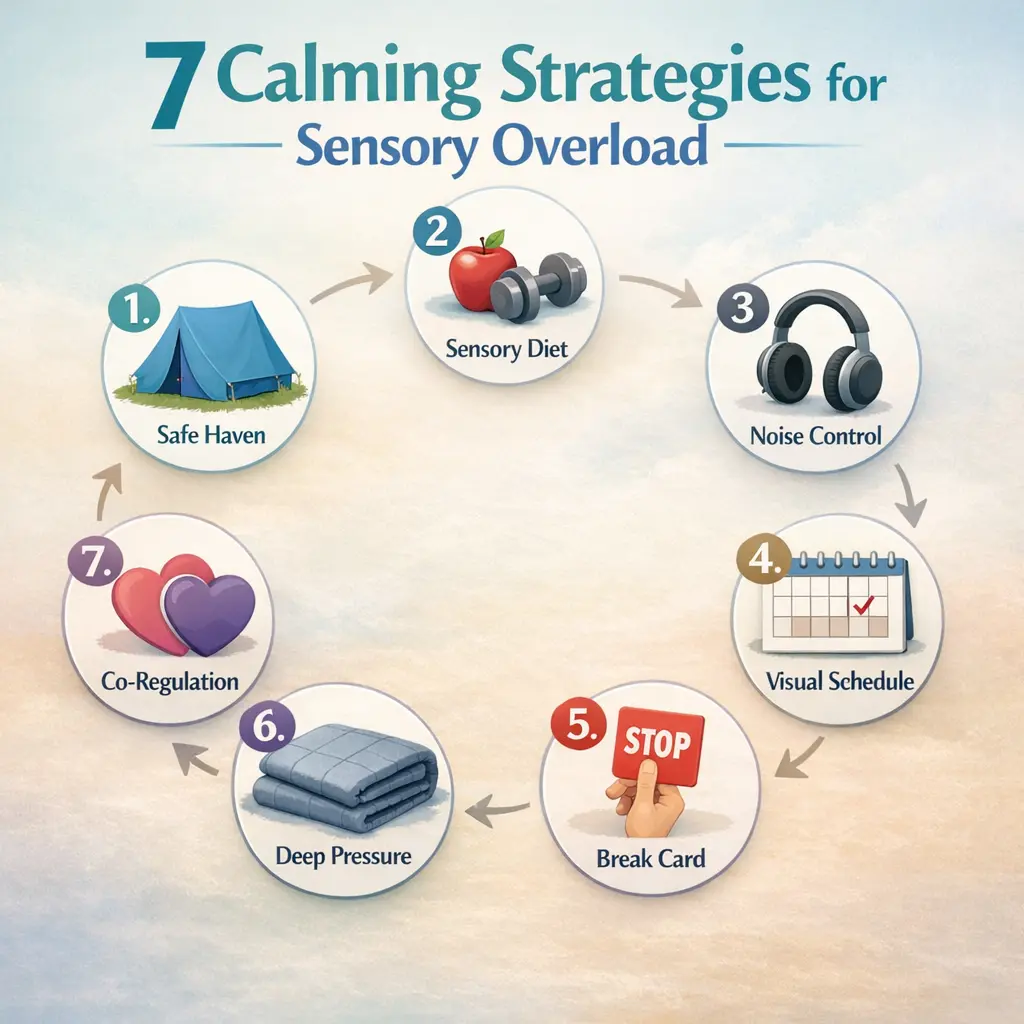
Your Action Plan: 7 Calming Strategies for Home
Knowledge is power, but action brings change. Here are seven actionable calming strategies for home to help your child find their equilibrium.
1. Co-Create a Sensory Safe Haven: This is non-negotiable. Dedicate a corner of a quiet room as a “calm down” space. Equip it with a beanbag chair, weighted blanket, dimmable lamp, and a few preferred fidget toys. This gives your child a predictable retreat they can use before reaching crisis point.
2. Implement a “Sensory Diet” with an OT: Work with an Occupational Therapist to build short, scheduled sensory activities into the day. This “diet” might include heavy work like carrying laundry, wall push-ups, or chewing crunchy snacks, which provides organizing input to the nervous system and proactively regulates it.
3. Master Environmental Modifications: Take control of the input. Use blackout curtains, replace humming light bulbs with warm LEDs, and provide high-quality noise-reducing headphones. Label drawers with clothes textures to let your child choose what feels okay.
4. Use Visual Schedules and Social Stories: Predictability reduces anxiety. A visual schedule prepares your child for potentially triggering transitions (like bath time). A social story can explain what sensory overload feels like and what they can do, fostering self-awareness.
5. Teach and Use a “Break” Card: Empower non-verbal or minimally verbal children with a way to communicate their need to escape. A simple picture card for “break” or “help” honors their communication, a principle central to all development, as discussed in our guide on Improving Communication for Nonverbal Children.
6. Practice Deep Pressure Therapy: Firm, steady pressure is often calming. This can be a tight hug (if consented to), rolling a therapy ball over their back while they lie down, or snuggling under a weighted blanket. This input signals the nervous system to shift from “alert” to “calm.”
7. Lead with Co-Regulation: Your calm is contagious. When you see signs of escalation, slow your own movements and lower your voice. Sit nearby quietly, breathe deeply, and model regulation. Avoid flooding them with questions or touch. Simply state, “It’s okay. I’m here. We can make it quieter.”
Collaborating with Professionals: The OT’s Role
While home strategies are powerful, the guidance of a pediatric Occupational Therapist (OT) is transformative. An OT can:
- Conduct a comprehensive sensory assessment to create your child’s unique profile.
- Design a personalized sensory diet and calming strategies plan.
- Recommend specific tools and environmental modifications.
- Provide direct therapy to help your child develop self-regulation skills.
Seeking OT support is a proactive step toward managing sensory overload in intellectual disability effectively.
Conclusion: Building a Sensory-Smart Home and Future
Navigating sensory overload in intellectual disability is a journey of attentive observation, creative adaptation, and deep empathy. By learning to recognize the subtle signs, systematically identifying triggers, and consistently applying these seven calming strategies for home, you do more than prevent meltdowns. You build a “sensory-smart” environment that respects your child’s neurology, reduces their daily distress, and frees up their cognitive and emotional energy for learning, connection, and joy. This proactive approach is the ultimate tool for fostering a sense of safety and well-being, empowering your child to engage with the world from a place of greater regulation and confidence.