instagram.com/SpecialKidsEducation

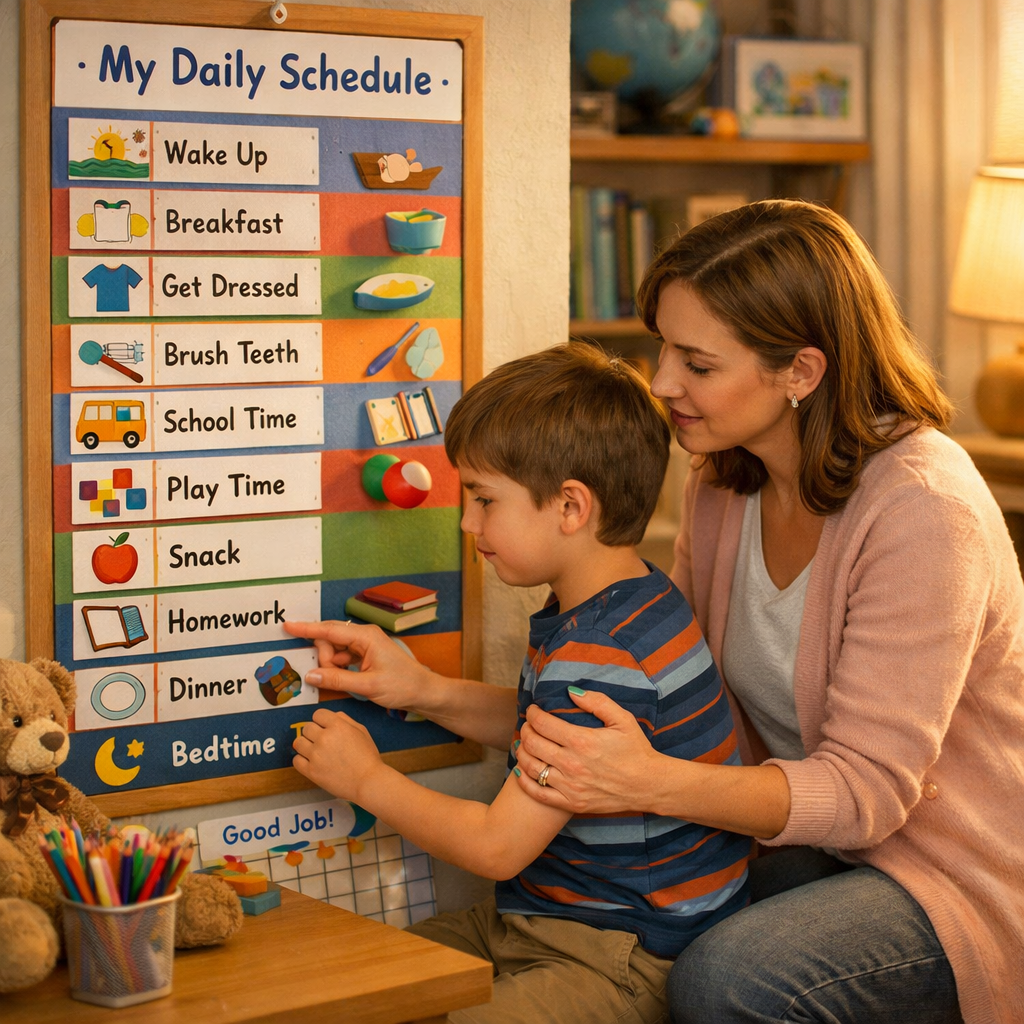
Why Daily Routines Are Important for Children with Autism
In this article about daily routines for children with autism, we will try to address the topic comprehensively.
Daily routines play a crucial role in the lives of children with Autism Spectrum Disorder (ASD). Many autistic children experience the world as unpredictable and overwhelming. Changes in environment, expectations, or activities can create anxiety and stress, making daily life challenging.
A consistent routine provides structure and predictability. When children know what to expect, they feel safer and more secure. This sense of security supports emotional regulation, communication, and learning at home.
For families, routines also reduce daily conflicts and misunderstandings. Clear structure benefits not only the child with autism but the entire household.
How Autism Affects a Child’s Need for Structure
Children with autism often process information differently from neurotypical children. Sensory sensitivities, communication differences, and difficulty with transitions can make unstructured environments overwhelming.
Structure helps by:
- Reducing uncertainty
- Supporting emotional regulation
- Making expectations clear
Daily routines act as a guide, helping children understand what comes next and how to respond. This clarity improves cooperation and reduces stress-related behaviors.
Benefits of Daily Routines for Children with Autism
Emotional Security and Reduced Anxiety
One of the most significant benefits of daily routines for children with autism is emotional stability. Predictable schedules help children feel in control of their environment.
When routines are consistent:
- Anxiety levels decrease
- Emotional outbursts may become less frequent
- Children feel safer exploring and learning
This emotional security is the foundation for positive development.
Improved Communication and Social Interaction
Routines naturally create repeated opportunities for communication. Daily activities such as meals, playtime, and bedtime provide predictable moments for interaction.
Through routines:
- Children learn functional communication
- Language becomes more meaningful
- Social expectations become clearer
Consistent routines support communication development at a comfortable pace.
Easier Transitions Between Activities
Transitions can be particularly challenging for children with autism. Moving from one activity to another without warning may cause distress.
Routines help by:
- Preparing children mentally for change
- Reducing resistance during transitions
- Encouraging cooperation
When children know what is coming next, transitions become smoother and less stressful.
Creating Effective Daily Routines at Home
Start With Simple and Realistic Schedules
When creating daily routines for children with autism, simplicity is key. Overly complex schedules can be confusing and difficult to maintain.
Helpful tips include:
- Focus on essential daily activities
- Keep routines consistent each day
- Avoid unnecessary changes
Starting small allows children to adapt gradually and successfully.
Use Visual Schedules to Support Routines
Visual schedules are one of the most effective tools for supporting daily routines for children with autism. Many autistic children understand visual information better than verbal instructions.
Examples of visual supports:
- Picture schedules
- Charts with symbols or icons
- Step-by-step visual routines
Visual schedules make routines more concrete and easier to follow.
Build Routines Around the Child’s Strengths
Every child with autism has unique strengths and preferences. Building routines around these strengths increases cooperation and engagement.
Consider:
- Preferred activities as motivation
- Natural energy levels throughout the day
- Sensory preferences
A personalized routine is more likely to succeed than a rigid, one-size-fits-all approach.
Key Daily Routines to Focus On
Morning Routines
Morning routines set the tone for the entire day. A predictable morning helps children transition from sleep to daily activities more comfortably.
Effective morning routines may include:
- Waking up at the same time
- Dressing with visual guidance
- Eating breakfast in a calm environment
Consistency in the morning reduces stress and supports positive behavior throughout the day.
Mealtime Routines
Mealtimes can be challenging due to sensory sensitivities or food preferences. Structured mealtime routines help create a calm and predictable experience.
Helpful strategies include:
- Eating meals at consistent times
- Using the same seating arrangement
- Limiting distractions during meals
Routine mealtimes support independence and reduce anxiety.
Play and Learning Routines
Play is a vital part of development. Structured play routines help children understand expectations while still allowing creativity.
Play routines may include:
- Scheduled playtimes
- Clear beginning and ending signals
- Consistent play environments
These routines support learning, communication, and social skills.
Bedtime Routines
Bedtime routines are especially important for children with autism. Predictable bedtime schedules promote better sleep and emotional regulation.
Effective bedtime routines often include:
- A consistent bedtime
- Calming activities before sleep
- Reduced screen time
A structured bedtime routine helps children relax and prepare for rest.
Supporting Flexibility Within Structure
While routines are important, flexibility is also necessary. Children with autism can learn to adapt to small changes over time.
To support flexibility:
- Introduce changes gradually
- Explain changes using visuals
- Offer reassurance and support
Balancing structure with flexibility helps children build coping skills.
Common Challenges When Establishing Routines
Resistance to New Routines
Some children may resist changes, even when routines are beneficial. This resistance is often a response to uncertainty.
To reduce resistance:
- Introduce routines slowly
- Involve the child when possible
- Reinforce positive participation
Patience and consistency are essential during this process.
Maintaining Consistency Over Time
Maintaining daily routines can be challenging for families. Life events, schedules, and fatigue can disrupt routines.
Helpful strategies include:
- Prioritizing key routines
- Allowing flexibility when needed
- Returning to routines after disruptions
Consistency over time matters more than perfection.
How Daily Routines Support Long-Term Development
Daily routines do more than organize the day. They support long-term development by:
- Encouraging independence
- Improving self-regulation
- Supporting communication growth
Over time, routines help children with autism navigate daily life more confidently.
Daily Routines as a Foundation for Family Life
Daily routines create a sense of harmony within the home. When expectations are clear and predictable, families experience fewer conflicts and more positive interactions.
For children with autism, routines provide the stability needed to grow, learn, and thrive in a supportive environment.
For additional guidance on supporting communication at home, you may also find our article “Effective Ways to Communicate with Autistic Children at Home” helpful.