instagram.com/SpecialKidsEducation
Best Home Activities to Improve Speech and Language Skills in Children are often the first thing parents search for when they want practical ways to support communication development at home. Understanding the best home activities to improve speech and language skills in children helps families move from worry to action. When parents consistently use the best home activities to improve speech and language skills in children, they create daily learning opportunities that strengthen vocabulary, articulation, comprehension, and confidence.
Communication development does not happen only in therapy sessions or classrooms. The home environment plays a powerful role in shaping speech clarity, sentence formation, and listening skills. The good news is that improving communication does not require expensive tools or professional training. Simple, structured activities integrated into daily routines can significantly enhance speech and language growth.
Why Home Activities Matter for Communication Development
Children learn language through repetition, interaction, and meaningful experiences. The best home activities to improve speech and language skills in children are those that encourage conversation, listening, and expressive practice in natural settings.
Benefits of consistent home-based communication practice include:
- Expanded vocabulary
- Improved sentence structure
- Better listening skills
- Increased speech clarity
- Greater confidence during conversation
When practiced regularly, these activities reinforce skills learned in therapy or school environments.
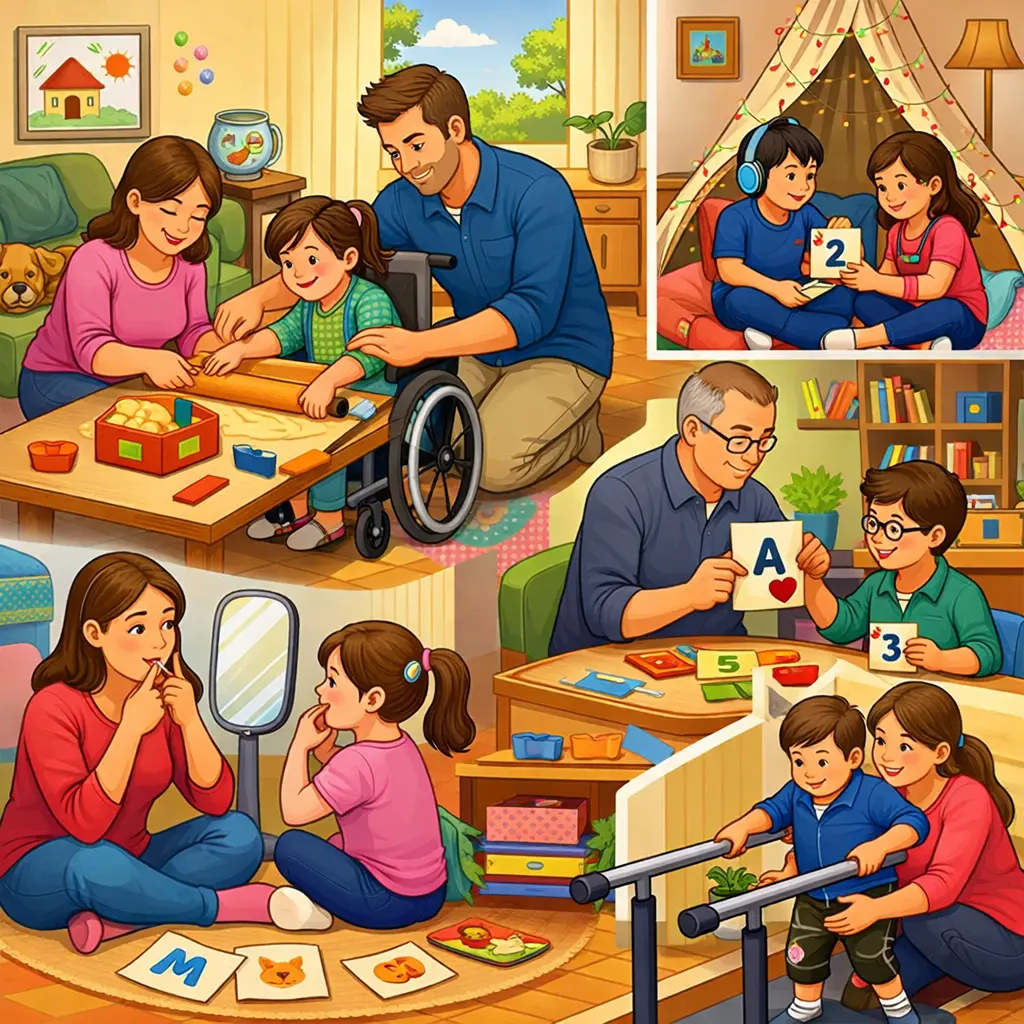
1. Daily Reading and Picture Discussion
Reading aloud is one of the best home activities to improve speech and language skills in children because it combines vocabulary exposure, listening comprehension, and conversational turn-taking.
How to Make Reading Interactive
- Pause and ask open-ended questions
- Point to pictures and label objects
- Encourage the child to describe what they see
- Expand on short responses
For example, if a child says “dog,” you can respond, “Yes, the dog is running fast in the park.”
This expansion technique strengthens expressive language development.
2. Turn-Taking Conversation Games
Conversation is a skill that develops with practice. Structured turn-taking games encourage children to wait, respond, and initiate speech.
Simple Turn-Taking Activities
- Rolling a ball back and forth
- Playing board games
- Using question-and-answer cards
- “My turn, your turn” storytelling
These activities help improve both speech clarity and conversational flow.
The best home activities to improve speech and language skills in children always include back-and-forth interaction.
3. Sound Practice Through Play
For children working on articulation, playful sound practice is highly effective.
Examples of Sound-Based Activities
- Practicing target sounds in front of a mirror
- Playing “I Spy” using specific beginning sounds
- Repeating rhymes that emphasize certain phonemes
- Sorting objects by initial sounds
Short, focused practice sessions (5–10 minutes) are more effective than long drills.
4. Expanding Everyday Conversations
Routine moments create powerful language opportunities.
Use Daily Routines to Encourage Speech
- Talk through cooking steps
- Describe what you are doing while cleaning
- Ask prediction questions during errands
- Encourage children to explain their choices
Instead of yes/no questions, use prompts like:
- “Why do you think that happened?”
- “What do we need next?”
The best home activities to improve speech and language skills in children are often built into natural daily routines.
5. Storytelling and Sequencing Activities
Narrative skills support both language structure and comprehension.
Ways to Practice Storytelling
- Retell events from the day
- Arrange picture cards in order
- Create short imaginative stories together
- Use “first, next, last” prompts
Sequencing strengthens logical thinking and sentence formation.
6. Singing and Rhythm-Based Activities
Music supports memory, sound awareness, and vocabulary growth.
Why Singing Works
- Repetition strengthens retention
- Rhythm improves fluency
- Songs build phonological awareness
Nursery rhymes and repetitive songs are among the best home activities to improve speech and language skills in children because they combine fun and learning.
7. Pretend Play for Language Growth
Imaginative play naturally encourages expressive language.
Pretend Play Ideas
- Playing “restaurant” or “doctor”
- Creating shopping scenarios
- Acting out storybook characters
Role-play builds vocabulary and social communication skills.
8. Following Multi-Step Directions
Listening comprehension improves when children practice following structured directions.
Try This Activity
Give simple instructions like:
- “Pick up the red ball and put it on the chair.”
- “Clap your hands and then jump once.”
Gradually increase complexity as skills improve.
9. Descriptive Language Challenges
Encourage children to describe objects without naming them.
Example:
- “It’s round, red, and grows on trees.”
This strengthens vocabulary retrieval and sentence structure.
10. Visual Supports at Home
Visual cues reinforce language comprehension.
Examples of Visual Supports
- Picture schedules
- Labeled household objects
- Emotion charts
- Choice boards
Visual reinforcement improves understanding and reduces frustration.
How Often Should Parents Practice?
Consistency matters more than duration.
- 10–15 minutes daily is effective
- Spread practice across the day
- Keep activities playful
- Avoid pressure or correction overload
The best home activities to improve speech and language skills in children are effective because they feel natural rather than forced.
Age-Specific Home Activities for Speech and Language Growth
When applying the best home activities to improve speech and language skills in children, it is important to consider age and developmental level. The same activity should not be used in the same way for a toddler and a school-aged child. Adjusting difficulty ensures steady progress.
For Toddlers (1–3 Years)
At this stage, communication development focuses on vocabulary building and imitation.
Effective activities include:
- Naming everyday objects repeatedly
- Encouraging imitation of simple sounds
- Using gesture-supported speech
- Singing repetitive nursery rhymes
- Practicing animal sounds and simple words
Short, playful repetition is key. The best home activities to improve speech and language skills in children at this age are highly interactive and visually supported.
For Preschoolers (3–5 Years)
Preschool children benefit from activities that expand sentence structure and storytelling ability.
Try:
- “Tell me about your day” prompts
- Sequencing picture cards
- Expanding simple sentences into longer ones
- Playing category games (e.g., name 3 animals)
- Describing objects with multiple attributes
At this stage, language complexity should gradually increase.
For Early School-Age Children
For older children, the focus shifts toward comprehension, conversation, and academic language.
Helpful activities include:
- Retelling stories with details
- Explaining how to complete tasks
- Discussing cause and effect
- Practicing new vocabulary from school
- Playing word association games
Tailoring activities by age ensures the best home activities to improve speech and language skills in children remain effective and engaging.
Common Mistakes to Avoid During Home Practice
While using the best home activities to improve speech and language skills in children, parents sometimes unintentionally create pressure or reduce effectiveness. Avoiding common mistakes makes home practice more productive.
Mistake 1: Overcorrecting Constantly
Correcting every sound error can reduce confidence. Instead of saying “No, that’s wrong,” model the correct pronunciation naturally.
Example:
Child: “I see a wabbit.”
Parent: “Yes, you see a rabbit!”
Modeling is more effective than repeated correction.
Mistake 2: Turning Practice Into a Test
Communication activities should feel like interaction, not evaluation.
Avoid:
- Rapid-fire questioning
- Demanding perfect answers
- Long drilling sessions
The best home activities to improve speech and language skills in children should feel playful and supportive.
Mistake 3: Practicing Too Long
Short sessions are more effective than extended practice.
Recommended structure:
- 5–10 minutes for toddlers
- 10–15 minutes for preschoolers
- Multiple short sessions throughout the day
Consistency matters more than duration.
Mistake 4: Ignoring Comprehension
Parents sometimes focus only on pronunciation. However, comprehension and vocabulary growth are equally important.
Balance practice between:
- Listening skills
- Expressive language
- Sound clarity
When families avoid these mistakes, the best home activities to improve speech and language skills in children become more effective and sustainable.
When Home Activities Are Not Enough
While home support is powerful, some children may require professional intervention.
Parents should consider evaluation if:
- Speech remains difficult to understand beyond age expectations
- Vocabulary growth is minimal
- The child struggles to follow simple directions
- Frustration during communication increases
For foundational guidance on communication disorders and early intervention, see:
Speech and Language Disorders in Children: Early Intervention Matters
Best Home Activities to Improve Speech and Language Skills in Children: Final Thoughts
Best Home Activities to Improve Speech and Language Skills in Children provide parents with practical, structured tools to strengthen communication development. When families consistently use the best home activities to improve speech and language skills in children, they build vocabulary, improve articulation, and support comprehension in everyday moments. Integrating the best home activities to improve speech and language skills in children into daily routines empowers children to grow confident communicators in supportive home environments.