instagram.com/SpecialKidsEducation
Autism Spectrum Disorder (ASD) is one of the most widely discussed developmental conditions today, yet it is often misunderstood. Some parents may confuse autism with behavioral issues, while others may believe outdated myths that no longer reflect scientific knowledge. Understanding the facts, recognizing early signs, and learning how to provide effective support can help children with ASD thrive both at home and in school.
What Is Autism Spectrum Disorder?
Autism Spectrum Disorder is a developmental condition that affects how a person communicates, interacts with others, and experiences the world around them. The word “spectrum” is used because autism can look very different from one child to another—some children may require significant support in daily life, while others may live independently with minimal assistance.
Key features of ASD often include:
- Challenges in social communication and interaction.
- Repetitive behaviors or restricted interests.
- Sensory sensitivities (to sound, light, textures, or smells).
Each child with autism is unique. For example, one child might speak fluently but struggle to make eye contact, while another may be nonverbal but highly skilled in problem-solving tasks. Recognizing this diversity is essential in providing appropriate support.
Breaking Down Common Myths
Unfortunately, autism is surrounded by misinformation. Let’s address a few common myths:
- Myth: Autism is caused by bad parenting.
Fact: Autism is a neurological condition with genetic and biological factors. Parenting does not cause autism. - Myth: All autistic children have intellectual disabilities.
Fact: Many children with autism have average or above-average intelligence. Some are even gifted in specific areas. - Myth: Autism can be “cured.”
Fact: Autism is not a disease to be cured, but a condition that can be supported through therapies, education, and acceptance.
By understanding the truth, families and communities can reduce stigma and build acceptance. For example, when classmates are taught accurate information about autism, bullying decreases and friendships increase.
The Importance of Early Diagnosis
Research shows that early detection and intervention can greatly improve developmental outcomes. Signs of autism can sometimes appear before age two.
Early signs may include:
- Limited eye contact or lack of response to name.
- Delayed speech or unusual language patterns (such as repeating phrases).
- Strong attachment to routines and difficulty adapting to change.
- Intense focus on specific interests or objects.
Parents who notice these signs should seek evaluation from developmental specialists. Early access to speech therapy, occupational therapy, and behavioral support can significantly enhance learning and communication skills.
Example: A toddler who shows little interest in playing with other children but spends hours spinning toy wheels may benefit from early intervention programs that encourage social play and language development.
Practical Support at Home and School
Children with ASD benefit most from structured, supportive environments tailored to their needs. Practical strategies include:
- Visual Schedules and Routines
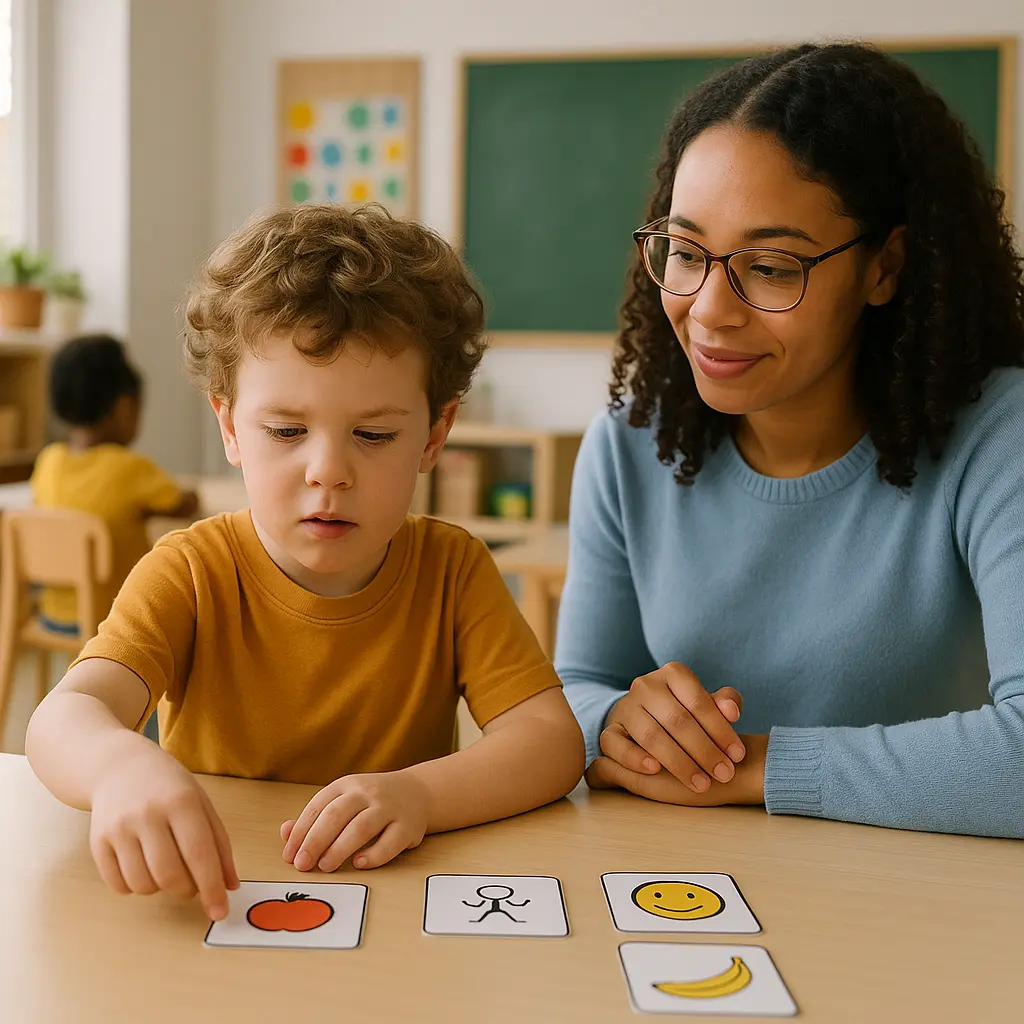
Predictable daily schedules reduce anxiety and help children understand what to expect. Parents might use picture cards showing activities like breakfast, playtime, and bedtime. - Clear and Simple Communication
Using short, direct sentences and visual cues makes communication easier. Teachers can pair spoken instructions with gestures or written notes. - Positive Reinforcement
Celebrating progress and rewarding desired behaviors encourages growth and confidence. Even small achievements—like trying a new food—should be acknowledged. - Sensory-Friendly Adaptations
Providing quiet spaces, reducing noise, or offering sensory tools like fidget toys can help children regulate emotions. - Peer Support and Inclusion
Encouraging classmates to understand and accept differences fosters social interaction and friendship. Programs like “buddy systems” in schools can reduce isolation.
Encouraging Social and Communication Skills
Supporting social development is one of the key areas for children with ASD. Strategies may include:
- Social Stories: Simple illustrated narratives that teach social rules and expectations.
- Role-Playing Games: Practicing conversations or daily situations in a safe environment.
- Therapies: Speech therapy, social skills groups, and applied behavior analysis (ABA) can provide structured support.
Families can practice these skills at home. For example, role-playing “how to order food at a restaurant” prepares the child for real-world experiences.
The Role of Families and Educators
Families and teachers play a critical role in helping children with ASD reach their potential. Parents provide love, consistency, and advocacy, while educators can create inclusive classrooms with flexible teaching approaches. Collaboration between families, schools, and therapists ensures that children receive consistent support across all settings.
Frequently Asked Questions (FAQ)
Q: Can children with autism succeed in mainstream classrooms?
A: Yes. With the right supports—such as visual schedules, peer buddies, and sensory breaks—many children thrive in general education settings.
Q: Do all children with autism struggle with speech?
A: No. Some children are nonverbal, while others develop strong language skills but may find social communication challenging.
Q: Is autism more common today than in the past?
A: Autism diagnoses have increased, but this is largely due to better awareness, broader diagnostic criteria, and improved screening—not because the condition itself is suddenly more common.
Conclusion
Autism Spectrum Disorder is not a limitation—it is a different way of experiencing and interacting with the world. With early recognition, supportive environments, and greater public awareness, children with ASD can grow into confident, independent individuals. By breaking myths and focusing on practical strategies, we build a society where every child is valued for who they are.