instagram.com/SpecialKidsEducation

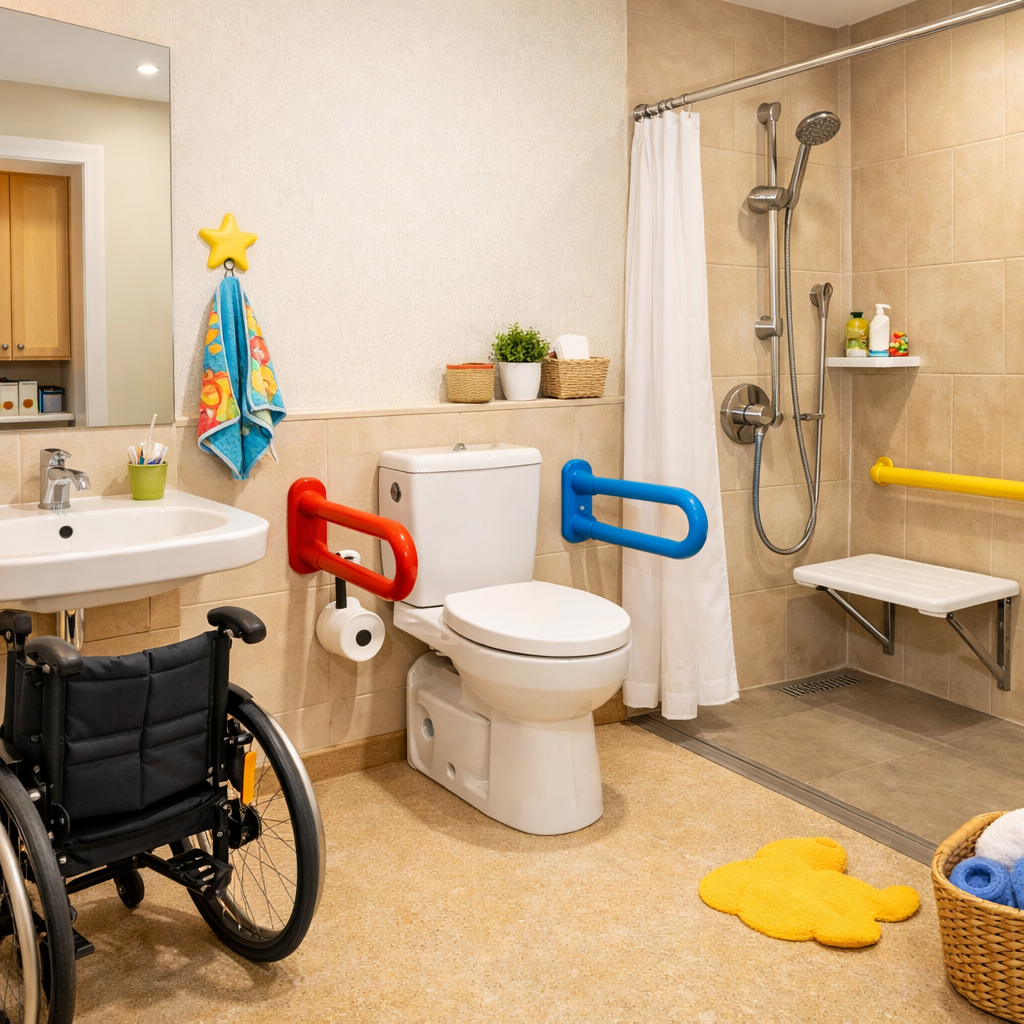
When you’re raising a child with a physical disability, your home is more than just a place to live—it’s their first playground, their classroom, their sanctuary. But standard homes aren’t always designed with accessibility in mind. Stairs can become mountains. Narrow doorways can feel like barriers. A bathroom designed for independence can suddenly feel impossible. The good news? You don’t need a complete home renovation to make a difference. Thoughtful, strategic adaptations—many of them simple and affordable—can transform your home into a space where your child can move, play, and grow with greater independence and confidence. This room-by-room accessibility guide will walk you through practical modifications for every area of your home, helping you create an environment that removes barriers and invites exploration.
Why Home Adaptations Matter for Independence
For a child with a physical disability, independence is built through daily practice. The ability to get out of bed alone, use the bathroom independently, or reach a favorite toy without asking for help—these small victories build confidence and self-esteem. A thoughtfully adapted home makes these victories possible. It reduces frustration for both child and caregiver, minimizes safety risks, and sends a powerful message: “This space is for you. You belong here. You can do this.” This philosophy of empowering independence aligns with the broader goals of our pillar resource, Physical Disabilities in Children (Orthopedic Impairments): Understanding, Supporting, and Empowering.
Before you begin, remember that every child’s needs are unique. A child who uses a wheelchair will have different requirements than a child who walks with crutches or a walker. Observe your child’s daily routines, note where they struggle, and involve them in the process as much as possible. The goal is to create a home that works for your child, not to follow a generic checklist.
General Principles for Home Accessibility
These principles apply throughout the house and will guide your decision-making in every room.
- Clear Pathways: Aim for at least 36 inches of clear width in hallways and doorways to accommodate wheelchairs and walkers. Remove clutter, loose rugs, and cords from all pathways.
- Lever Handles: Replace round doorknobs with lever handles, which are much easier for children with limited hand strength or dexterity to operate.
- Consistent Flooring: Avoid transitions between different flooring types (thick carpet to tile) that can trip or catch wheels. If you have thresholds, keep them as low as possible or add small ramps.
- Good Lighting: Bright, even lighting helps children with visual or perceptual challenges navigate safely. Consider motion-sensor lights for hallways and bathrooms.
- Contrasting Colors: Use contrasting colors to define edges—for example, a dark rug on a light floor, or a brightly colored strip at the edge of a step. This helps children with low vision or perceptual difficulties.
- Safety First: Secure furniture to walls, cover sharp corners, and ensure that all adaptations meet safety standards. Consult with an occupational therapist or accessibility specialist for major modifications.
Room-by-Room Accessibility Guide
Let’s walk through each room of your home, highlighting common challenges and practical solutions.
Entryways and Exterior Access
The journey to independence starts at the front door.
- Ramps: If you have steps at any entrance, a ramp is essential. Portable ramps can be a temporary solution, but a permanent, properly sloped ramp (1 inch of rise per 12 inches of length) is safer and easier. Consider a covered ramp to protect against rain and snow.
- Door Width: Standard doors are often too narrow for wheelchairs. If replacing a door isn’t possible, offset hinges can add 1-2 inches of width by swinging the door completely out of the frame.
- Automatic Door Openers: For children with significant mobility limitations, an automatic door opener can be life-changing. Less expensive options include a keyless entry system so your child can unlock the door without fumbling for keys.
- Door Thresholds: Even a small threshold can be a barrier. Install a low-profile threshold or a small rubber transition ramp.
- Welcome Mat: Choose a low-pile, firmly anchored mat that won’t catch wheels or crutches.
Living Room and Common Areas
This is where family time happens—everyone should be able to participate fully.
- Furniture Arrangement: Create wide, clear pathways between furniture. Arrange seating so your child can sit with the family, not off to the side. Leave space next to couches and chairs for a wheelchair or walker to pull up alongside.
- Seating: Consider a variety of seating options. Some children need firmer seats with good back support; others may benefit from a beanbag chair that molds to their body. If your child uses a wheelchair, ensure there’s a comfortable spot in the living room where they can transfer out of their chair if they wish.
- Flooring: Low-pile carpet or smooth, non-slip flooring is easiest for wheeled mobility. Avoid thick, plush carpets and loose rugs that can be tripping hazards.
- Window Treatments: Choose blinds or curtains with easy-to-reach wands or remote controls so your child can adjust light independently.
- Electronics and Controls: Place light switches, thermostats, and entertainment system controls at accessible heights (between 36 and 48 inches from the floor). Consider smart home technology that allows control via voice or tablet.
- Storage: Keep frequently used items—toys, books, remotes—on low, open shelving that your child can reach independently. Clear bins help with visibility and organization.
Kitchen
The kitchen is the heart of the home, and with thoughtful adaptations, your child can be part of the action—and learn valuable life skills.
- Lower Work Surfaces: If possible, create a lowered section of counter where your child can work from a seated position. A pull-out cutting board or a small, movable cart can serve the same purpose.
- Accessible Storage: Store everyday dishes, cups, and snacks in lower cabinets or drawers that your child can reach. Use pull-out shelves and lazy Susans to make items accessible.
- Appliances: Choose appliances with easy-to-use controls—large buttons, lever handles, or touch controls. A side-opening oven makes it easier for a seated child to access. Consider a countertop microwave placed at an accessible height.
- Faucets: Install a single-lever faucet that’s easy to operate with limited hand strength or a closed fist. Touch-activated faucets are even easier.
- Safety: Install stove guards to prevent burns, and choose a refrigerator with a water dispenser on the door to reduce the need to lift heavy pitchers.
- Seating: If your child uses a wheelchair, ensure there’s space to pull up to the table or an adapted chair. Some families use a height-adjustable table that can accommodate both seated and standing family members.
Bedroom
A child’s bedroom should be a safe, comfortable retreat where they can start and end their day with as much independence as possible.
- Bed Access: The bed should be at a height that makes transfers easy—ideally, the same height as your child’s wheelchair seat. If not, consider a bed rail for safety or a small step stool with non-slip surface. Some families use a hospital bed with adjustable height, but a thoughtfully chosen regular bed can work well too.
- Closet and Storage: Lower closet rods so your child can reach their own clothes. Use open shelving or clear bins for toys and belongings. Consider a closet system with pull-down rods if lowering isn’t possible.
- Dressing Area: Create a designated spot for dressing with a mirror at your child’s eye level. Adaptive tools like a long-handled shoehorn or button hook can be stored nearby.
- Lighting and Controls: Place light switches within reach of the bed. A bedside lamp with a large, easy-to-press switch is helpful. Consider smart plugs that allow voice control of lights.
- Flooring: Smooth, easy-to-clean flooring (like vinyl plank) is practical, but a low-pile carpet can add warmth. Avoid thick carpets and loose rugs.
- Personalization: This is still your child’s room—let them choose colors, decor, and bedding. Independence doesn’t mean sacrificing personality.
Bathroom
The bathroom is often the most challenging room for accessibility, but it’s also one of the most important for dignity and independence.
- Door Width: Bathroom doors are notoriously narrow. If possible, widen the doorway to at least 32 inches clear (36 inches is better). If that’s not feasible, consider pocket doors or offset hinges.
- Sink: Install a wall-mounted sink with clearance underneath for a wheelchair to roll under. Insulate pipes to prevent burns. Choose a single-lever or touch-activated faucet. Place a mirror at your child’s eye level.
- Toilet: A raised toilet seat or a height-adjustable toilet makes transfers easier. Install grab bars on the side and back wall (not towel racks—they’re not safe!). The bars should be securely anchored into studs. Consider a bidet attachment to reduce the need for reaching and wiping.
- Shower/Tub: A roll-in shower with a zero-threshold entry is ideal but may require major renovation. If that’s not possible, consider:
- A transfer bench that allows your child to sit and slide into the tub.
- A handheld shower head on a sliding bar.
- Grab bars inside and outside the tub/shower.
- A non-slip mat or textured floor surface.
- A shower chair or bath seat.
- Storage: Keep toiletries within easy reach from the toilet and shower—low shelves, caddies, or wall-mounted dispensers.
- Flooring: Use non-slip, water-resistant flooring throughout.
Low-Cost and Temporary Solutions
Not all adaptations require major construction. Here are some affordable options to try now:
- Portable Ramps: For small thresholds or single steps.
- Raised Toilet Seats: Inexpensive and easy to install.
- Shower Transfer Benches: Allow safe tub access without renovation.
- Handheld Shower Heads: Easy to install and greatly increase independence.
- Grab Bars with Suction Cups: For temporary use (but not as secure as mounted bars).
- Furniture Risers: Raise beds, chairs, or tables to a more accessible height.
- Command Hooks and Small Shelves: Create accessible storage without drilling.
- Color-Contrast Tape: Mark edges of steps, counters, and light switches for children with low vision.
Funding and Resources for Home Adaptations
Home modifications can be expensive, but there are resources to help.
- State Medicaid Waivers: Many states have Home and Community-Based Services (HCBS) waivers that can fund home modifications. Contact your state’s Medicaid office.
- Early Intervention and School Districts: For children under 3, Early Intervention may provide some adaptive equipment. For older children, the school district may fund modifications if they are necessary for educational access (though this is rare for private homes).
- Nonprofit Organizations: Organizations like Rebuilding Together, Habitat for Humanity, and local disability organizations sometimes offer home modification assistance.
- Family Support Services: Some states have family support programs that provide small grants for equipment and modifications.
- Tax Credits and Deductions: Some medical home modifications may be tax-deductible. Consult a tax professional.
- Insurance: Private insurance rarely covers home modifications, but may cover durable medical equipment (like hospital beds or lift systems) that are part of the adaptation.
- Loans: Some organizations offer low-interest loans for accessibility modifications.
Involving Your Child in the Process
As much as possible, involve your child in planning and decision-making. Ask them:
- “What’s hard for you to reach or do in your room?”
- “What would make it easier to get ready in the morning?”
- “Where would you like your toys to be stored?”
Let them test solutions and give feedback. When children have a say in their environment, they’re more likely to use and appreciate the adaptations. It also teaches self-advocacy—a skill they’ll need for life.
Frequently Asked Questions (SSS)
Q: Do I need to renovate my whole house at once?
A: Absolutely not. Start with the most critical areas—usually the bathroom and the child’s bedroom. Then prioritize based on your child’s needs and your budget. Even small changes can make a big difference. A portable ramp, a raised toilet seat, and some lowered shelves can transform daily life without a major renovation.
Q: How do I know if a modification is safe and appropriate for my child?
A: Consult with professionals. An occupational therapist (OT) with experience in home modifications can assess your child’s needs and recommend specific adaptations. For major construction, work with a contractor who has experience with accessible design (sometimes called a “CAPS” contractor—Certified Aging-in-Place Specialist). They’ll ensure that grab bars are properly anchored, ramps meet slope requirements, and all work meets safety standards.
Q: What if we’re renting our home?
A: Renting adds complexity, but there are still options. Talk to your landlord about modifications—you may be able to negotiate, especially if you offer to pay for the changes or restore the home when you leave. Portable solutions (like temporary ramps, suction grab bars, and furniture risers) can be a good alternative. The Fair Housing Act requires landlords to allow “reasonable modifications” at the tenant’s expense for people with disabilities.
Q: My child is young—should I wait to see how their needs change before modifying?
A: This is a common concern. Children grow, and their needs will change. Focus on adaptations that are adjustable (like height-adjustable beds or shelving) or that address current needs without major structural changes. An OT can help you plan for both present and future needs. Remember that early independence builds confidence—waiting may mean missing critical opportunities for your child to learn and grow.
Q: How can I make our home accessible without making it look like a hospital?
A: This is so important! Your home should still feel like home. Choose grab bars in finishes that match your decor (they come in many colors now). Use attractive, non-institutional furniture. Let your child’s personality shine through in colors and decorations. Many adaptive products are now designed with aesthetics in mind. The goal is accessibility that blends in, not stands out.
Conclusion: Building a Home Where Everyone Belongs
Adapting your home for a child with a physical disability is an act of profound love and practical hope. It’s about looking at your space through their eyes and asking, “What barriers can I remove? What independence can I unlock?” Each adaptation—from a lowered light switch to a roll-in shower—is a statement: You matter. You belong. You can do this. The journey may feel overwhelming at times, but you don’t have to do it all at once. Start with one room, one change, one victory. Celebrate every small step toward greater independence. And remember, the most important element in any home isn’t the ramps or the grab bars—it’s the love and belief that you, as a parent, bring to every moment. Your home, adapted with thought and care, becomes a launchpad for your child’s confidence, competence, and joy.