instagram.com/SpecialKidsEducation

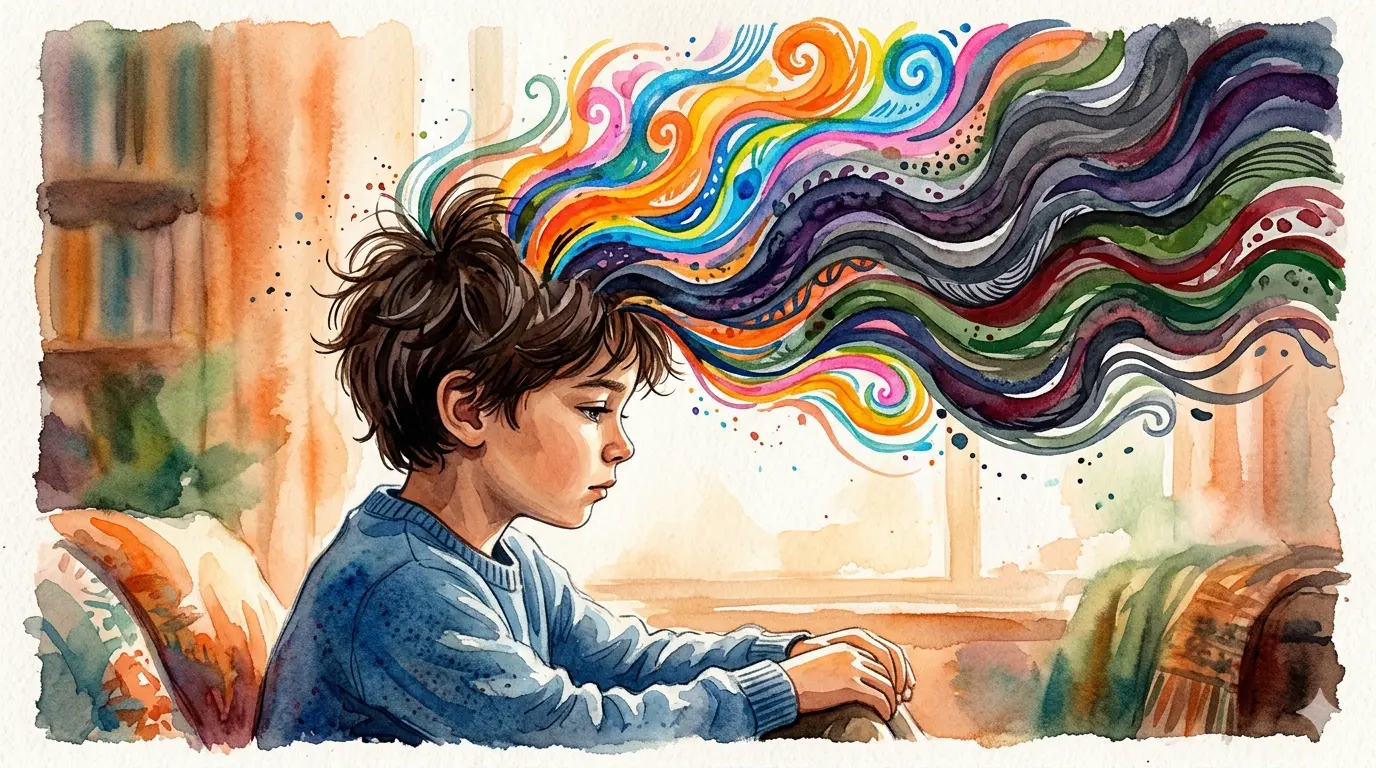
Gifted children feel things differently. They don’t just get upset—they feel devastated. They don’t just worry—they envision worst-case scenarios. They don’t just care about fairness—they become consumed by injustice. These intense reactions are not behavioral problems or signs of weakness. They are features of giftedness itself. Understanding the social and emotional needs of gifted children is just as important as nurturing their intellectual abilities—perhaps more so. Without emotional support, gifted children may struggle with perfectionism, anxiety, relationship difficulties, and underachievement. This guide explores three core emotional challenges of giftedness: perfectionism, intensity (overexcitabilities), and asynchronous development. You’ll learn practical strategies to help your gifted child manage these challenges, build resilience, and develop healthy self-esteem—without dimming their brightness.
Why Gifted Children Have Unique Social and Emotional Needs
Giftedness is not just about learning faster or thinking deeper. It affects how children experience the world emotionally and socially. The social and emotional needs of gifted children arise from several factors:
- Asynchronous development: Intellectual abilities may far outpace emotional and social maturity. A 7-year-old may read at a 4th-grade level but have the emotional regulation of a 5-year-old.
- Heightened sensitivity (overexcitabilities): Gifted children often experience the world more intensely—sounds are louder, emotions are stronger, and injustices feel more profound.
- Perfectionism: Gifted children may set unrealistically high standards for themselves and experience extreme distress when they fall short.
- Existential concerns: Gifted children often grapple with abstract concepts like death, fairness, and the meaning of life at young ages, leading to anxiety or sadness.
- Feeling different: Gifted children may struggle to find peers who share their interests or intensity, leading to isolation or masking their abilities to fit in.
Understanding these unique social and emotional needs of gifted children is central to our pillar resource, Gifted and Talented Education: Nurturing Exceptional Potential.
Challenge 1: Perfectionism in Gifted Children
Perfectionism is one of the most common and challenging social and emotional needs of gifted children. It’s not about wanting to do well—it’s about feeling that anything less than perfect is unacceptable.
Signs of Problematic Perfectionism
- Avoids challenging tasks for fear of failure or mistakes.
- Extreme distress or meltdowns when work isn’t perfect.
- Erases and redoes work repeatedly, unable to accept “good enough.”
- Compares themselves constantly to others and feels inadequate.
- Procrastinates because “if I don’t try, I can’t fail.”
- Discounts successes as “luck” or “not good enough.”
How Parents Can Help with Perfectionism
- Model healthy responses to mistakes: “I burned the dinner. Oh well, let’s order pizza. I’ll try again tomorrow.” Show that mistakes are normal, not catastrophic.
- Praise effort, strategy, and persistence—not just outcomes: “I saw how hard you worked on that problem. You tried three different strategies before you found one that worked. That’s great problem-solving.”
- Use “good enough” language: “This is good enough for now. We can come back to it later if you want, but for now, let’s call it done.”
- Share stories of famous mistakes: J.K. Rowling was rejected by 12 publishers. Einstein didn’t speak until age 4. Normalize struggle.
- Create low-stakes opportunities for imperfection: Activities where the goal is fun, not mastery—messy art, silly games, improvisation.
What to Say and What Not to Say
| Instead of saying… | Try saying… |
|---|---|
| “Don’t be so hard on yourself.” | “I see you’re feeling frustrated. What part feels hardest right now?” |
| “It’s okay, you did your best.” | “What helped you keep going? What would you try differently next time?” |
| “You’re being too sensitive.” | “It’s okay to have big feelings. Let’s sit with them for a minute.” |
Challenge 2: Intensity and Overexcitabilities
Psychologist Kazimierz Dabrowski identified five “overexcitabilities”—intensities that are common in gifted individuals. These are not disorders. They are heightened ways of experiencing the world. Understanding overexcitabilities is key to addressing the full social and emotional needs of gifted children.
The Five Overexcitabilities (OEs)
- Intellectual OE: Intense curiosity, need to understand, asking endless questions, deep focus on interests. Looks like: Questioning rules, challenging authority, hyperfocus.
- Emotional OE: Deep feelings, empathy, attachment to people and animals, sensitivity to criticism. Looks like: Crying easily, intense reactions, anxiety about global issues.
- Imaginational OE: Vivid imagination, daydreaming, love of fantasy, creative storytelling. Looks like: Distractibility, elaborate imaginary worlds, difficulty separating fantasy from reality.
- Sensual OE: Heightened sensitivity to sensory input—sounds, textures, tastes, light, smells. Looks like: Irritated by tags on clothing, overwhelmed by loud noises, picky eating.
- Psychomotor OE: Intense physical energy, love of movement, rapid speech, nervous habits. Looks like: Fidgeting, restlessness, talking fast, difficulty sitting still.
How Parents Can Support Intensity
- Name the intensity: “You have a strong imagination. That’s a gift, but sometimes it can make it hard to separate real fears from pretend ones. Let’s talk about what’s real and what’s possible.”
- Create outlets for each intensity:
- Intellectual: Books, museum trips, time for research, conversations with experts.
- Emotional: Journaling, art, music, talking through feelings, volunteering.
- Imaginational: Creative writing, drama, building, fantasy games.
- Sensual: Sensory tools (headphones, weighted blanket), control over environment.
- Psychomotor: Sports, dance, fidget tools, movement breaks.
- Protect downtime: Intense children need quiet time to recharge. Overscheduling leads to overwhelm and meltdowns.
- Connect with peers who share intensities: Gifted camps, robotics teams, art classes, or online communities where intensity is normalized.
Challenge 3: Asynchronous Development in Gifted Children
Asynchrony means developing unevenly across domains. A child might have the intellectual capacity of a 12-year-old, the emotional regulation of a 7-year-old, and the fine motor skills of a 6-year-old—all at the same time. This is one of the most confusing social and emotional needs of gifted children for parents and teachers to navigate.
What Asynchrony Looks Like
- A child who can discuss philosophy but melts down when a sibling touches their toy.
- A child who reads high school-level books but can’t tie their shoes or remember to bring homework home.
- A child who wants to play with older children (who share intellectual interests) but whose emotional maturity fits better with younger children.
- A child who can solve complex math problems but struggles with handwriting or organization.
How Parents Can Support Asynchronous Development
- Meet the child where they are, not where they “should” be: “I know you can talk about big ideas, but I see you’re feeling really young right now. That’s okay. Let me hold you.”
- Don’t expect consistency: A child who excels in one area may struggle in another. That’s asynchronous development, not laziness or defiance.
- Communicate with teachers: Help them understand that your child’s intellectual abilities don’t predict their social or emotional maturity. “She can read at a 5th-grade level, but she still needs help managing frustration. Can you help me think about supports for both?”
- Normalize the experience: “It can feel confusing when your brain moves faster than your body or your feelings. That happens to lots of gifted kids. It doesn’t mean anything is wrong with you.”
Social Challenges: Friendships and Peer Relationships
Gifted children often struggle to find true peers. They may feel different, isolated, or rejected. Addressing these social and emotional needs of gifted children often requires intentional support.
Why Gifted Children Struggle Socially
- Different interests: A child fascinated by astrophysics may have little in common with same-age peers who talk about video games or sports.
- Different intensity: Gifted children may want to discuss ideas in depth while peers prefer light conversation.
- Different developmental pace: Asynchronous development means they may connect intellectually with older children but emotionally with younger ones—and feel out of place with both.
- High expectations of friendship: Gifted children may expect loyalty, depth, and shared values from friends—things that typical children may not prioritize.
How to Support Social Development
- Find “true peers” through interest-based activities: Chess club, robotics, creative writing groups, or gifted programs where children share passions.
- Teach social skills explicitly: Gifted children often need direct instruction in conversation turn-taking, reading social cues, and handling disagreement. These don’t come naturally to everyone.
- Consider mixed-age friendships: A gifted child may find better friendship matches with slightly older or younger children. That’s okay.
- Allow alone time without shame: Some gifted children are introverts who need solitude to recharge. There’s nothing wrong with preferring a book to a playdate.
- Role-play social scenarios: “Let’s practice what to say when someone interrupts you. How can you politely ask them to wait?”
When to Seek Professional Help
While intensity and asynchrony are normal in giftedness, sometimes children need additional support.
- Consider evaluation if:
- Perfectionism causes avoidance of school or activities the child would otherwise enjoy.
- Anxiety interferes with sleep, eating, or daily functioning.
- Depression, withdrawal, or talk of self-harm occurs.
- Social isolation is severe and persistent.
- You suspect twice-exceptionality (giftedness co-occurring with ADHD, autism, dyslexia, or anxiety disorders).
- Look for professionals who understand giftedness: Many therapists pathologize intensity and asynchrony. Seek someone familiar with the social and emotional needs of gifted children.
If you suspect your child may be twice-exceptional, see our guide on twice-exceptional (2e) children for more information on how giftedness co-occurs with ADHD, dyslexia, and autism.
Frequently Asked Questions (SSS)
Q: Is emotional intensity a sign that my gifted child needs therapy?
A: Not necessarily. Intensity is a normal feature of giftedness. However, if the intensity is causing significant distress, interfering with daily functioning, or leading to avoidance of school or activities, an evaluation can be helpful—with a professional who understands giftedness.
Q: How do I help my perfectionist child start a task they’re afraid of failing?
A: Lower the stakes. “Let’s just work on this for five minutes. You don’t have to finish. We’re just starting.” Use a timer. Break the task into tiny pieces. Celebrate starting, not finishing. “You did the first problem! That’s a win.”
Q: My child has no friends and seems lonely. What should I do?
A: First, ask your child how they feel about it. Some gifted children are content with one friend or with solitude. If they are distressed, help them find “true peers” through interest-based activities. Consider social skills groups for gifted children. And consider whether masking—hiding their abilities to fit in—is contributing to the problem.
Q: How do I handle meltdowns caused by overexcitabilities?
A: During the meltdown, reduce demands, stay calm, and ensure safety. Don’t try to reason or teach in the moment. After they’ve regulated, help them identify the trigger. “It seemed like the noise in the cafeteria was overwhelming. Next time, what could we do differently? Headphones? Eat outside? A break pass?”
Q: Can asynchrony be “fixed”?
A: Asynchrony is not a disorder—it’s a developmental pattern common in giftedness. It doesn’t need to be “fixed.” It needs to be understood and accommodated. Over time, as children mature, the gaps between different areas of development often narrow. But the best approach is to meet your child where they are in each domain, not where you expect them to be based on their age or IQ.
Conclusion: Embracing Intensity, Nurturing Resilience
The social and emotional needs of gifted children are not weaknesses to be fixed. They are features of a different way of experiencing the world. Perfectionism arises from a deep desire to succeed. Intensity comes from feeling things deeply. Asynchrony reflects remarkable cognitive strengths developing alongside emotional vulnerability. Your job is not to “calm down” your gifted child or make them more “normal.” It’s to give them the tools to navigate their own intensity—to channel perfectionism into excellence without being paralyzed by it, to use their emotional depth for empathy and justice without being consumed by anxiety, and to build friendships that honor both their intellect and their heart. This work is not easy. There will be meltdowns, worries, and lonely afternoons. But with your understanding, validation, and guidance, your gifted child can learn to see their intensity not as a burden but as a source of strength. And that is the most important gift you can give.