instagram.com/SpecialKidsEducation

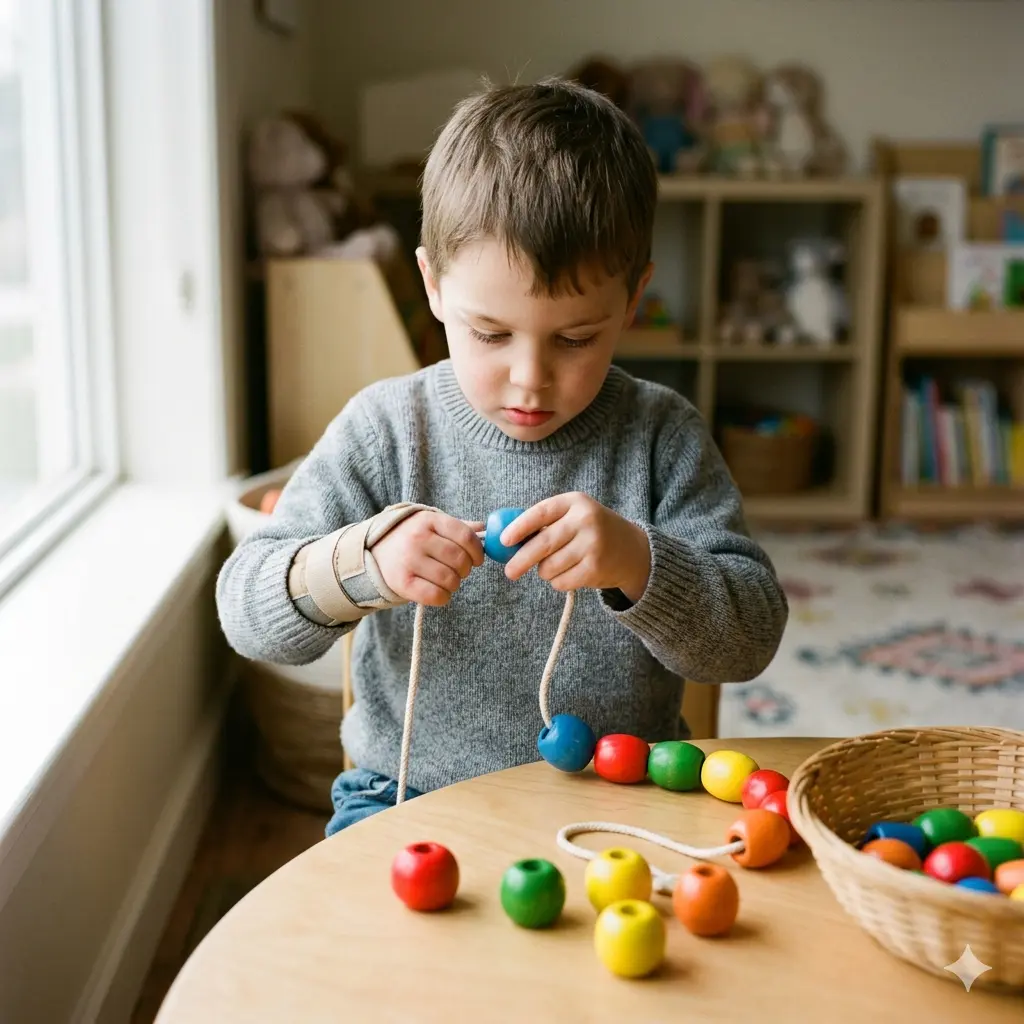
For a child with an orthopedic impairment, the small movements matter just as much as the big ones. Buttoning a shirt. Holding a pencil. Scooping with a spoon. These everyday tasks—things most of us do without thinking—can be significant challenges. But here’s the encouraging truth: fine motor skills can be built, strengthened, and improved through play. The key is to make practice feel like play, not work. This guide is packed with fun activities for children with orthopedic impairments that you can do at home, using everyday materials. We’ll explore activities that build hand strength, improve coordination, develop dexterity, and most importantly, bring smiles and laughter. Because when learning is fun, children practice more—and when they practice more, they improve.
Why Fine Motor Skills Matter for Children with Orthopedic Impairments
Fine motor skills are the small movements we make with our hands, fingers, and wrists. They’re essential for so many aspects of daily life:
- Self-Care: Feeding, dressing, brushing teeth, using the bathroom.
- School Tasks: Writing, drawing, cutting with scissors, using a computer.
- Play: Building with blocks, doing puzzles, playing with small toys.
- Social Connection: High-fives, handshakes, waving, creating art to share.
For a child with an orthopedic impairment—whether from cerebral palsy, muscular dystrophy, arthrogryposis, or another condition—these tasks may require extra effort, adapted techniques, or specialized tools. But the goal remains the same: as much independence as possible. Building fine motor skills through play is a joyful way to work toward that goal. This focus on empowering children through skill development is central to our pillar resource, Physical Disabilities in Children (Orthopedic Impairments): Understanding, Supporting, and Empowering.
And the best part? All of this skill-building can happen through fun activities for children with orthopedic impairments that feel like play, not therapy.
Before You Start: Key Principles for Success
Before diving into activities, keep these principles in mind:
- Follow Their Lead: The best activities are the ones your child wants to do. If they’re passionate about dinosaurs, use dinosaurs. If they love music, sing songs while you work. Motivation is everything.
- Start Where They Are: Meet your child at their current skill level, then gently stretch. If they can’t yet grasp a small object, start with larger ones. Success builds confidence; frustration shuts it down.
- Make It Short and Sweet: Five to ten minutes of focused play is plenty. Multiple short sessions throughout the day are far more effective than one long, exhausting session.
- Celebrate Every Victory: Did they hold the crayon for three seconds? That’s a win. Did they manage to scoop one spoonful of beans? Celebrate it. Positive reinforcement works.
- Consult Your Team: Your occupational therapist (OT) is your best resource. They can recommend specific activities tailored to your child’s needs and show you proper positioning and techniques.
Setting Up for Success: Positioning and Environment
Before your child can use their hands well, their body needs to be stable. Proper positioning is essential for fine motor work.
- Stable Base: Ensure your child is seated securely, with feet flat on the floor or a footrest if possible. A stable trunk allows the hands to move more freely.
- Appropriate Table Height: The table should be at a height where your child’s elbows are bent at about 90 degrees when their hands are on the surface.
- Good Lighting: Bright, even lighting helps children see what they’re doing, which is especially important if they also have visual challenges.
- Minimize Distractions: A quiet, organized workspace helps children focus on the task at hand.
- Adaptive Tools: Your OT may recommend adapted scissors, pencil grips, or utensils. These are tools for independence, not crutches. Embrace them.
Fun Activities by Skill Area
Here are activities organized by the specific skills they build. Try a few and see what resonates with your child.
Activities to Build Hand Strength
Strong hands are the foundation for all fine motor skills. These activities work on building muscle strength in the hands and fingers.
Playdough Power
- What to do: Playdough is a fine motor powerhouse. Roll it into snakes, pinch off small pieces, press cookie cutters, hide small objects inside for your child to find and dig out.
- Make it fun: Add glitter, scents (peppermint extract, cocoa powder), or different textures (mix in rice or sand). Create a “bakery” and make pretend cookies.
- Adapt it: For children with limited hand strength, use softer dough or make your own with extra oil. Start with larger movements (pressing, patting) before moving to pinching and rolling.
Squeeze Bottle Art
- What to do: Fill small squeeze bottles (like ketchup or glue bottles) with watered-down paint. Let your child squeeze designs onto paper.
- Make it fun: Create “fireworks” paintings, make “rain” on paper, or write letters with the paint.
- Adapt it: Start with bottles that are easy to squeeze. If needed, you can modify the bottle by adding a larger grip or using a hand-over-hand approach.
Squirt Gun Fun
- What to do: Fill squirt guns or spray bottles with water. Have your child squirt targets—plastic cups, letters written in chalk on the sidewalk, floating toys in a kiddie pool.
- Make it fun: Turn it into a game: “Let’s knock down all the red cups!” “Can you squirt the letter ‘A’?”
- Adapt it: Different squirt guns require different amounts of hand strength. Start with an easy-squeeze option and work up.
Theraputty Treasures
- What to do: Theraputty is like playdough but with more resistance (your OT can recommend the right strength). Hide small objects—beads, coins, tiny toys—inside and have your child dig them out.
- Make it fun: Create a “treasure hunt” theme. “There are five hidden dinosaurs in this putty. Can you find them all?”
- Adapt it: Start with softer putty and larger objects. Work up to firmer putty and smaller items.
Activities to Improve Pincer Grasp (Thumb and Finger)
The pincer grasp—using the thumb and index finger to pick up small objects—is essential for tasks like holding a pencil, buttoning, and picking up small items.
Drop and Collect Games
- What to do: Provide a container with a small opening (like a water bottle or a jar) and small objects to drop in—pom-poms, coins, beads, dry pasta.
- Make it fun: Decorate the container to look like a monster that “eats” the objects. Race to see how fast you can fill it.
- Adapt it: Start with larger objects and a wider opening. As skills improve, use smaller items and narrower openings.
Peeling Stickers
- What to do: Provide sheets of stickers (start with larger stickers) and have your child peel them off and stick them onto paper.
- Make it fun: Create sticker scenes—a farm scene, an underwater scene, a space scene. “Can you put the fish in the water? Can you put the star in the sky?”
- Adapt it: If peeling is too hard, slightly lift the corner of each sticker to get it started. Use repositionable stickers that are easier to remove.
Finger Painting with a Twist
- What to do: Finger painting is wonderful for sensory exploration, but you can target pincer grasp specifically. Provide small amounts of paint in shallow containers and have your child dip just their thumb and index finger to make prints.
- Make it fun: Make fingerprint animals (add eyes and legs with a marker later). Create patterns with different colors.
- Adapt it: Use pudding or yogurt as a taste-safe alternative for younger children or those who mouth objects.
Feeding Themselves
- What to do: Snack time is prime fine motor practice. Offer finger foods of different sizes and textures—Cheerios, small crackers, pieces of soft fruit, peas.
- Make it fun: Use colorful plates with divided sections. Create “snack art” on the plate before eating.
- Adapt it: If picking up small objects is challenging, start with larger foods and work down to smaller ones. Use adapted utensils if needed, but also offer finger foods for direct hand practice.
Activities for Bilateral Coordination (Using Both Hands Together)
Many tasks require both hands to work together—holding paper while cutting, stabilizing a container while opening it, buttoning.
Playdough Two-Handed Fun
- What to do: Roll playdough into snakes using both hands together. Make a ball by rolling between both palms. Use cookie cutters—one hand holds the cutter, the other presses it down.
- Make it fun: Make a playdough pizza—roll the dough with a rolling pin (two hands!), add toppings with both hands working together.
- Adapt it: Work hand-over-hand to demonstrate the movement. Use larger tools that are easier to grasp.
Cutting and Pasting
- What to do: Cutting with scissors requires one hand to cut while the other holds and turns the paper. Pasting requires one hand to hold the paper while the other applies glue.
- Make it fun: Make collages from magazine cutouts. Create paper snowflakes. Cut out pictures to make a storyboard.
- Adapt it: Use spring-loaded scissors that open automatically for children with limited hand strength. Start with cutting straight lines, then curves, then shapes.
Stringing and Lacing
- What to do: String beads onto a string or pipe cleaner. Lace cards with shoelaces.
- Make it fun: Make necklaces or bracelets to wear. Create patterns with different colors.
- Adapt it: Start with large beads and stiff strings (like pipe cleaners). Work up to smaller beads and flexible strings. Use a lacing card with larger holes.
Building with Blocks
- What to do: Stacking blocks, building towers, creating structures. Both hands work together to select, place, and balance.
- Make it fun: Build a zoo for toy animals. Make the tallest tower you can. Knock it down together!
- Adapt it: Start with larger, lighter blocks that are easier to grasp and stack. Use blocks with slightly textured surfaces for better grip.
Activities for Hand-Eye Coordination
Hand-eye coordination is the ability to use visual information to guide hand movements.
Puzzles
- What to do: Puzzles are classic hand-eye coordination builders. Start with simple knob puzzles, move to chunky puzzles, then to jigsaw puzzles.
- Make it fun: Choose puzzles with your child’s favorite characters. Work on them together, talking about where each piece goes.
- Adapt it: For children who struggle with traditional puzzles, try magnetic puzzles or puzzles with larger pieces. Use a non-slip mat underneath to keep the puzzle from sliding.
Pouring and Transferring
- What to do: Set up a water table or a large container with dry materials (rice, beans, sand). Provide cups, spoons, scoops, and funnels for pouring and transferring.
- Make it fun: Add food coloring to water. Hide small toys in the rice for discovery. Pretend to make soup or tea.
- Adapt it: Start with larger scoops and wider containers. As skills improve, use smaller spoons and narrower openings. Always supervise water play closely.
Tongs and Tweezers
- What to do: Provide child-safe tongs or tweezers and small objects to pick up—pom-poms, cotton balls, blocks, plastic bugs.
- Make it fun: Have a “rescue mission” to move objects from one container to another. Sort objects by color or type.
- Adapt it: Start with larger, easier-to-squeeze tongs. Work up to smaller tweezers. If gripping is very difficult, try using a small scoop instead.
Drawing and Coloring
- What to do: Provide crayons, markers, chalk, or pencils. Encourage scribbling, drawing, and coloring.
- Make it fun: Use different surfaces—paper, cardboard, sidewalk, chalkboard. Draw together and tell stories about your drawings.
- Adapt it: Use adapted grips or larger crayons if needed. Try using an upright easel, which can improve wrist position. If your child can’t hold a marker, try using a paintbrush or a finger in pudding.
Incorporating Fine Motor Practice into Daily Routines
The beauty of fine motor practice is that it can happen naturally throughout the day. Here are some ideas:
- Morning: Let your child squeeze their own toothpaste, turn on the faucet (with a lever handle), zip their own jacket (with a pull tab attached).
- Mealtimes: Use child-safe utensils, let them pour their own drink from a small pitcher, spread butter with a dull knife, peel a banana.
- Playtime: Choose toys that build skills—LEGOs, Play-Doh, puzzles, art supplies. Rotate toys to maintain interest.
- Chores: Yes, chores! Wiping tables, sweeping with a small broom, putting toys away in bins, watering plants with a small watering can—all build fine motor skills.
- Bedtime: Turning pages of a book, pulling up the covers, turning off the light switch.
Frequently Asked Questions (SSS)
Q: How much time should we spend on fine motor activities each day?
A: Quality matters more than quantity. Aim for several short sessions (5-15 minutes) throughout the day, integrated into natural routines. The goal is to make practice a normal, enjoyable part of life, not a separate chore. Watch your child’s cues—if they’re engaged, keep going. If they’re frustrated, take a break and try again later.
Q: My child gets frustrated and gives up quickly. What can I do?
A: Frustration often means the task is too hard. Step back and make it easier. Go back to a skill they’ve already mastered, then add just a tiny bit of challenge. Celebrate every attempt. Your enthusiasm is contagious. And sometimes, the best thing is to take a complete break and try a completely different activity later.
Q: Should I use adaptive equipment like pencil grips and adapted scissors?
A: Absolutely. Adaptive equipment isn’t a crutch—it’s a tool for independence. A pencil grip that helps your child hold a pencil correctly allows them to actually write, rather than struggling with the grip. Adapted scissors that spring open let them cut, rather than giving up. Work with your OT to choose the right tools and teach your child how to use them.
Q: What if my child has limited use of one hand?
A: Many children with orthopedic impairments have one hand that is stronger or more functional. The goal is not necessarily to make both hands equal, but to help them use their available skills effectively. Focus on activities that encourage using both hands together in whatever way works for them. Your OT can suggest adapted techniques, like stabilizing objects with the less functional hand while the other hand works.
Q: How do I know if we’re making progress?
A: Progress can be slow, so celebrate small victories. Can they hold the crayon for five seconds longer than last month? Can they pick up a smaller object than they could before? Did they try to use their non-dominant hand to help? These are all wins. Regular check-ins with your OT can provide more formal progress monitoring. But don’t underestimate the power of simply noticing and celebrating the small steps.
Conclusion: Small Hands, Big Possibilities
Building fine motor skills through fun activities for children with orthopedic impairments is a journey of patience, creativity, and celebration. There will be days when nothing seems to work, and days when a new skill suddenly clicks. The key is to keep showing up, keep making it fun, and keep believing in your child’s abilities. Every time you offer playdough, every sticker peeled, every puzzle piece placed, you’re not just building skills—you’re building confidence. You’re showing your child that they are capable, that their efforts matter, and that with practice and persistence, they can do hard things. Those small hands hold big possibilities. Your job is to create the space for those possibilities to unfold, one joyful activity at a time.