instagram.com/SpecialKidsEducation


Sensory overload in autism is one of the most profound and daily challenges faced by individuals on the spectrum and their families. It transcends simple dislike of noise; it is a neurological state of extreme distress where the brain is bombarded by more sensory information—sights, sounds, smells, touches, tastes—than it can process or filter. Understanding sensory overload in autism is not just about managing meltdowns; it’s about unlocking a deeper comprehension of your child’s experience of the world. This comprehensive guide delves into the neuroscience behind it, teaches you to recognize the often-missed early signs, identifies the most common environmental triggers, and provides over a dozen practical, actionable calming strategies for both home and school settings. By mastering this knowledge, you can proactively build environments that prevent distress and empower your child to self-regulate and thrive.
What Is Sensory Overload? The Neuroscience of the Autistic Brain
To effectively support a child experiencing sensory overload in autism, we must first understand the “why” behind it. The typical brain possesses a sophisticated filtering system—like a skilled secretary—that prioritizes important sensory data (a teacher’s voice) and tunes out background noise (the hum of the AC). In many autistic individuals, research indicates this filtering system is wired differently, a condition often co-occurring with ASD known as Sensory Processing Disorder (SPD). This means the brain may struggle to gatekeep input, causing seemingly ordinary stimuli to register as intense, painful, or chaotic. A flickering light isn’t just annoying; it’s a strobe. A shirt tag isn’t just itchy; it’s a constant, scraping distraction. Sensory overload occurs when the cumulative volume of this unfiltered input crashes through the brain’s processing capacity, leading to a fight, flight, or freeze response. Recognizing this is critical: a child’s subsequent behavior is not defiance but a neurological crisis, a desperate reaction to a world that feels physically assaultive.
Understanding these neurological differences is the first step in moving from frustration to empathy, and is a core part of the comprehensive support discussed in our main guide, Autism Spectrum Disorder: Myths, Facts, and Practical Support.
Recognizing the Signs of Sensory Overload in Autism: From Subtle Cues to Meltdown
Sensory overload in autism manifests on a continuum, and catching the early, subtle signs is the key to prevention. Meltdowns are not the first sign; they are the final, overwhelming result. Here’s how to decode the progression:
- Early Warning Signs (The “Withdrawal” Stage): This is your critical window for intervention. The child is beginning to feel overwhelmed and attempts to self-regulate or block out input.
- Physical Avoidance: Covering ears, squinting or closing eyes, turning away from the source.
- Increased Self-Stimming: Repetitive behaviors like rocking, hand-flapping, or humming may intensify as a coping mechanism to create predictable sensory feedback.
- Seeking Proprioceptive Input: A subconscious need for deep pressure may lead to behaviors like pressing their head into cushions, seeking tight hugs (or sometimes giving them), or squeezing into small spaces.
- Verbal & Social Cues: Making statements like “too loud,” “bright,” or “smelly.” Becoming unusually quiet, withdrawing from conversation, or appearing “shut down.”
- Signs of Escalation (The “Overload” Stage): If early signs are missed, distress builds. The brain’s regulatory systems are becoming overwhelmed.
- Increased Agitation: Appearing irritable, anxious, or unable to sit still. Frustration over minor things.
- Cognitive Dysregulation: Clear difficulty following instructions, answering questions, or making simple choices. They may seem not to hear you.
- Escape Motivation: Actively trying to leave the environment (elopement), which can be a safety risk.
- Physical Symptoms: You may notice sweating, rapid breathing, flushed skin, or dilated pupils—classic signs of a stress response.
- Meltdown (The “Overwhelm / Crisis” Stage): This is a state of neurological and emotional overwhelm, fundamentally different from a behavioral tantrum. A tantrum is goal-oriented (seeking an outcome); a sensory meltdown is a loss of control.
- It may involve intense crying, screaming, shouting, or aggressive behavior that seems to come from nowhere.
- Crucially, it is not the time for reasoning or discipline. The child is in survival mode.
- The aftermath typically involves extreme exhaustion (physical and emotional depletion) and a long recovery period requiring quiet and safety.
Top Sensory Triggers: Mapping the Landmines at Home and School
Proactive management of sensory overload in autism requires knowing the enemy. By auditing environments, you can predict and mitigate triggers. They span all senses:
- Auditory (Sound) Triggers: These are among the most common. Examples include the chaotic din of cafeterias or school hallways, sudden sharp noises (fire alarms, school bells), persistent hums (fluorescent lights, projectors), overlapping sounds (multiple people talking, TV+radio), and specific distressing sounds (vacuum cleaners, hand dryers, blenders).
- Visual (Sight) Triggers: The modern world is visually cluttered. Flickering or overly bright fluorescent lighting is a major culprit. Others include visually busy rooms with cluttered walls, highly patterned wallpaper, too many educational posters, fast-paced cartoons or video game graphics, and flashing lights.
- Tactile (Touch) Triggers: This includes both unwanted touch and irritating textures. Clothing tags, seams in socks, specific fabric feels (wool, certain synthetics), light or unexpected touch, messy hands, certain food textures (slimy, lumpy), and the feel of grass or sand can be intolerable.
- Olfactory/Gustatory (Smell/Taste) Triggers: The sense of smell is powerfully linked to the amygdala (the brain’s emotion center). Strong perfumes, cleaning chemicals, cafeteria or bathroom smells, certain food aromas, and specific food textures or temperatures can trigger immediate aversion and overload.
- Vestibular/Proprioceptive (Movement/Body Awareness) Triggers: This relates to balance and where one’s body is in space. Triggers include chaotic movement environments (playgrounds, PE class), spinning, being tipped backwards, long periods of sitting still, or conversely, a need for intense movement (crashing, jumping) that isn’t being met.
Your Action Plan: 10+ Calming Strategies for Sensory Overload in Home and School
Knowledge is power, but action is transformation. Here is your toolkit for managing sensory overload in autism, divided into preventative strategies and in-the-moment responses.
Foundational Strategies for Home & School:
- Co-Create a Sensory Safe Haven: This is non-negotiable. Designate a low-stimulation retreat. At home, this could be a tent, a corner with a beanbag, weighted blankets, and soft lighting. At school, advocate for access to a quiet corner of the library, a resource room, or even a designated “calm down” space in the classroom.
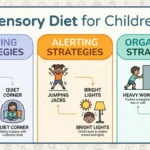
- Implement a Proactive “Sensory Diet”: Work with an Occupational Therapist (OT) to build scheduled sensory breaks into the day. These are like “snacks” for the nervous system—short activities (5-10 minutes of swinging, wall push-ups, carrying heavy books) that provide the input the child craves to stay regulated, preventing overload before it starts.
- Master Environmental Control: Use noise-canceling or dampening headphones predictably. Replace flickering lights with LEDs. Create organized, clutter-free spaces. Use blackout curtains. Offer clothing choices without tags and with preferred fabrics.
- Leverage the Power of Predictability: As emphasized in our guide on Daily Routines for Children with Autism, structure is safety. Visual schedules prepare the child for transitions (e.g., from quiet reading to noisy lunch) that are common overload points.
- Educate and Foster Empathy: At school, simple peer education can reduce stigma. A “buddy system” provides social support. At home, ensure all family members understand that sensory overload is not a choice.
In-the-Moment Calming Strategies:
6. Deep Pressure Therapy: If tolerated, apply firm, steady pressure. A tight hug (if the child seeks it), rolling a therapy ball over their back while they lie down, or snuggling under a weighted blanket can be incredibly grounding by switching the nervous system from “alert” to “calm.”
7. Offer a Sensory “Anchor”: Provide a single, focused sensory input to block out the chaos. This could be a favorite fidget toy, smelling a calming scent vial (lavender), listening to a familiar song on headphones, or sucking on a sour candy.
8. Use Non-Verbal Exits: Teach and honor the use of a “break card.” When a child hands you this card (or uses a pre-agreed signal), it is an immediate, non-negotiable pass to leave the environment without explanation. This empowers communication and aligns with effective Ways of Communicating with Autistic Children.
9. Reduce Demands Immediately: Stop talking, turn down lights, and clear people from the immediate area. Use minimal, slow speech if you must communicate. The goal is to reduce all incoming demands.
10. Focus on Co-Regulation, Not Correction: Your calm presence is the model. Sit nearby quietly, breathe deeply and audibly. Avoid phrases like “calm down” or “you’re okay.” Instead, use validating statements like “It’s too loud in here,” or “I can see this is really hard. I’m right here.”
Beyond Home Strategies: The Critical Role of Occupational Therapy
While these strategies are powerful, professional guidance is often the key to systemic change. A pediatric Occupational Therapist (OT) is the foremost expert in sensory processing challenges and sensory overload in autism. They provide:
- A comprehensive sensory profile assessment to pinpoint your child’s unique pattern of sensitivities and seeking behaviors.
- A customized, detailed “sensory diet” and strategy plan for home and school.
- Direct therapy to help the child develop their own self-regulation “toolkit.”
- Official recommendations for school IEP or 504 Plans, mandating accommodations like sensory breaks, modified seating, or use of aids.
Seeking OT support is a proactive step away from reactive crisis management and the frustration of Common Mistakes Parents Make, moving toward empowered, science-based advocacy.
Conclusion: Shifting from Reaction to Empowerment
Navigating sensory overload in autism requires a paradigm shift: from viewing behaviors as problems to be fixed, to interpreting them as distress signals to be understood. The child is not giving you a hard time; they are having a hard time. By learning the signs, mapping the triggers, and consistently applying a toolbox of calming strategies, you do more than prevent meltdowns. You build trust, foster felt safety, and empower your child with the message that their experience is valid and that you are a reliable partner in navigating a overwhelming world. This empathetic, proactive approach is the true foundation for growth, learning, and well-being on the autism spectrum.