instagram.com/SpecialKidsEducation

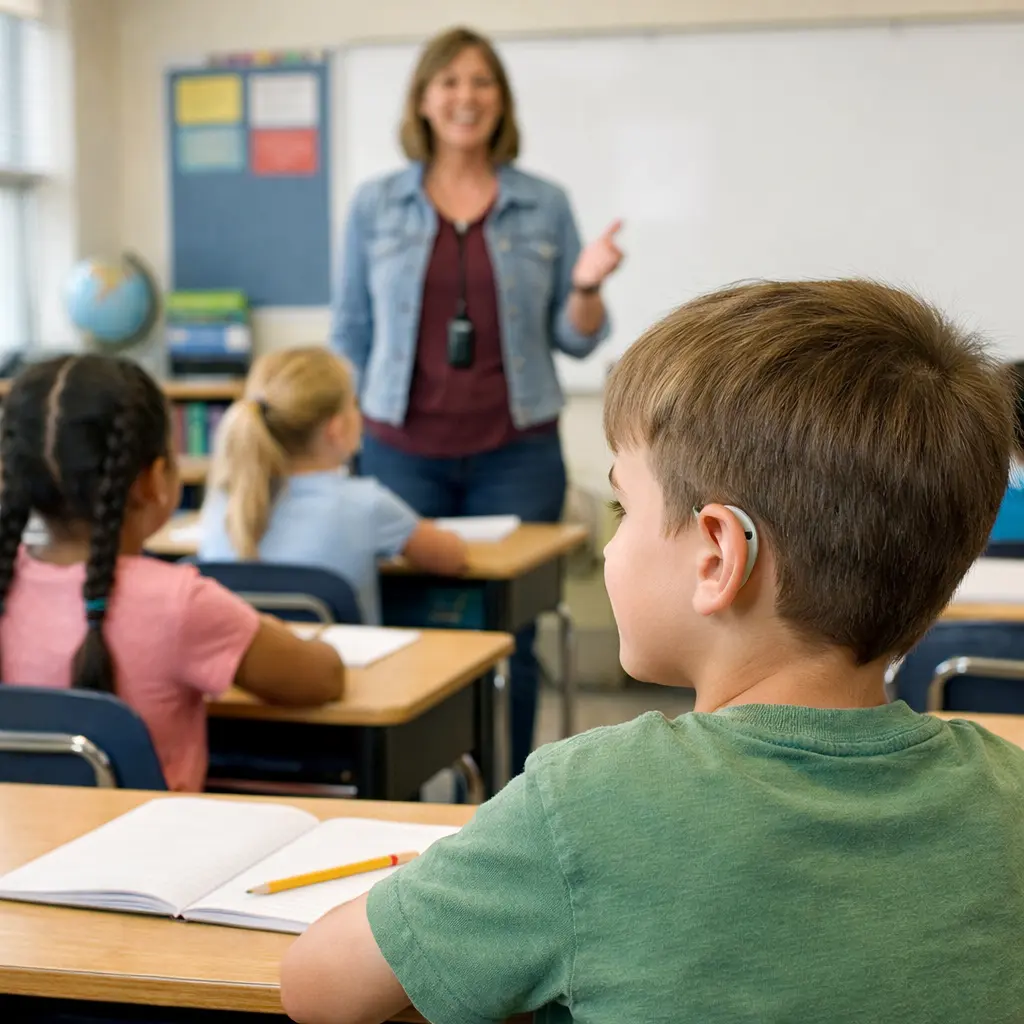
When people think of hearing loss, they often imagine a child who cannot hear at all or needs hearing aids in both ears. But there’s a less visible, often misunderstood condition that affects many children: unilateral hearing loss in children, also known as single-sided deafness (SSD). These children have one ear with normal or near-normal hearing and one ear with significant hearing loss. Because they can hear from their “good ear,” their struggles are frequently overlooked—by teachers, by peers, and sometimes even by parents. This guide aims to change that. We’ll explore the often-subtle signs of unilateral hearing loss, the unique challenges these children face in noisy classrooms and social settings, and most importantly, provide you with practical, actionable classroom strategies and home supports to ensure your child doesn’t just get by, but truly thrives.
What Is Unilateral Hearing Loss? Understanding the Basics
Unilateral hearing loss in children means hearing loss in one ear, while the other ear has normal hearing. The degree of loss can range from mild to profound. It may be present at birth (congenital) or develop later in childhood due to infections, head trauma, or other medical conditions.
Because one ear works well, these children often pass school hearing screenings (which typically test one ear at a time) and may not be identified until they start struggling in school. This “invisible” nature of unilateral hearing loss is precisely what makes it so challenging. The child looks like they can hear—and in quiet, one-on-one situations, they usually can—but their ability to function in the real world, with all its background noise and chaos, is significantly compromised.
The Hidden Challenges of Single-Sided Deafness
To understand why unilateral hearing loss in children is more than just “half a problem,” we need to understand what two healthy ears do for us.
1. Difficulty Hearing in Noise (The “Cocktail Party Problem”)
This is the biggest challenge. Having two ears allows the brain to filter out background noise and focus on a single voice—a skill known as the “cocktail party effect.” A child with SSD doesn’t have this luxury. In a noisy classroom, at a birthday party, or even at a family dinner, their single ear is overwhelmed. They hear everything—the teacher’s voice, the child whispering next to them, the hum of the projector—all at the same volume. This is exhausting, and over time, it leads to listening fatigue.
2. Difficulty Localizing Sound
Two ears also allow us to tell where a sound is coming from. If someone calls your name from across the playground, your brain instantly knows which direction to turn. A child with unilateral hearing loss cannot do this. They may appear “spacey” or unresponsive when called, not because they’re ignoring you, but because they genuinely can’t tell where the sound originated. This has serious safety implications, too—like not knowing which direction a car is coming from.
3. Academic and Social Impact
The constant effort to hear in the classroom leads to listening fatigue. By afternoon, a child with SSD may be completely drained, leading to inattention, acting out, or simply “shutting down.” They may miss instructions, misunderstand assignments, and fall behind academically. Socially, they may struggle to follow group conversations, feel left out, and withdraw from peers. This directly impacts the development of social skills in children with hearing loss, making peer interactions even more challenging.
Recognizing the Signs: What to Look For
Because unilateral hearing loss in children is often invisible, parents and teachers need to be vigilant. Look for these red flags:
At Home:
- Your child seems to “ignore” you when you call from another room or from their “bad ear” side.
- They prefer to sit with their “good ear” toward the TV or toward you during conversations.
- They startle easily when approached from their deaf side.
- They complain of fatigue after school or social events.
At School:
- The child performs well in quiet, one-on-one settings but struggles in group discussions or noisy classrooms.
- They frequently ask for repetition or say “what?”
- They appear inattentive, especially in the afternoon.
- They have difficulty following multi-step directions.
- They seem to “shut down” or act out in noisy environments like the cafeteria or gym.
Classroom Strategies: Setting Your Child Up for Success
With the right accommodations, children with unilateral hearing loss can excel academically. The key is to reduce the listening burden and optimize the learning environment.
1. Preferential Seating
This is the most important and easiest accommodation. The child should be seated:
- With their “good ear” toward the teacher and the majority of the class. This means the teacher is on their hearing side.
- Away from noise sources. Avoid seating near the hallway door, the classroom sink, the aquarium pump, the pencil sharpener, or the heating/cooling unit.
- Where they can see the teacher’s face clearly. Even with one good ear, visual cues are vital.
2. Classroom Acoustics and Noise Management
- Reduce background noise. Simple things matter: closing the classroom door, putting felt pads under chair legs, and using rugs or curtains to absorb sound.
- Use a personal FM or DM system. This is a game-changer. The teacher wears a small microphone that transmits their voice directly to a receiver connected to the child’s hearing aid or to a small speaker near the child. It effectively “lifts” the teacher’s voice above the classroom noise.
- Be mindful of group work. Position the child so their good ear is toward the group. Assign a “buddy” to repeat questions or comments from other group members.
3. Instructional Strategies for Teachers
- Get their attention first. Before giving instructions, say the child’s name and wait for eye contact.
- Provide visual support. Write key instructions on the board, use visual schedules, and provide handouts or outlines.
- Check for understanding. Don’t ask, “Do you understand?” Instead, ask, “What are you going to do first?” or “Can you tell me what you need for this project?”
- Allow extra time. Processing auditory information takes more effort. Be patient and give the child a few extra seconds to respond.
- Caption videos. Always turn on closed captions for any video shown in class.
Supporting Your Child at Home
Your role at home is equally important. Here’s how you can support a child with unilateral hearing loss:
Create a “Listening-Friendly” Home
- Reduce background noise. Turn off the TV or music during conversations.
- Get their attention before speaking. Use their name, and if they don’t respond, gently tap their arm.
- Position yourself on their “good side.” Make a mental note of which ear is their better ear and position yourself on that side during conversations, especially in noisy settings.
- Speak clearly, but don’t over-exaggerate. Natural, clear speech is best.
Teach Self-Advocacy
Empower your child to speak up for their needs. This is a gift that will serve them for life.
- Practice simple scripts: “Can you sit on my other side? I hear better from this ear.” “It’s noisy in here, can we move somewhere quieter to talk?”
- Teach them about their hearing loss. Help them understand, in age-appropriate terms, why they have challenges and what helps them.
- Involve them in IEP or 504 meetings. As they get older, having them attend part of the meeting and even share their own perspective is incredibly empowering.
The Importance of an IEP or 504 Plan
Because unilateral hearing loss in children is often minimized, getting formal accommodations can sometimes require advocacy. Even if your child has “mild” loss, they are entitled to support if it impacts their learning.
- Request an evaluation. If you suspect your child is struggling, request a school evaluation in writing.
- Consider a 504 Plan. A 504 Plan can document essential accommodations like preferential seating, use of an FM system, and extended time on tests.
- Advocate for an IEP if needed. If the hearing loss significantly impacts educational performance, your child may qualify for an IEP with specialized instruction and related services.
Frequently Asked Questions (SSS)
Q: Will unilateral hearing loss get worse over time?
A: It depends on the cause. Some types of unilateral hearing loss are stable, while others may be progressive. Regular monitoring by an audiologist is essential to track any changes and adjust management accordingly.
Q: Does my child need a hearing aid if they have one good ear?
A: Not always, but often, yes. Options include a CROS (Contralateral Routing of Signal) hearing aid, which picks up sound from the deaf side and transmits it to the good ear, or a bone-anchored hearing system (BAHS). An audiologist specializing in pediatric hearing loss can help you explore the best options.
Q: My child’s school says they don’t need accommodations because they have one good ear. What do I do?
A: This is a common and frustrating misconception. Politely but firmly educate them. Explain that unilateral hearing loss causes significant difficulty hearing in noise and localizing sound, both of which directly impact classroom learning. Provide them with resources, or ask your audiologist to write a letter explaining the need for accommodations. You have the right to advocate for your child’s access to education.
Q: Can unilateral hearing loss affect my child’s balance?
A: Possibly. The inner ear is responsible for both hearing and balance. Some children with certain types of unilateral hearing loss (especially if related to inner ear structure) may experience balance issues or dizziness. If you notice your child is clumsy or complains of dizziness, mention it to their audiologist or pediatrician.
Q: How do I explain my child’s hearing loss to their friends and classmates?
A: Keep it simple and positive. “Sarah has one ear that’s a superstar at hearing, and one ear that needs a little extra help. Sometimes she might not hear you if you’re on her ‘quiet side,’ so it’s awesome if you tap her arm or move to her ‘superstar side’ before you talk!” This normalizes it and empowers peers to be helpful.
Conclusion: Seeing the Invisible Challenge
Unilateral hearing loss in children is often called an “invisible disability” for a reason. These children work harder than anyone realizes just to hear and participate in a world designed for two ears. The listening fatigue is real, the social challenges are significant, and the academic impact can be profound. But with awareness, understanding, and the right supports—both in the classroom and at home—these children don’t just cope; they excel. By recognizing the hidden challenges, implementing effective classroom strategies, and teaching your child to advocate for themselves, you are giving them the tools they need to navigate a noisy world with confidence and success. They don’t need to be “fixed”; they need to be understood and supported.