instagram.com/SpecialKidsEducation
Vision plays a vital role in a child’s development, influencing how they learn, explore, and interact with the world. When a child experiences vision loss or visual impairments, it can significantly affect their educational progress, communication skills, and overall quality of life. By understanding the causes, recognizing early signs, and implementing supportive strategies, parents and educators can help children with vision loss thrive both academically and socially.
What Is Vision Loss in Children?
Vision loss refers to a partial or complete inability to see, even with corrective lenses such as glasses or contact lenses. In children, vision impairments may range from mild difficulties that can be managed with corrective tools, to severe vision loss or blindness.
Experts emphasize that early identification is crucial, since untreated visual impairments can delay speech, motor development, and social skills. Unlike adults, children may not realize that their vision is different, which is why parents, teachers, and doctors play a critical role in detection.
Common Causes of Visual Impairments
Genetic and Congenital Factors
Some children are born with conditions such as congenital cataracts, glaucoma, or retinal disorders. Genetic syndromes like albinism or retinitis pigmentosa also impact vision from an early age. These conditions often require both medical treatment and educational adaptations.
Premature Birth
Premature babies are at higher risk of retinopathy of prematurity (ROP), a condition caused by abnormal blood vessel growth in the retina. If left untreated, ROP can result in permanent vision loss.
Eye Injuries and Infections
Childhood injuries, untreated eye infections, or exposure to harmful chemicals may damage the eyes permanently. Preventive education about eye safety at home and school is essential.
Neurological Conditions
Not all vision impairments stem directly from the eyes. Cortical Visual Impairment (CVI), for instance, occurs when the brain has trouble interpreting visual signals. Children with CVI may see, but struggle to process what they are looking at.
Early Signs Parents and Teachers Should Notice
Children may not always communicate vision difficulties clearly. Some important signs include:
- Frequent squinting, eye rubbing, or tilting the head.
- Difficulty recognizing people or objects from a distance.
- Struggling with reading, writing, or copying from the board in school.
- Poor hand-eye coordination, frequent tripping or bumping into things.
- Light sensitivity, unusual eye movements, or rapid eye fluttering.
In addition, emotional or behavioral clues may appear—such as frustration during classroom tasks, avoiding play activities, or withdrawing socially. These indirect signals are equally important for early detection.
Educational Challenges Linked to Vision Loss
Children with vision impairments often face:
- Reading and Writing Barriers: Without adaptations, textbooks and worksheets may be inaccessible.
- Mobility and Orientation Issues: Navigating classrooms, playgrounds, and hallways safely requires additional support.
- Social Interaction Difficulties: Not being able to recognize facial expressions can impact friendships.
- Confidence and Independence: Constant reliance on others may lower self-esteem.
If unaddressed, these challenges can contribute to learning gaps and emotional stress.
Supportive Teaching and Learning Strategies
Accessible Learning Materials
- Use large-print, Braille, and audio books to support diverse needs.
- Incorporate tactile learning tools such as raised-line drawings, textured maps, and 3D models.
Classroom Adaptations
- Ensure proper lighting and reduce glare.
- Allow seating that optimizes the child’s ability to see the board.
- Give extra time for assignments and tests.
Orientation and Mobility Training
Specialists can teach children how to move safely within their environment. Skills such as using tactile floor markers or a white cane empower independence.
Assistive Technology
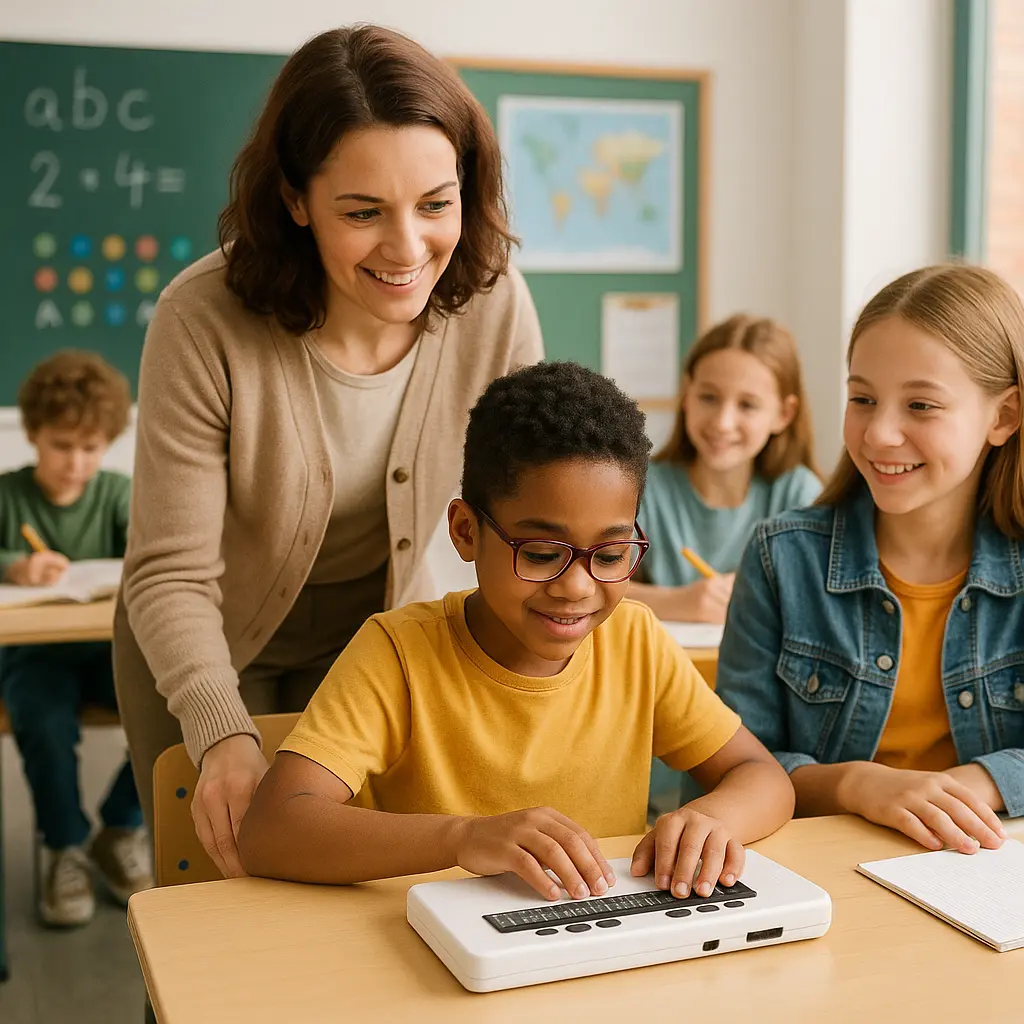
- Screen readers, magnification devices, and Braille displays give children access to digital content.
- Mobile apps designed for visually impaired learners help build literacy and daily living skills.
Encouraging Peer Support
Peer buddies and group projects help build social connections. Teaching classmates empathy and inclusion prevents isolation and bullying.
Emotional and Psychological Support
Vision loss does not only affect academics—it can also influence a child’s confidence and mental health. Parents and educators should encourage self-expression, celebrate achievements, and offer counseling when needed. Participation in sports, music, or arts programs can also boost confidence and show children that vision impairment does not limit creativity or talent.
The Role of Families and Professionals
Supporting a child with vision loss requires teamwork:
- Families provide love, advocacy, and reinforce skills at home.
- Teachers and Special Educators create individualized education plans (IEPs).
- Therapists and Eye Specialists monitor treatment and rehabilitation.
- Orientation and Mobility Instructors develop independence in navigating public and private spaces.
Building Inclusive Environments
Inclusive schools and communities empower children with vision impairments by:
- Promoting universal design in learning, making classrooms accessible for all.
- Designing safe play areas without physical barriers.
- Raising awareness among peers to encourage kindness, patience, and cooperation.
Conclusion
Vision loss in children presents unique challenges, but with early detection, supportive teaching strategies, emotional guidance, and inclusive environments, children can thrive. Families, educators, and communities working together ensure that every child, regardless of vision ability, has equal access to education, independence, and happiness.