instagram.com/SpecialKidsEducation
Hearing is one of the key senses children use to explore the world, learn language, and build relationships. When a child has hearing loss, communication and learning can become more challenging—but with the right support, children with hearing impairments can thrive academically and socially. Understanding the causes, recognizing the signs, and applying inclusive strategies can empower both families and educators to create supportive environments.
For children, hearing loss is not simply a medical issue but also a developmental and educational challenge. Since spoken language relies heavily on hearing, undiagnosed or untreated hearing problems can affect vocabulary growth, classroom participation, and even self-confidence. The earlier the support begins, the stronger the outcomes.
What Is Childhood Hearing Loss?
Hearing loss refers to a partial or total inability to hear sounds. It can affect one ear (unilateral) or both ears (bilateral) and may range from mild to profound.
- Mild hearing loss: Difficulty hearing soft sounds or speech in noisy settings.
- Moderate hearing loss: Challenges understanding normal conversations without amplification.
- Severe hearing loss: Very limited ability to hear speech, even with amplification.
- Profound hearing loss (deafness): Little to no sound perception.
For children, hearing loss can impact speech development, social skills, and educational achievement if not addressed early. Importantly, it can appear at birth (congenital) or develop later in childhood (acquired).
Causes and Risk Factors
Some common causes of childhood hearing loss include:
- Genetic factors (inherited conditions).
- Infections during pregnancy (such as rubella or cytomegalovirus).
- Birth complications, including low birth weight or lack of oxygen.
- Frequent ear infections (otitis media), which can cause temporary or permanent hearing loss if untreated.
- Noise exposure at an early age, such as loud music or environments.
In some cases, the cause may remain unknown, but early detection remains critical. Pediatricians often recommend newborn hearing screenings and regular checkups to identify hearing issues as soon as possible.
Early Signs of Hearing Loss
Parents and teachers may notice:
- Lack of response to sounds or name calling.
- Delayed speech and language milestones.
- Frequently asking for repetition.
- Difficulty following conversations, especially in noisy environments.
- Turning up the TV or devices to very high volumes.
Additional subtle signs might include unclear speech, avoiding group activities, or becoming easily frustrated during communication attempts. Recognizing these red flags early ensures that interventions—like hearing aids or therapy—can begin before the child falls behind in learning or social development.
Hearing Aids and Assistive Technology
Modern technology offers many tools to support children with hearing impairments:
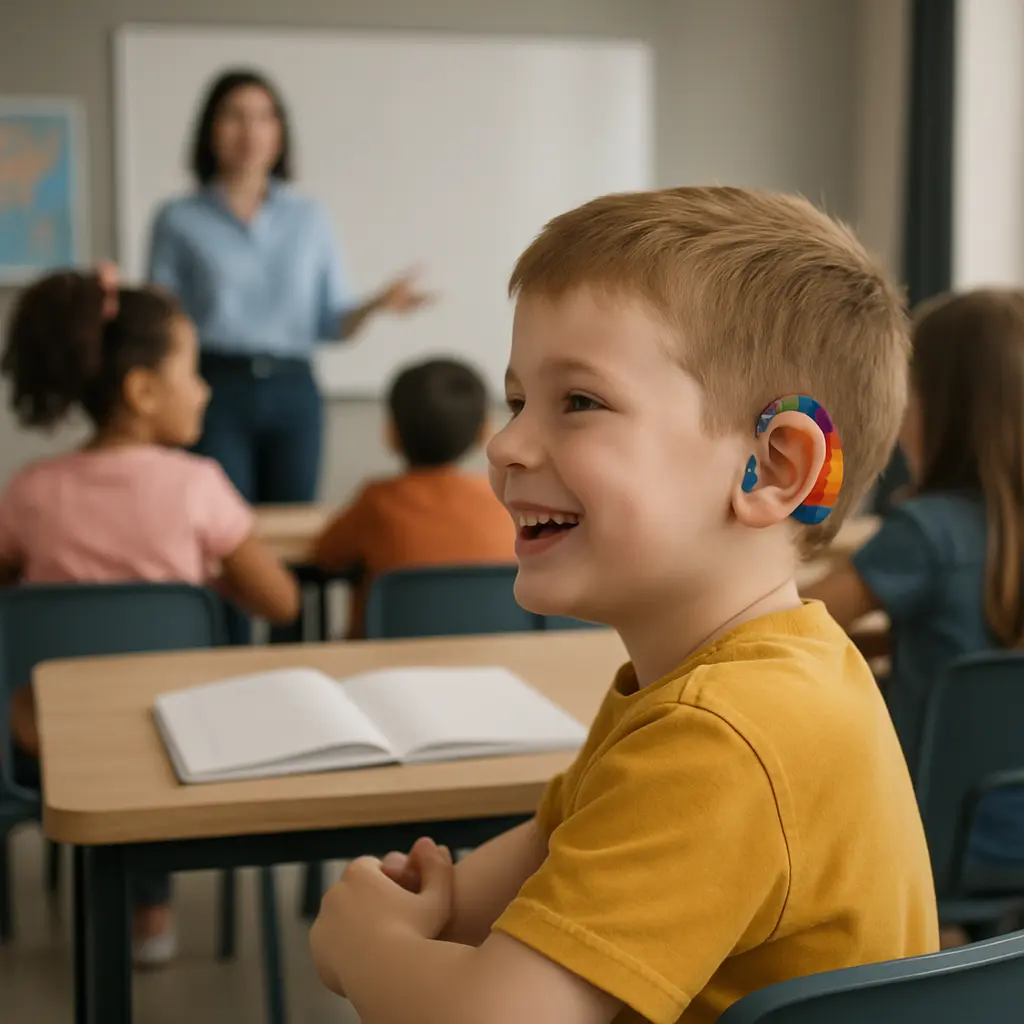
- Hearing aids amplify sounds for children with partial hearing.
- Cochlear implants provide direct stimulation to the auditory nerve for severe cases.
- FM systems and classroom microphones help reduce background noise.
- Speech-to-text software and captioned videos support learning and communication.
These tools are most effective when combined with ongoing support from audiologists, speech therapists, and educators. For example, a child may use a hearing aid in school while also benefiting from captioned lessons and teacher microphones.
Teaching Strategies for Inclusive Classrooms
Educators play a key role in ensuring that children with hearing loss are included in learning environments. Strategies include:
- Facing the student while speaking and using clear speech.
- Providing written instructions and visual aids.
- Using sign language or basic gestures if helpful.
- Allowing extra response time during discussions.
- Encouraging peers to practice patience and inclusion.
Teachers can also arrange classrooms strategically—for example, seating the child closer to the teacher, reducing background noise, and pairing them with supportive classmates for group activities. Collaboration with special educators and speech-language specialists helps create individualized education plans (IEPs).
Tips for Parents to Support Daily Communication
At home, families can make communication easier by:
- Maintaining eye contact when speaking.
- Using both spoken language and gestures.
- Minimizing background noise (TV, radio) during conversations.
- Reading aloud and discussing stories together.
- Advocating for their child’s needs in school and community settings.
Parents are also encouraged to learn basic sign language or communication strategies recommended by therapists. Building a strong home-school connection ensures consistency in the child’s support system.
Frequently Asked Questions (FAQ)
Q: Will hearing loss delay my child’s speech development?
A: Yes, hearing loss can delay speech and language milestones if not addressed, but with early intervention, children can make excellent progress.
Q: Do all children with hearing loss need sign language?
A: Not necessarily. Some children benefit from sign language, while others primarily use spoken language with the help of hearing aids or cochlear implants. Many families choose a combination.
Q: How can I help my child feel included with peers?
A: Encourage friendships, educate classmates about hearing differences, and support your child in extracurricular activities where communication can be adapted. Inclusion is key to building confidence.
Conclusion
Hearing loss does not have to limit a child’s ability to learn, communicate, or connect with others. With timely diagnosis, assistive technology, and inclusive strategies at home and in school, children with hearing impairments can thrive. By working together, families, educators, and communities can ensure every child has equal access to opportunities and a voice in the world.