instagram.com/SpecialKidsEducation
Communication is the foundation of learning, social interaction, and self-expression. For many children, however, difficulties in speech or language development can create challenges in school, at home, and in relationships. Speech and language disorders are among the most common developmental concerns in early childhood. The good news is that with early recognition and proper intervention, children can make remarkable progress.
Children who receive help early often develop the skills they need to succeed in academics and social life. For this reason, raising awareness about the signs, causes, and interventions of speech and language disorders is critical for both parents and educators.
Defining Speech vs. Language Disorders
Although often used together, “speech” and “language” are not the same:
- Speech disorders affect the ability to produce sounds correctly. Examples include articulation disorders, stuttering (fluency disorders), and voice disorders.
- Language disorders involve difficulties in understanding or using words and sentences. This may include limited vocabulary, trouble forming sentences, or difficulty following directions.
Understanding the difference helps families and educators seek the right type of support. For example, a child who cannot pronounce the “r” sound has a speech issue, while a child who struggles to form complete sentences has a language difficulty.
Common Types of Disorders
- Articulation Disorders – Difficulty pronouncing certain sounds, often making speech hard to understand.
- Fluency Disorders – Problems such as stuttering or prolonged pauses in speech.
- Voice Disorders – Unusual pitch, volume, or quality of the voice.
- Expressive Language Disorders – Trouble putting thoughts into words.
- Receptive Language Disorders – Difficulty understanding spoken language.
Some children may experience a combination of these challenges, requiring individualized approaches.
Early Warning Signs for Parents
Parents are usually the first to notice when something feels different. Some red flags include:
- No babbling or limited sounds by 12 months.
- Few words by age two.
- Difficulty combining words into sentences by age three.
- Trouble following simple directions.
- Frequent frustration due to communication difficulties.
It is important to note that every child develops at their own pace. However, consistent delays across milestones should be taken seriously. Early evaluation by a professional allows interventions to begin when they are most effective.
The Role of Speech Therapy
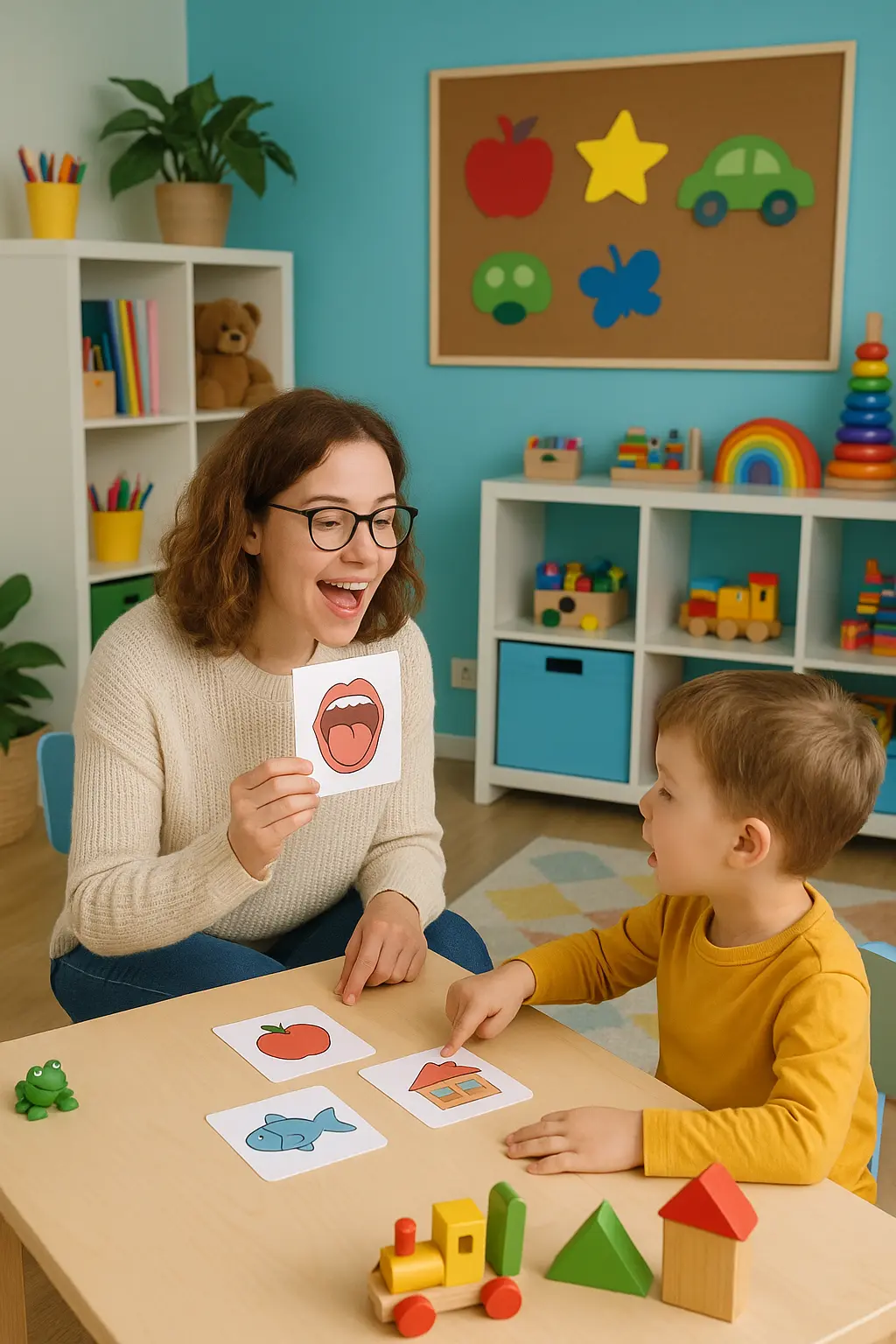
Speech therapy is one of the most effective tools for supporting children with communication difficulties. Therapists use play-based, interactive methods that engage children while building their skills. Common approaches include:
- Articulation exercises to practice specific sounds.
- Language games to expand vocabulary and sentence structure.
- Storytelling and picture cards to improve comprehension.
- Parent coaching so families can support learning at home.
For instance, a child who stutters may learn breathing techniques and pacing strategies, while a child with receptive language difficulties might work on following multi-step directions through games.
Activities That Support Language Development at Home
Parents and caregivers can encourage communication skills in everyday life by:
- Reading aloud daily and discussing pictures in books.
- Singing songs, nursery rhymes, and practicing repetitive phrases.
- Asking open-ended questions that encourage longer responses.
- Playing interactive games that involve turn-taking and following rules.
These simple activities not only support therapy goals but also strengthen parent-child bonding. Consistency is key—short, frequent practice sessions are more effective than long, occasional efforts.
Inclusive Strategies in Schools
Teachers play a vital role in supporting children with speech and language disorders. Classroom strategies may include:
- Allowing extra time for verbal responses.
- Using visual aids alongside spoken instructions.
- Encouraging peer support and group activities.
- Collaborating with speech-language specialists for individualized plans.
A supportive school culture helps reduce stigma. For example, when teachers model patience and acceptance, classmates are more likely to include children with communication challenges in group activities.
Frequently Asked Questions (FAQ)
Q: Will my child outgrow a speech or language disorder?
A: Some children may catch up naturally, but many require targeted therapy. Professional evaluation is the safest way to determine the right approach.
Q: Do bilingual children develop speech and language disorders more often?
A: No. Bilingualism does not cause communication disorders. In fact, learning two languages can be beneficial for cognitive growth.
Q: How long does speech therapy take?
A: The duration varies depending on the severity of the disorder and the child’s progress. Some may need a few months, while others benefit from ongoing support over several years.
Conclusion
Speech and language disorders may pose challenges, but they do not have to define a child’s future. With early identification, professional therapy, and family support, children can build strong communication skills that open the door to learning and friendships. Every child deserves the opportunity to be heard and understood. By fostering inclusive environments and using practical strategies, parents and educators can make a lasting difference in a child’s development.