instagram.com/SpecialKidsEducation
For parents and caregivers, one of the most pressing questions is how to effectively prepare their adolescent for adulthood. The answer lies in a dedicated, home-based focus on life skills for teens with intellectual disabilities. This structured approach is the cornerstone of fostering true autonomy, self-confidence, and preparedness for future independent or supported living. This guide serves as your comprehensive blueprint, detailing a practical life skills curriculum that covers essential domains from personal hygiene to community navigation. We will delve into actionable strategies for assessment, teaching methods like Task Analysis, and creating a home environment that turns everyday routines into powerful lessons in teaching independence.
Why a Focus on Life Skills for Teens is Non-Negotiable
Academic learning is vital, but the true measure of readiness for adulthood is functional capability. A targeted program in life skills for teens with intellectual disabilities addresses the core “adaptive behavior” deficits head-on. This proactive curriculum does more than just impart knowledge; it directly reduces long-term dependency, builds self-esteem, and equips young adults for the realities of life after school. Investing time in these skills for teens is an investment in their future dignity, autonomy, and overall quality of life—a goal that aligns perfectly with the holistic support framework in our pillar resource, Understanding Intellectual Disability: Causes, Signs, and Support Strategies.
First Step: Assessing Current Abilities
Launching your life skills curriculum begins with a compassionate assessment. Observe your teen’s current performance in key areas: Personal Care, Home Management, Food Preparation, Money Concepts, and Community Safety. Create a simple checklist to note independent skills, those needing prompts, and skills not yet acquired. This isn’t about criticism; it’s about creating a personalized map. Prioritize teaching skills that are immediately useful, enhance safety, or align with your teen’s personal interests to ensure motivation remains high from the start.
The Five Pillars of a Practical Life Skills Curriculum
An effective program breaks down the vast concept of independence into teachable pillars. This structure is essential for teens with intellectual disabilities to learn without feeling overwhelmed.
1. Personal Care & Hygiene: The Foundation of Self-Respect
Any curriculum must start with the self. This pillar covers routines like bathing, oral care, grooming, and choosing weather-appropriate clothing. Visual step-by-step guides posted in the bathroom are invaluable tools. Mastery here is critical not just for health, but for social integration and self-worth—key components of independent living.
2. Food Preparation & Kitchen Safety: From Consumer to Creator
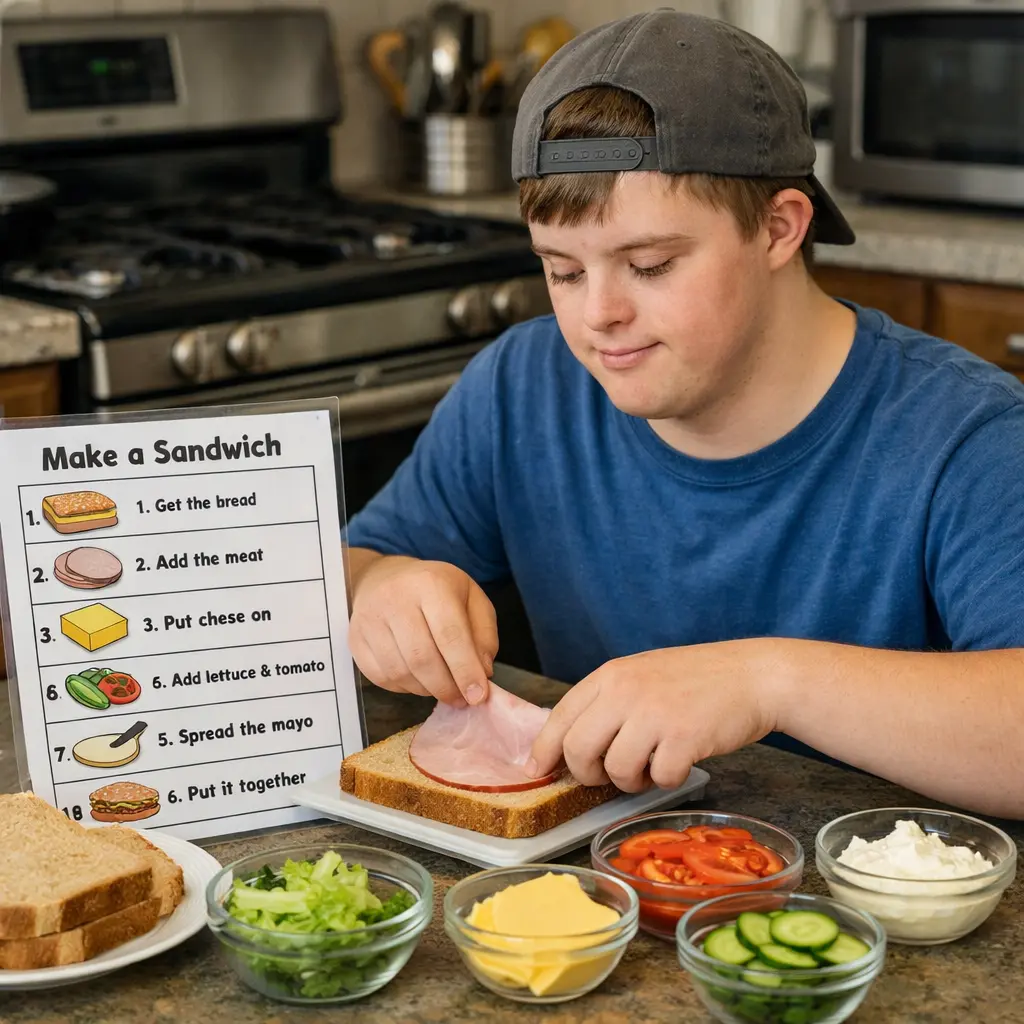
Nutrition and cooking are central to independence. Begin with simple, no-cook meals like sandwiches and salads, gradually introducing appliances like the microwave and toaster with clear safety rules. Using picture-based recipes can make the process accessible and build confidence in the kitchen, a vital life skill for any teen.
3. Home Management & Chores: Building Responsibility
Independence means contributing to one’s living space. Skills in this pillar include doing laundry, basic cleaning (vacuuming, dusting), taking out trash, and bed-making. Assign regular, predictable chores. Using visual labels on washing machine settings turns a complex task into a manageable one, reinforcing the routines that are also beneficial for younger children, as discussed in our article on Daily Routines for Children with Autism.
4. Money, Time, & Organization: Navigating Abstract Concepts
These cognitive skills are challenging but fundamental. Use real money for practice with small purchases. Work on telling time, using timers, and managing a personal schedule. Introduce tools like calendars and “get-ready” checklists. This pillar is arguably the most complex but also the most transformative for future semi-independent living.
5. Safety, Community, & Social Skills: Beyond the Home
True independence extends into the community. This final pillar covers emergency procedures, personal information, stranger safety, and basic community navigation like making a purchase or using public transit with support. Role-playing social scenarios and self-advocacy are also key components here.
The Master Teaching Strategy: Task Analysis
The most effective technique for teaching complex life skills is Task Analysis—deconstructing an activity into its smallest, sequential steps.
- Process: For example, “Making a Bed” becomes: 1. Pull flat sheet tight. 2. Tuck sheet under mattress at foot. 3. Tuck sheet in on one side…
- Chaining: Teach these steps using Forward Chaining (teaching the first step first) or Backward Chaining (you complete initial steps, teen does the final, rewarding step). This methodical approach is the engine of skill acquisition.
Fostering a Supportive Home Learning Environment
Your home is the primary classroom. Consistently use visual supports (checklists, picture sequences) to provide clarity. Integrate technology like timers and reminder apps. Crucially, teach skills in their natural context and time—cooking at mealtime, laundry on laundry day. The principle of “fading prompts” is key: start with physical guidance, move to verbal hints, then to visual cues, aiming for full independence. The goal is functional ability, not perfection.
Syncing with the School IEP for Amplified Impact
To reinforce learning, your home efforts should be mirrored in school goals. Your teen’s Individualized Education Program (IEP) must include strong Transition Goals focused on independent living skills.
- Advocacy: Push for IEP goals related to cooking, money management, or community navigation. This school-based practice solidifies the home curriculum. This collaborative model is as crucial as it is for developing core communication, outlined in our guide on Improving Communication for Nonverbal Children.
- Community-Based Instruction: Advocate for school-led trips to stores or cafes to generalize skills learned at home.
Conclusion: Building a Pathway to Empowered Adulthood
The journey of implementing a life skills curriculum is one of patience and celebrated micro-victories. Each mastered skill, from doing laundry to making a simple purchase, lays a brick on the pathway to a more autonomous future—whether that’s in supported independent living, a group home, or a more self-sufficient life at home. By committing to this structured, compassionate, and consistent approach to life skills for teens with intellectual disabilities, you do more than teach tasks. You empower your teen with the confidence, competence, and self-belief needed to navigate their own adult life with as much independence and dignity as possible.