instagram.com/SpecialKidsEducation

You have tried everything. Time-outs. Taking away screens. Raising your voice. Begging. Nothing seems to work. In fact, it feels like the battles are just getting worse. If this sounds familiar, you are not alone. Parenting a child with intense emotional and behavioral challenges requires a specialized approach. That is why parent training for children with behavioral problems is one of the most effective, evidence-based interventions available. This guide will walk you through the core principles of parent training for children with behavioral problems, offering practical techniques to reduce conflict, improve cooperation, and rebuild a positive relationship with your child. These strategies work for children with Oppositional Defiant Disorder (ODD), ADHD, and other Emotional and Behavioral Disorders (EBD).
What Is Parent Training for Children with Behavioral Problems?
Parent training for children with behavioral problems is a structured, evidence-based approach that teaches parents specific skills to manage challenging behaviors. Unlike traditional therapy that focuses primarily on the child, this training focuses on you — the parent. The core principle is simple: by changing how you respond to your child’s behavior, your child’s behavior will change. Decades of research confirm that parent training for children with behavioral problems is highly effective for reducing aggression, defiance, and emotional outbursts. This approach aligns with the comprehensive strategies for EBD discussed in our pillar resource, Emotional and Behavioral Disorders in Children: 7 Early Warning Signs Every Parent Must Know.
Why Traditional Discipline Fails Children with EBD
Before learning new skills, it helps to understand why the strategies that work for other children often fail for children with emotional and behavioral disorders.
- Punishment increases emotional dysregulation: For a child who is already overwhelmed, yelling or time-out can escalate, not calm.
- Delayed consequences don’t connect: “You lose your tablet tomorrow morning” is too far away for a child with impulsivity to connect to the behavior.
- Negative attention is still attention: If a child only gets intense interaction when they misbehave, the misbehavior is reinforced.
- Skill deficits are mistaken for willful defiance: Many children lack the skills to manage frustration, transition between activities, or ask for help. Punishing a skill deficit does not teach the skill.
Parent training for children with behavioral problems replaces these ineffective patterns with proactive, skill-building, relationship-centered strategies.
Understanding the root causes of these externalizing behaviors is essential. For more on decoding aggression, defiance, and impulsivity, see our guide on externalizing behaviors in children.
Core Techniques of Parent Training for Children with Behavioral Problems
These evidence-based techniques are the foundation of effective parent training and can be implemented at home immediately.
1. Positive Reinforcement: Catch Your Child Being Good
Children with behavior problems receive far more negative feedback than positive. A key goal of parent training for children with behavioral problems is to flip this ratio.
- The 5:1 ratio: Aim for five positive interactions for every correction or negative comment. “I love how you put your plate in the sink!”
- Use specific, labeled praise: Not “Good job” but “Good job staying in your seat during dinner.”
- Reward small approximations: If your child normally screams, praise even a slightly quieter voice.
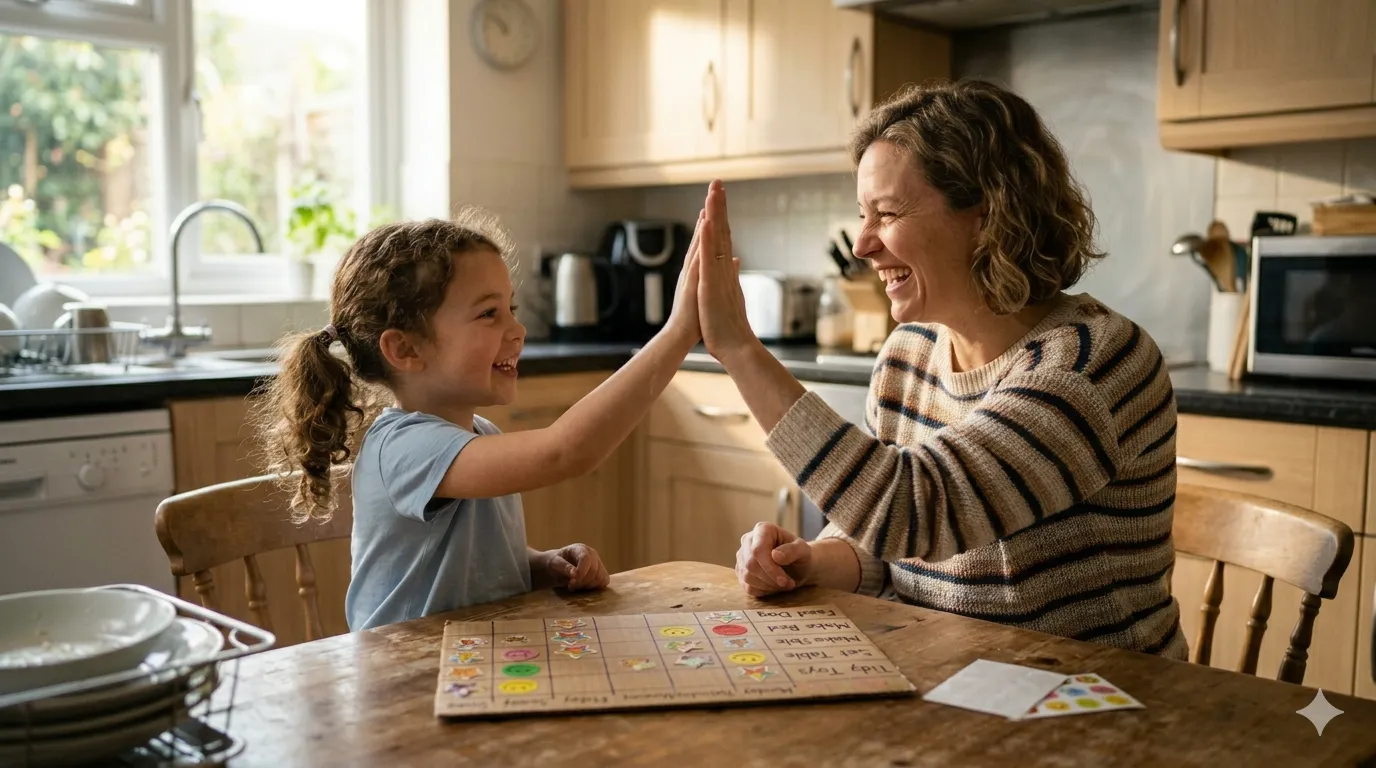
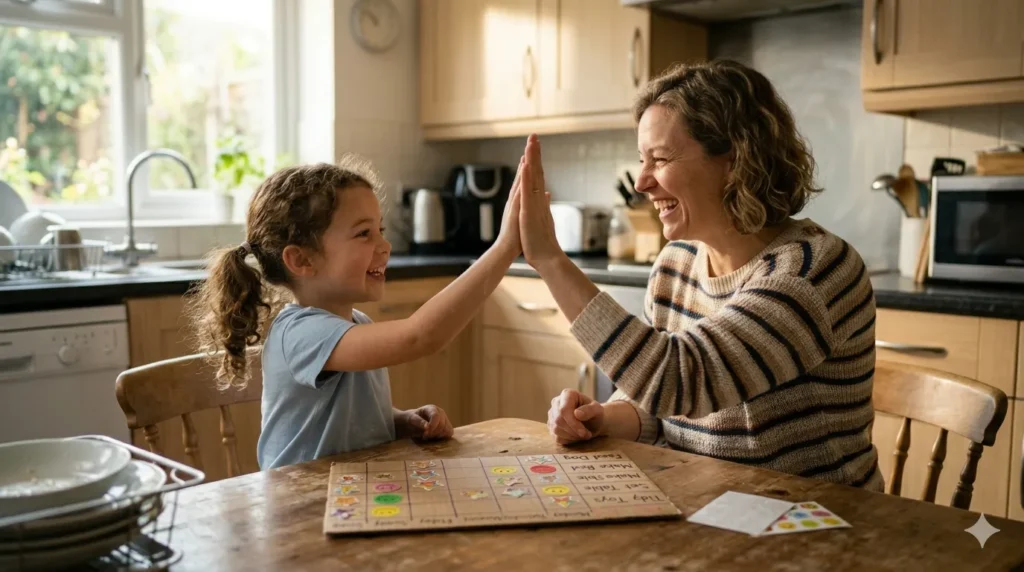
- Use a token system: Create a simple chart where your child earns tokens for specific positive behaviors. Tokens can be exchanged for small, immediate rewards.
2. Giving Effective Instructions That Get Followed
How you give an instruction dramatically affects whether it’s followed. Parent training for children with behavioral problems teaches specific techniques for this.
- Get close, get eye level, get attention: Never shout instructions from another room.
- Use direct, positive commands: “Please walk” instead of “Don’t run.” Positive commands tell the child what to do, not what to stop doing.
- One instruction at a time: “Please put your pajamas on. Then come brush your teeth.”
- Use “when/then” statements: “When you finish your homework, then you can have screen time.”
- Give a warning before transitions: “In five minutes, we’re leaving the park.” Use a timer.
3. Selective Ignoring: When to Look Away
Not every misbehavior needs a consequence. A core skill in parent training for children with behavioral problems is knowing when to ignore.
- Behaviors to ignore: Whining, complaining, mild arguing, tantrums for attention, interrupting, pouting.
- Behaviors that require action: Aggression, destruction of property, dangerous behaviors, severe defiance.
- How to ignore effectively: Turn away, avoid eye contact, do not speak. As soon as the behavior stops, turn back and praise: “I like how you calmed down.”
- The extinction burst: When you first start ignoring a behavior, it will often get worse before it gets better. Hold the line.
4. Calm, Immediate Consequences That Teach
When ignoring isn’t enough, consequences should be immediate, brief, and calm. Parent training for children with behavioral problems emphasizes consequences that are directly related to the misbehavior.
- Time-out from positive reinforcement: Brief, boring, and followed by a reconnect.
- Logical consequences: “You threw your toy. The toy goes away for the rest of the day.”
- Response cost: Removing a previously earned privilege for specific misbehaviors.
- Deliver consequences calmly: No lecture, no anger. “You didn’t put your shoes away. You will lose screen time for 30 minutes.”
5. The Daily Report Card: Bridging Home and School
The Daily Report Card (DRC) is a powerful tool that creates consistency between home and school, a principle often taught in parent training for children with behavioral problems.
- Identify 3-5 target behaviors at school: “Stayed in seat during math,” “Kept hands to self.”
- Teacher rates each behavior daily: Simple scale and sends the report home.
- Parent provides home reward based on daily points: “If you earn 8 out of 10 points today, you get 30 minutes of tablet time.”
How to Find Professional Parent Training Support
While the strategies above can be implemented today, working with a trained professional significantly increases effectiveness, especially for severe challenges. Many clinics offer group or individual parent training for children with behavioral problems.
- Look for evidence-based programs: The Incredible Years, Parent-Child Interaction Therapy (PCIT), or Triple P (Positive Parenting Program).
- Ask a child psychologist or psychiatrist: Many mental health clinics offer parent training groups.
- Online options: Some programs are now offered through telehealth.
- Ask about insurance: Parent training is often covered as a behavioral health service.
What to Do When Strategies Don’t Work Right Away
Parent training for children with behavioral problems is not magic. It requires consistency, practice, and patience. Here is what to do when you hit bumps.
- The escalation effect is normal: When you first change your responses, your child may escalate. This is called an “extinction burst.” Hold the line.
- Start small: Pick one or two strategies to focus on. Trying to change everything at once overwhelms both you and your child.
- Take care of yourself: If you cannot be calm, seek your own support — therapy or parent coaching.
- Be consistent across caregivers: If both parents are involved, you must use the same strategies.
- Seek professional support: If you have been consistent for 6-8 weeks with no improvement, work with a therapist to adjust your approach.
Frequently Asked Questions (SSS)
Q: How long does parent training take to work?
A: Some families see improvement in 4-6 weeks. More significant changes may take 10-20 weeks. The key is consistency. If you use strategies sporadically, they will not work.
Q: Can I do parent training on my own without a therapist?
A: You can implement the core principles on your own. However, for children with severe behavioral problems, working with a trained provider significantly increases success.
Q: What if my partner isn’t on board?
A: Inconsistent parenting is confusing for children. Share this guide. Offer to attend a workshop together. If they still refuse, you can still implement strategies when you are alone with your child.
Q: My child is a teenager. Will these techniques work?
A: Yes, with modifications. Teenagers need more autonomy and logical consequences. The core principles remain the same.
Q: Does parent training work for anxiety or depression?
A: This approach is primarily designed for behavioral problems like defiance and aggression. For internalizing behaviors like anxiety or depression, Cognitive Behavioral Therapy (CBT) is often more appropriate.
Conclusion: Change Starts with You — And That Is Empowering
Parent training for children with behavioral problems can feel counterintuitive. You may have been raised with punishment, lectures, and consequences. But decades of research show that positive reinforcement, calm consequences, and selective ignoring are the most effective ways to reduce conflict and build lasting cooperation. The most difficult part of parent training is not the techniques — it is changing yourself. It is staying calm when every instinct screams to yell. It is praising effort when you feel only frustration. But you can do this. Choose one technique from this guide and practice it for one week. Just one. See what happens. Parent training for children with behavioral problems is not about being a perfect parent. It is about being an intentional one. And that intention will change everything.