instagram.com/SpecialKidsEducation
The Challenge and Goal: Understanding Nonverbal Communication
For parents of a child with an intellectual disability who does not speak, the world can feel silent. However, the absence of speech does not mean an absence of thought, will, or the need to connect. The core challenge—and the primary goal—is to build effective nonverbal communication. This term encompasses every way a child expresses themselves without words: gestures, facial expressions, body language, and crucially, the use of assisted tools known as Augmentative and Alternative Communication (AAC). Improving nonverbal communication in children with cognitive delays is not about finding a cure for silence; it’s about building a reliable bridge between their inner world and yours, reducing frustration, and unlocking their potential for learning and relationships. This guide provides a concrete pathway to achieve that.
First Principles: Presuming Competence and Recognizing Intent
Every strategy for enhancing nonverbal communication rests on one foundational belief: presume competence. Your child understands more than they can express. Start by becoming an expert observer of their existing nonverbal signals. Does they reach for a cup? Lean away from a loud sound? Make a specific sound when happy? These are all forms of communication. By consistently responding and labeling these actions (“You’re reaching for milk! Here is milk.”), you teach the powerful equation: “My action causes a response.” This basic cause-and-effect is the bedrock of all communication development and a key support strategy discussed in our pillar article on Understanding Intellectual Disability.
Augmentative and Alternative Communication (AAC): The Essential Toolkit
AAC is not a last resort; it is the first and most important tool for developing nonverbal communication. It refers to any method that supports or replaces speech. The spectrum ranges from simple to high-tech, ensuring there’s a fit for every child.
No-Tech and Low-Tech AAC: The Accessible Foundation
- Gestures and Sign Language: Simple, culturally recognized signs or family-invented gestures provide an immediate outlet.
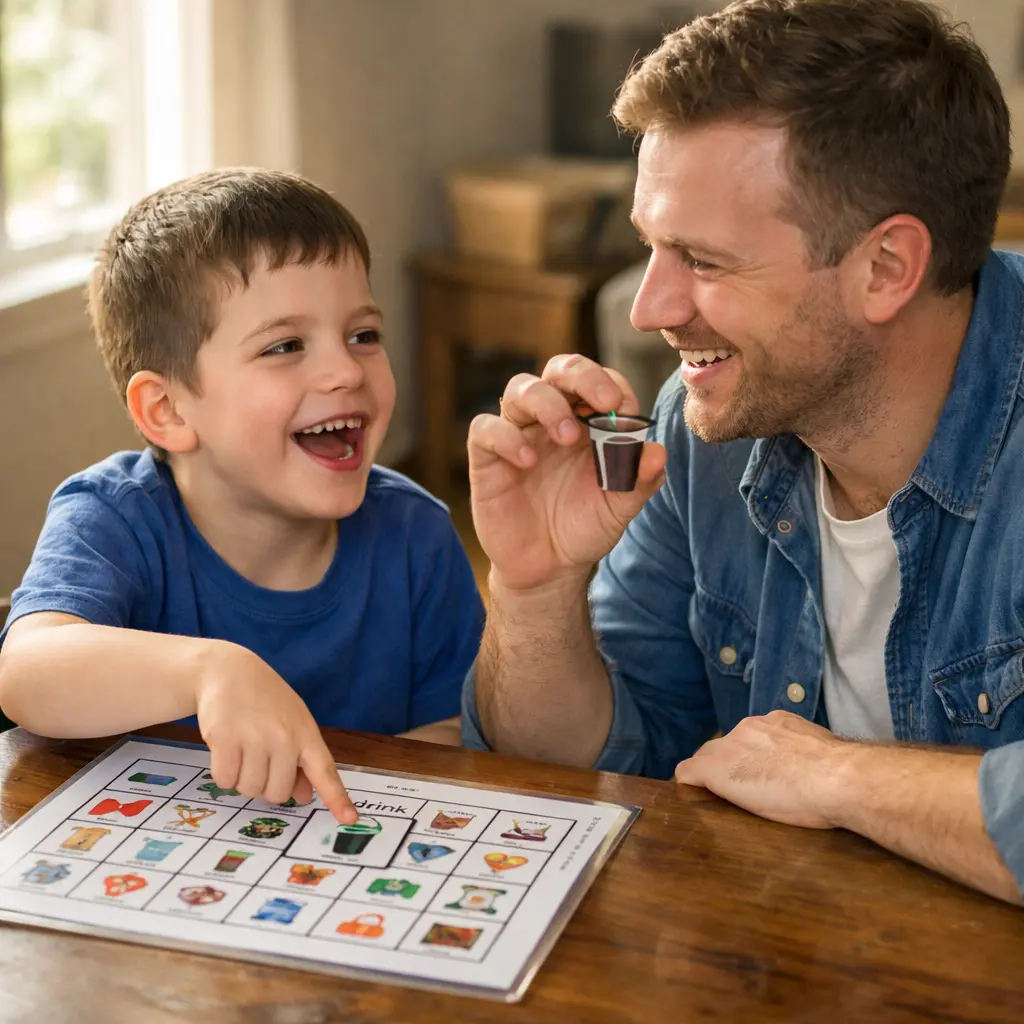
- Picture-Based Systems: The Picture Exchange Communication System (PECS) or simple communication boards with photos or symbols allow a child to hand over a picture to make a request or comment. These are tangible, reliable, and a perfect starting point for building nonverbal communication skills.
High-Tech AAC: A Digital Voice
- Speech-Generating Devices (SGDs): These are dedicated devices or tablets with specialized apps (e.g., Proloquo2Go). When a child touches a symbol, the device speaks the word aloud. This is transformative for children who understand symbols but lack the motor skill for clear signs.
Practical Strategies to Teach and Encourage Nonverbal Communication
Having tools is one thing; integrating them into life is another. Improving communication requires deliberate, daily practice.
- Modeling (Aided Language Input): This is the golden rule. Use the child’s AAC system to talk to them. Point to the “eat” picture while saying, “Time to EAT.” They need to see the tool being used meaningfully to understand its purpose.
- Create Communication Opportunities: Offer irresistible choices using visuals. Withhold a small part of a favorite activity to naturally elicit a request for “more.” These planned moments are the gym where nonverbal communication muscles are built.
- Use Visual Schedules for Predictability: Reducing anxiety about “what’s next” frees up mental energy for communication. A visual schedule provides clarity, a strategy equally vital for children with diagnoses like Down syndrome and intellectual disability, where routine is key.
- Start with Motivating Vocabulary: Begin with a core board of 10-15 powerful words: more, stop, eat, drink, play, help, all done, yes, no. Place the board or device always within reach, especially during motivating activities like meals or play.
Targeting the Functions of Communication: Beyond “I Want”
True empowerment in nonverbal communication comes from expressing a range of needs and ideas.
- Requesting: The most basic and motivating (food, toys).
- Rejecting/Protesting: Critical for safety and autonomy (“no,” “stop,” “go away”).
- Commenting: Sharing observations (“big truck,” “hot”).
- Social Interaction: Greetings, turn-taking, manners.
- Asking Questions: An advanced but crucial skill for engagement.
Building a Support Team: The Critical Role of Speech Therapy and the IEP
You are the constant, but professionals are the guides. A Speech-Language Pathologist (SLP) with AAC experience is indispensable.
- The SLP’s Role: Assesses the child’s best access method (touch, eye gaze), recommends and programs the right AAC system, trains you in modeling, and writes specific, measurable goals.
- The School IEP: Your child’s Individualized Education Program must have robust goals for AAC use and nonverbal communication. Advocate for staff training so every teacher and aide can model using the device. This ensures consistency, which is as crucial as it is for mastering Daily Routines for Children with Autism, a parallel need for many children with intellectual disabilities.
Navigating Related Hurdles: Behavior, Sensory, and Motor Skills
- Behavior as Communication: Tantrums often signal a broken nonverbal communication bridge. The answer is to provide a better tool, like a “break” or “help” card, not just consequence.
- Sensory Considerations: Collaborate with an Occupational Therapist if your child is tactile-defensive (rejects touching a board) or visually overwhelmed. Addressing sensory processing issues, common in many developmental disabilities, can make or break AAC success.
- Physical Access: For children with significant motor challenges, switches or eye-gaze technology can be their gateway to communication. An OT can assess these needs.
The Journey: Patience, Consistency, and Celebration
Developing nonverbal communication is a slow, profound journey. Progress is measured in subtle glances, intentional touches, and moments of shared understanding. Consistency across all environments (home, school, therapy) is non-negotiable. Celebrate every micro-victory: a purposeful point to a picture, a signed “more,” a peer’s response to their device’s voice. Each success builds confidence and proves that their voice, in whatever form it takes, is powerful and heard. By embracing AAC, implementing these strategies, and partnering with professionals, you are not just teaching skills—you are affirming your child’s right to be known, understood, and connected to the world around them.