instagram.com/SpecialKidsEducation

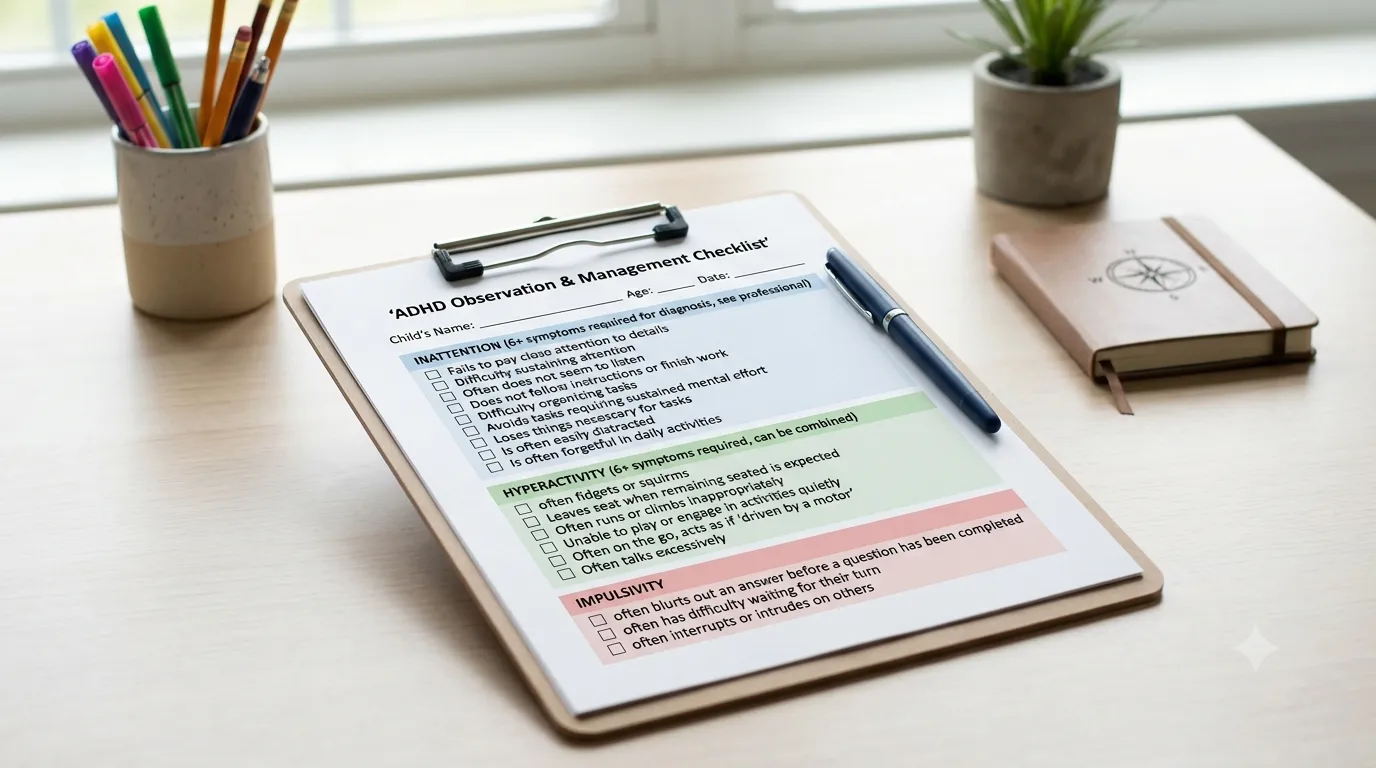
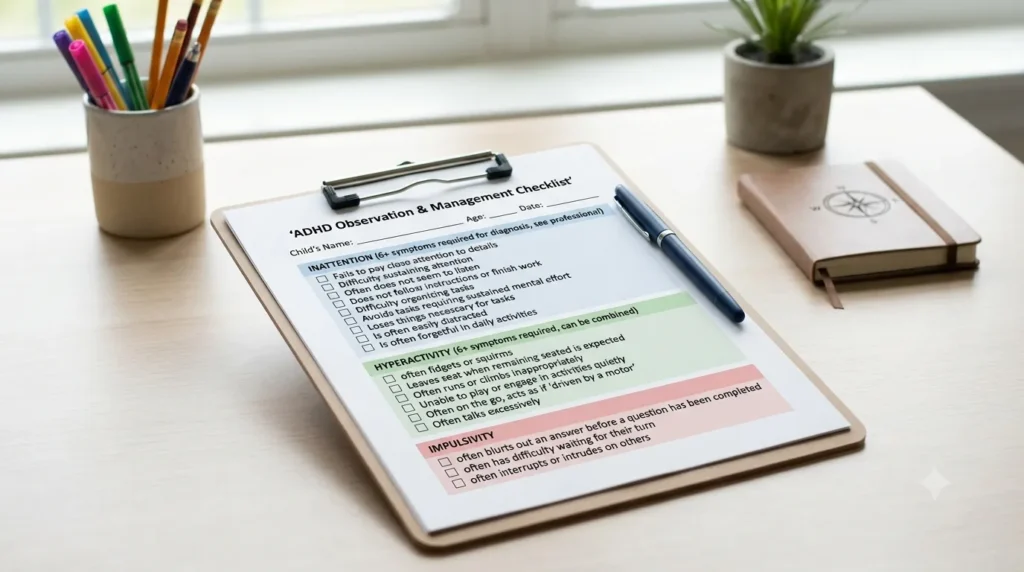
Every child has moments of inattention, high energy, or impulsivity. But when these behaviors are persistent, frequent, and interfere with daily life, they may be signs of Attention-Deficit/Hyperactivity Disorder (ADHD). This comprehensive ADHD symptom checklist for children is designed to help parents and teachers recognize the key signs across different settings and age groups. While this ADHD symptom checklist for children is not a diagnostic tool, it can help you identify patterns that warrant professional evaluation. Early identification of ADHD symptoms in children leads to earlier intervention and better outcomes. This guide covers the three main presentations of ADHD, provides age-specific checklists, and explains what to do next if you recognize these signs in your child or student. Understanding these symptoms is the first step toward effective support, as discussed in our pillar resource, Understanding ADHD in Children: Signs, Challenges, and Support Strategies.
How to Use This ADHD Symptom Checklist for Children
This ADHD symptom checklist for children is intended for informational purposes only. It is not a substitute for a professional evaluation. Use it to document behaviors across different settings (home, school, social) and to guide conversations with your child’s healthcare provider or school team. The symptoms listed are based on the Diagnostic and Statistical Manual of Mental Disorders (DSM-5) criteria. For a diagnosis, symptoms must be present for at least six months, be inconsistent with the child’s developmental level, and cause significant impairment in two or more settings.
DSM-5 ADHD Symptom Checklist for Children
ADHD is categorized into three presentations. Use the checklists below to identify which pattern most closely matches your child’s behavior. Check each symptom that applies.
Inattentive Presentation Symptoms
- [ ] Often fails to give close attention to details or makes careless mistakes in schoolwork, work, or other activities.
- [ ] Often has difficulty sustaining attention in tasks or play activities.
- [ ] Often does not seem to listen when spoken to directly.
- [ ] Often does not follow through on instructions and fails to finish schoolwork, chores, or duties in the workplace.
- [ ] Often has difficulty organizing tasks and activities.
- [ ] Often avoids, dislikes, or is reluctant to engage in tasks that require sustained mental effort (such as schoolwork or homework).
- [ ] Often loses things necessary for tasks or activities (e.g., school materials, pencils, books, tools, wallets).
- [ ] Is often easily distracted by extraneous stimuli.
- [ ] Is often forgetful in daily activities.
Hyperactive-Impulsive Presentation Symptoms
- [ ] Often fidgets with or taps hands or feet or squirms in seat.
- [ ] Often leaves seat in situations when remaining seated is expected.
- [ ] Often runs about or climbs in situations where it is inappropriate (in adolescents or adults, may be limited to feeling restless).
- [ ] Often unable to play or engage in leisure activities quietly.
- [ ] Is often “on the go,” acting as if “driven by a motor.”
- [ ] Often talks excessively.
- [ ] Often blurts out an answer before a question has been completed.
- [ ] Often has difficulty waiting their turn.
- [ ] Often interrupts or intrudes on others (e.g., butts into conversations or games).
Combined Presentation
Check both lists above. If your child shows at least six symptoms from both the inattentive and hyperactive-impulsive lists, they may have the combined presentation.
Age-Specific ADHD Symptom Checklist for Children
ADHD symptoms can look different at different ages. Use these age-specific checklists to recognize patterns.
ADHD Symptoms in Preschoolers (Ages 3-5)
- [ ] Constant movement; cannot sit still even for short periods (storytime, meals).
- [ ] Extreme difficulty with transitions (leaving the playground, stopping a preferred activity).
- [ ] Frequent, intense temper tantrums that seem out of proportion to the trigger.
- [ ] Runs or climbs in unsafe situations without awareness of danger.
- [ ] Interrupts constantly; cannot wait for a turn.
- [ ] Does not follow simple one-step instructions.
ADHD Symptoms in Elementary School Children (Ages 6-12)
- [ ] Struggles to finish homework or classroom assignments on time.
- [ ] Loses materials regularly (homework, pencils, permission slips).
- [ ] Frequent reminders needed for daily routines (getting dressed, packing backpack).
- [ ] Blurts out answers in class; interrupts peers and teachers.
- [ ] Difficulty waiting in line or taking turns in games.
- [ ] Messy, disorganized desk, backpack, and workspace.
- [ ] Avoids or resists reading, writing, or math tasks that require sustained focus.
- [ ] Often appears “spacey” or daydreaming, even when directly addressed.
ADHD Symptoms in Middle and High School (Ages 13-18)
- [ ] Persistent difficulty with time management and deadlines.
- [ ] Procrastinates or avoids long-term assignments until the last minute.
- [ ] Frequently loses or forgets materials, assignments, and personal items.
- [ ] Struggles to sustain attention in class, especially during lectures or independent work.
- [ ] Impulsive comments or actions that disrupt class or peer relationships.
- [ ] Difficulty managing multiple responsibilities (school, extracurricular, work).
- [ ] Low frustration tolerance; gives up easily on challenging tasks.
- [ ] May appear unmotivated or underachieving despite intelligence.
Co-Occurring Conditions to Watch For
Children with ADHD often have other conditions that may mask or complicate symptoms. This ADHD symptom checklist for children should also consider these common co-occurring conditions:
- Anxiety: Excessive worry, avoidance, physical symptoms (headaches, stomachaches).
- Depression: Persistent sadness, irritability, withdrawal from activities.
- Oppositional Defiant Disorder (ODD): Frequent arguing, defiance, anger toward authority figures.
- Learning Disabilities: Academic struggles beyond what would be expected from ADHD alone.
- Autism Spectrum Disorder: Social communication challenges, rigid routines, sensory sensitivities.
What to Do After Completing the Checklist
If you have checked multiple symptoms on this ADHD symptom checklist for children, here are the next steps:
- Document your observations: Keep a journal of behaviors for 1-2 weeks. Note when and where they occur.
- Share the checklist with your child’s teacher: Ask them to complete a parallel checklist. Symptoms in multiple settings are key to diagnosis.
- Schedule a visit with your pediatrician: They can rule out other causes (hearing, vision, sleep disorders) and refer you to a specialist.
- Consider a comprehensive evaluation: A child psychologist or developmental pediatrician can conduct formal testing for ADHD and co-occurring conditions.
- Request a school evaluation: If symptoms significantly impact learning, you can request an evaluation for an IEP or 504 Plan.
For a step-by-step guide to navigating the evaluation and support process, see our guide on How to Request an IEP for a Child with a Learning Disability.
Frequently Asked Questions (SSS)
Q: At what age can ADHD be reliably diagnosed?
A: ADHD symptoms often emerge before age 7, but a reliable diagnosis is typically made in elementary school (age 6 or older). Some children are diagnosed earlier, but symptoms must be persistent and impairing.
Q: Can a child have ADHD without hyperactivity?
A: Yes. The predominantly inattentive presentation (sometimes called ADD) is marked by difficulty focusing, disorganization, and forgetfulness — without significant hyperactivity. These children are often overlooked because they don’t disrupt the classroom.
Q: How long do symptoms need to be present for a diagnosis?
A: At least six months. Symptoms must be present before age 12, occur in two or more settings (home, school, social), and significantly interfere with daily functioning.
Q: What if my child shows some symptoms but not all?
A: This checklist is a screening tool, not a diagnostic test. If you have concerns, discuss them with a professional. Some children may have ADHD but not meet the full criteria, or they may have another condition with overlapping symptoms.
Q: Is there a cure for ADHD?
A: ADHD is a lifelong condition, but it is highly manageable. Treatment (medication, behavioral therapy, parent training, school supports) can significantly reduce symptoms and improve functioning.
Conclusion: Using the Checklist as a Starting Point
This ADHD symptom checklist for children is a powerful starting point for identifying potential signs of ADHD in your child or student. But a checklist is not a diagnosis. If you recognize persistent patterns, the next step is to seek a comprehensive evaluation from a qualified professional. Early identification, combined with evidence-based interventions (behavioral therapy, school supports, parent training, and sometimes medication), can dramatically improve your child’s trajectory. ADHD is not a label — it is a roadmap. And this checklist is the first step on that road. For more resources, explore our pillar guide on Understanding ADHD in Children: Signs, Challenges, and Support Strategies.